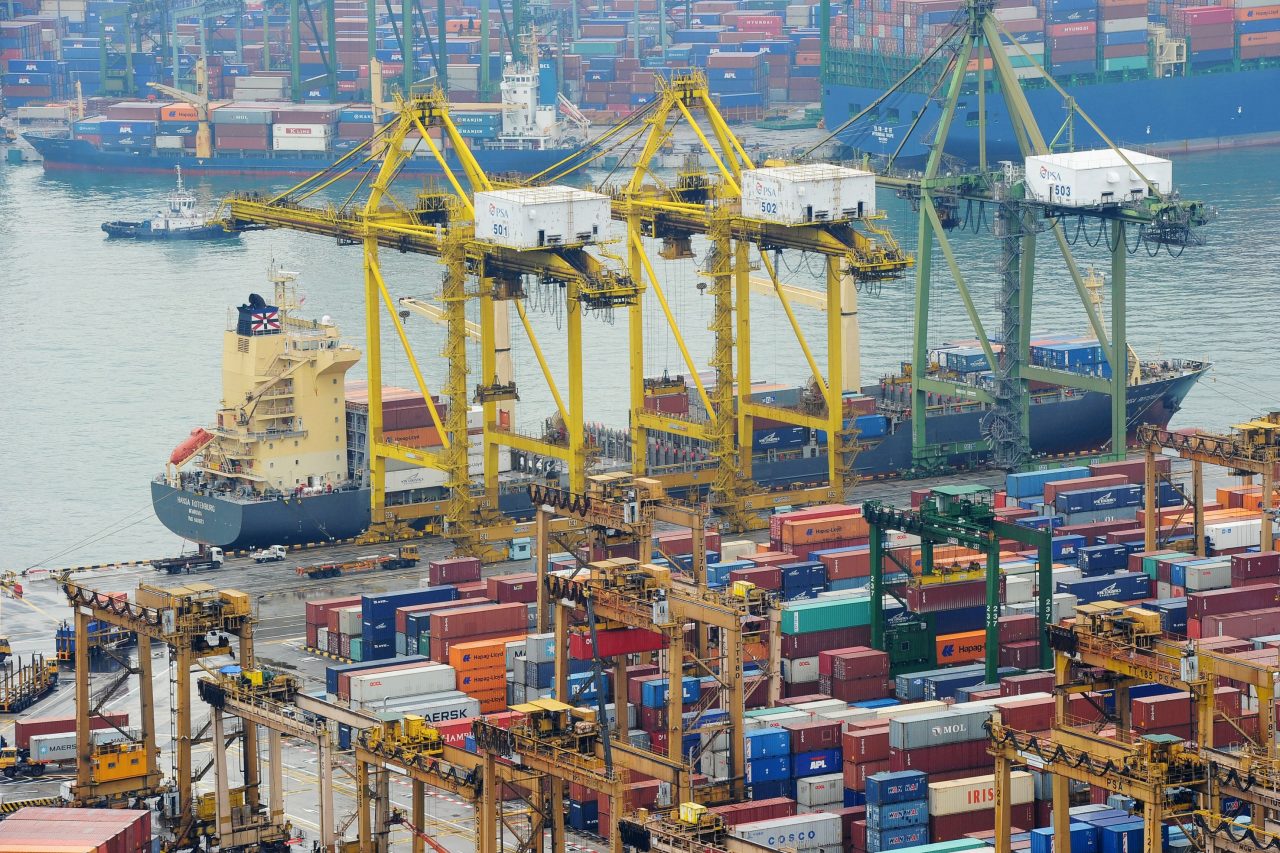
In what is being hailed as the most significant intervention in Nigeria’s maritime history, the Federal Government has secured a £746 million financing agreement with the United Kingdom to overhaul the nation’s aging port infrastructure.
The announcement, released by Bolaji Akinola, Special Adviser to the Minister of Marine and Blue Economy, signals a decisive shift toward modernizing the “Apapa and Tin Can Island” ports—the twin engines of Nigerian commerce that have long struggled under the weight of congestion and decaying facilities.
Backed by UK Export Finance (UKEF), the deal marks the first comprehensive overhaul of these ports since their inception. For years, stakeholders have lamented that the facilities remained frozen in time while global shipping evolved toward automation and mega-vessels.
Minister of Marine and Blue Economy, Dr. Adegboyega Oyetola, characterized the agreement as a “defining moment” for the sector.
“What we are set to do is not merely an upgrade but a comprehensive transformation that will bring our ports into alignment with international best practice,” Oyetola stated. He emphasized that the current infrastructure has simply failed to keep pace with modern global shipping demands.
The stakes for this modernization are high. The Apapa and Tin Can Island complexes are the lifeblood of the Nigerian economy, handling the vast majority of the nation’s maritime traffic:
Total Investment: £746 Million (approx. ₦1.4 Trillion)
Trade Volume: 70%+ of Nigeria’s total imports and exports
Primary Goals: Digitalization, expanded capacity, advanced cargo handling
Economic KPIs: Reduced vessel turnaround time & lower cargo dwell time
The modernization program aims to replace manual processes with digitalized operations, a move expected to strip away layers of bureaucracy and “man-made” delays. By introducing advanced cargo-handling systems, the government hopes to:
Slash Logistics Costs: Lowering the overhead for local businesses.
Enhance Transparency: Reducing opportunities for corruption through automation.
Boost Reliability: Ensuring predictable schedules for the international shipping lines.
The timing of the announcement is strategically aligned with high-level diplomacy. The formal signing ceremony is scheduled to take place in London during President Bola Ahmed Tinubu’s state visit on March 18 and 19, 2026. This underscores the deal’s importance not just as a commercial contract but as a pillar of the renewed UK-Nigeria economic partnership.
As the president prepares to put pen to paper in London, the maritime industry watches closely. If successful, this £746 million gamble could finally unlock the “Blue Economy” potential that has remained dormant at Nigeria’s water’s edge for decades.
WHAT YOU SHOULD KNOW
Nigeria has secured a £746 million UK-backed investment to fully modernize the Apapa and Tin Can Island ports.
The key takeaway is that this isn’t just a minor repair; it is the first comprehensive overhaul since the ports were built, specifically designed to replace manual bottlenecks with digitalized systems. By modernizing the gateways that handle 70% of Nigeria’s trade, the government aims to slash cargo delays and lower the cost of doing business nationwide.