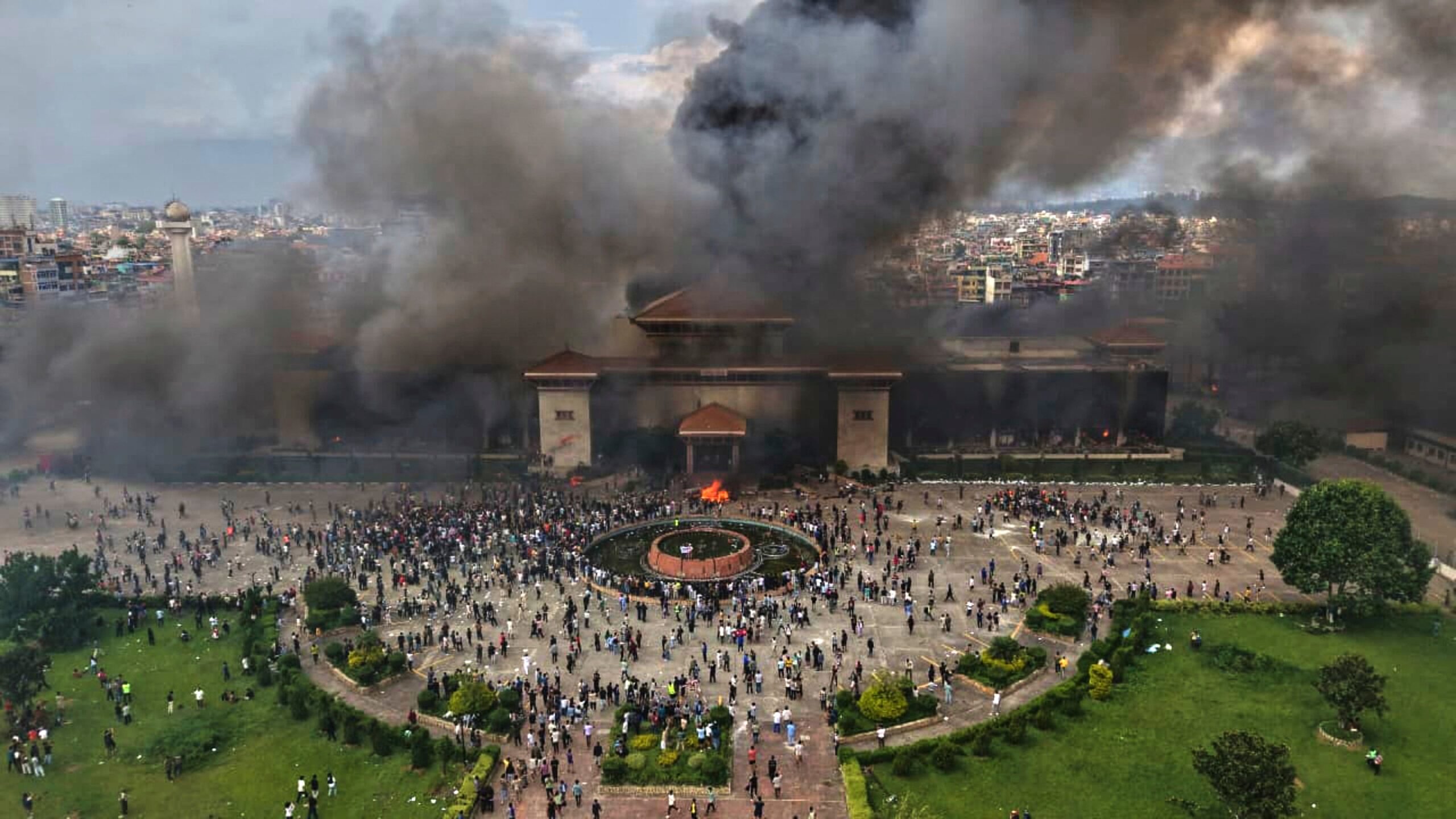
Nepal is taking stock of the devastating economic and infrastructural damage left behind after last week’s violent anti-corruption protests, which saw parliament, government offices, and the recently opened Hilton Hotel engulfed in flames.
According to official reports, at least 72 people lost their lives during two days of unrest, while many more sustained serious injuries.
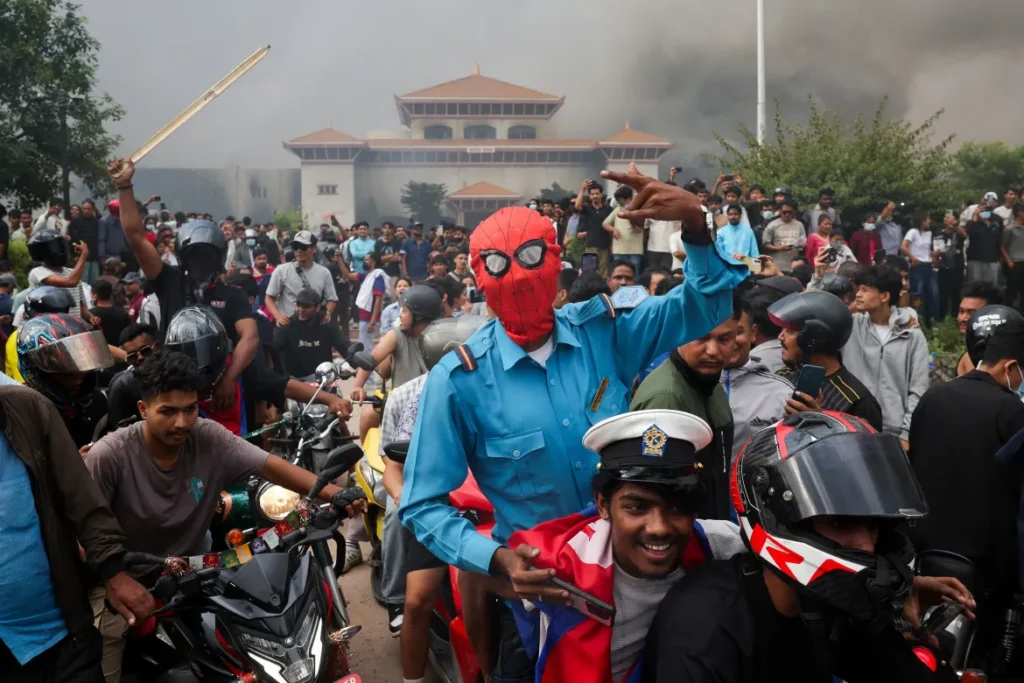
“So much has been destroyed,” police spokesman Binod Ghimire told AFP, noting that the overall damage is yet to be fully determined as destruction spread beyond Kathmandu.
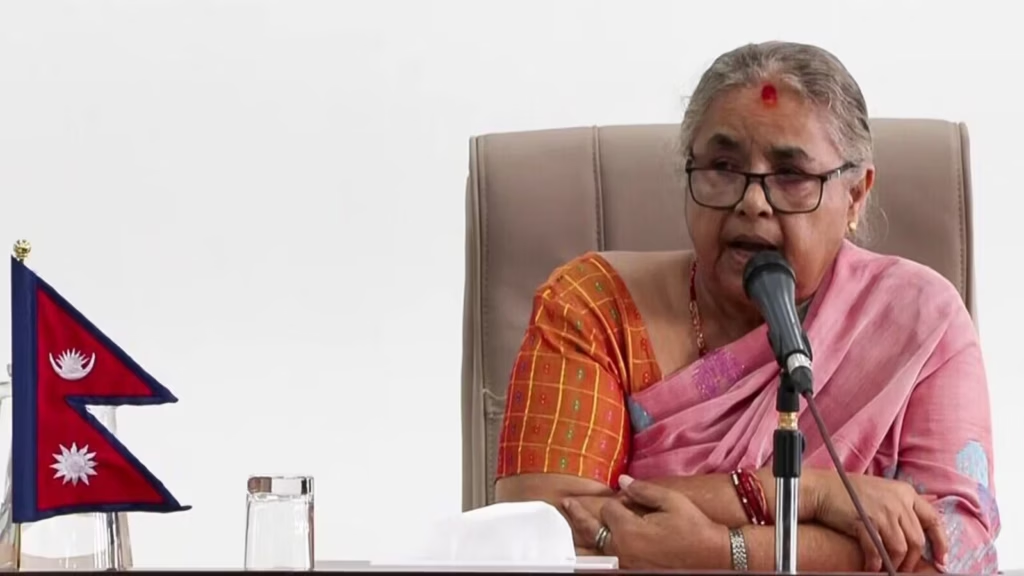
Newly appointed interim Prime Minister Sushila Karki, who assumed office on Sunday, described the events as a “widespread loss of lives and property.”
At the Supreme Court complex, staff were seen working beneath makeshift tents outside the burned building, surrounded by charred vehicles, as they attempted to rescue water-damaged files.
AFP correspondents who surveyed the wreckage of the national parliament reported that vast sections of the complex had been gutted by fires that raged unchecked on September 9.
The Hotel Association of Nepal revealed that over 20 hotels sustained damage, including the Hilton blaze, while some properties were looted. Estimates placed total financial losses at around 25 billion Nepali rupees ($177 million), with the Hilton alone suffering up to $56 million in damages. More than 2,000 hotel staff have been affected.
Tourism, Nepal’s fourth-largest employer, is particularly vulnerable. The sector provides work to over 371,000 citizens and attracts more than a million international visitors each year, according to government statistics.
Singha Durbar, the iconic palace complex housing the prime minister’s office and several ministries, was also gutted. Its once-pristine white pillars now stand blackened, bearing the scars of the blaze.
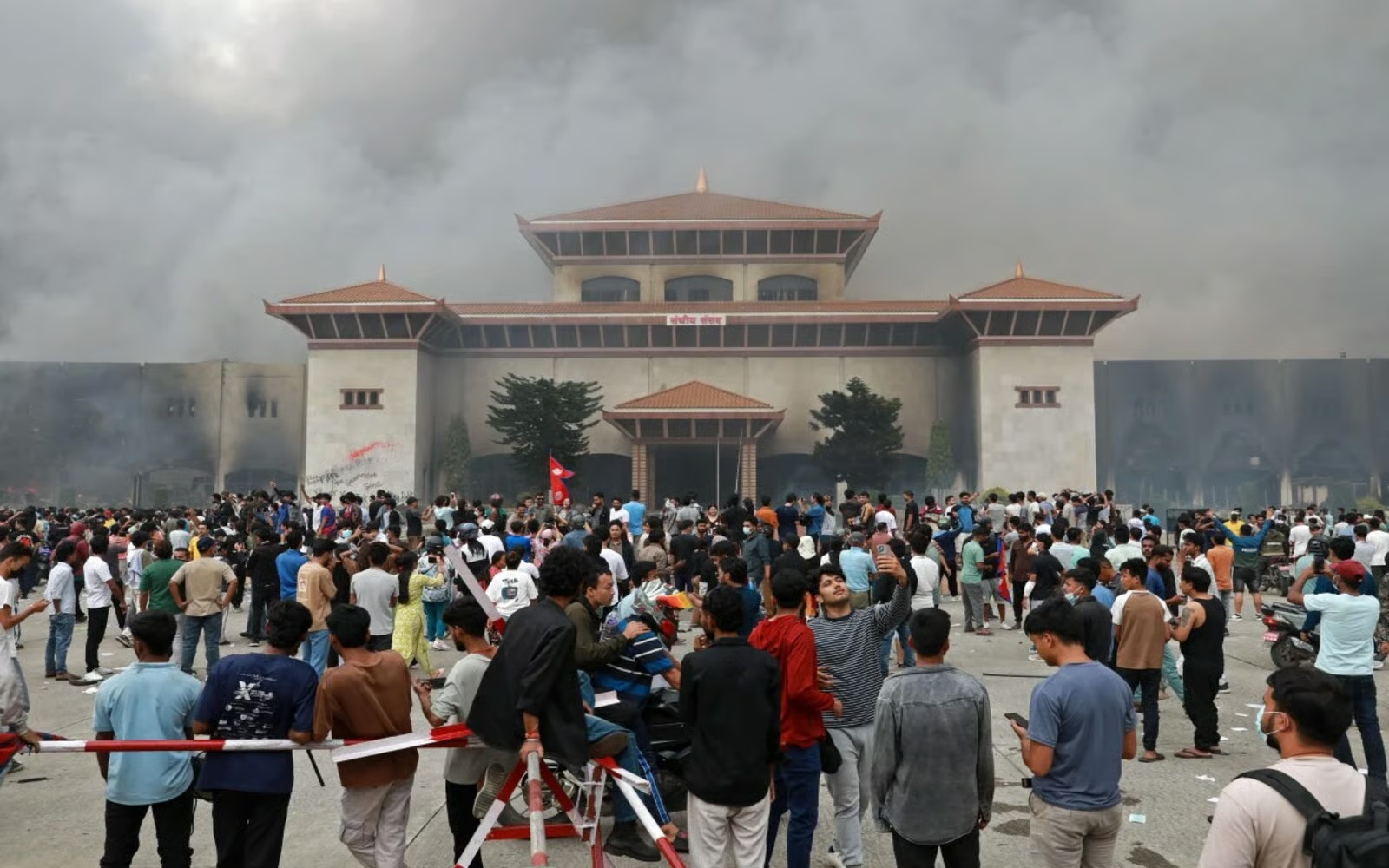
Beyond government institutions, protesters targeted police stations, courts, and other public facilities.
“All our records, evidence, files of the Supreme Court have been all destroyed,” Prime Minister Karki said, stressing that critical state institutions were deliberately attacked.
The unrest also enabled over 12,500 prisoners to escape custody, leaving security forces scrambling to restore order.
Crowds set fire to the residences of politicians, luxury car dealerships, and private offices, symbols of privilege and power that drew the ire of demonstrators. Even media outlets were not spared: the Kantipur Media Group’s building was badly damaged, though it has since resumed broadcasting from temporary facilities and publishing online.
Durga Khanal, an employee of the Department of Roads, expressed mixed feelings. “I support the change they are striving for, but I cannot agree with the destruction of physical infrastructure,” she said.
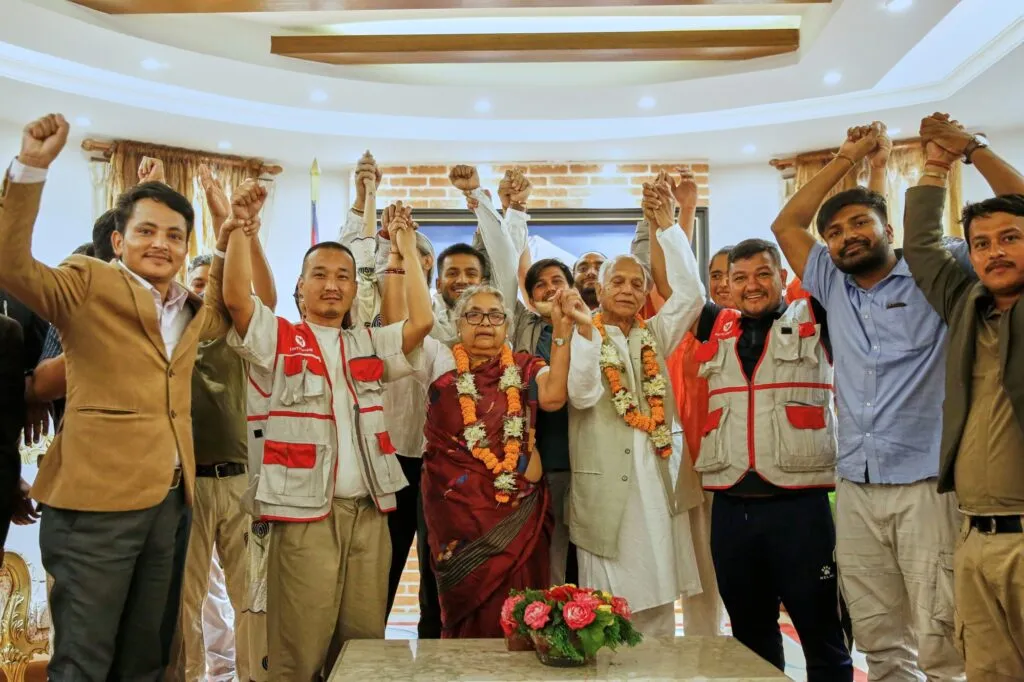
Kulman Ghising, the new minister overseeing energy, infrastructure, transport, and urban development, has directed officials to deliver a rapid assessment and a reconstruction plan within one week.
Nepal’s chambers of commerce and industry are still compiling data, but experts warn that the scope of losses is staggering.
“No type of infrastructure has been spared. The government, private sector, media have all endured losses,” economist Chandra Mani Adhikari told AFP. “It will take a lot of time and resources to recover and rebuild everything.”
What you should know
Nepal is reeling from two days of anti-corruption protests that left at least 72 people dead and caused more than $177 million in damages.
Historic landmarks, government offices, hotels, and media houses were destroyed. The crisis has crippled tourism, freed over 12,500 prisoners, and left the country facing a long and costly road to recovery.