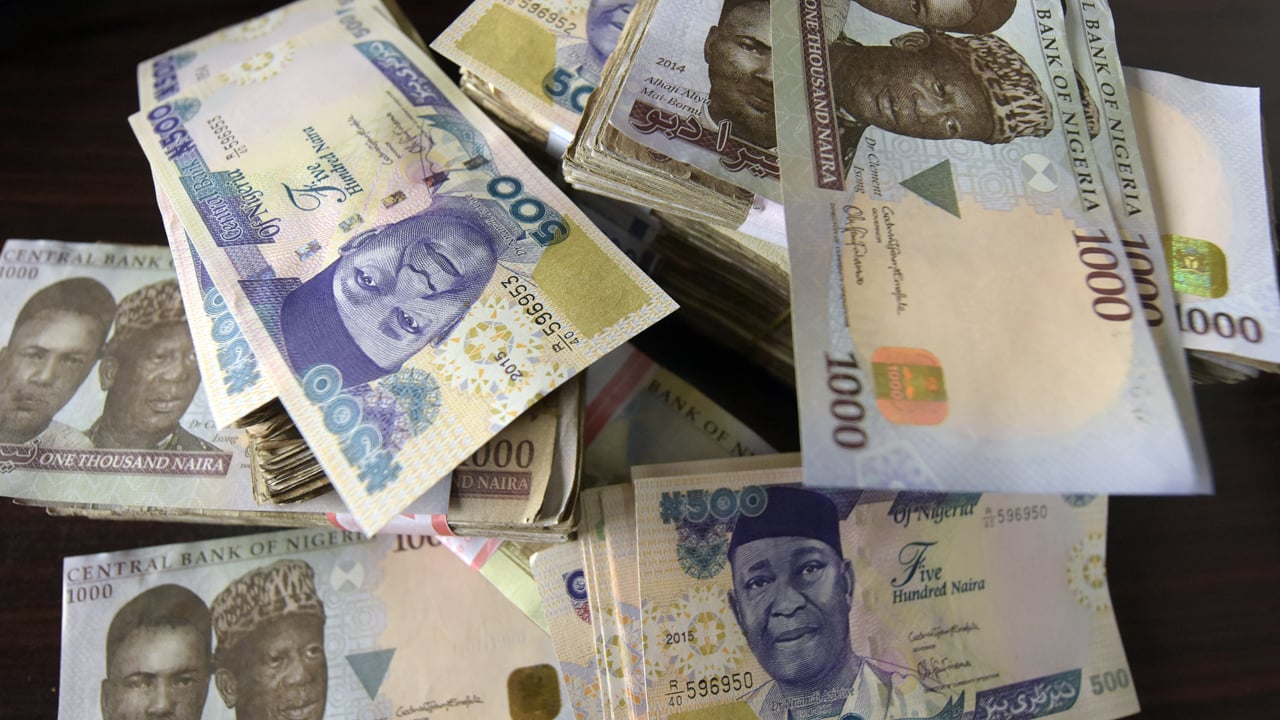
Nigeria’s currency landscape presented a mixed picture this week, with the naira demonstrating relative stability in official markets even as parallel market pressures persist, while the country’s foreign exchange reserves reached their strongest position since 2018.
Market Dynamics and Exchange Rate Divergence
The naira has maintained a tenuous equilibrium within the mid-N1,400 to dollar range, supported by bolstered foreign exchange holdings in the Nigerian treasury. However, this stability masks underlying tensions, as robust demand from importers continues to exert pressure on available dollar supplies.
On the streets of Lagos, where currency traders operate in the informal parallel market, the story tells a different tale. These dealers quoted slightly elevated rates, reflecting the persistent appetite for hard currency among businesses and individuals unable to access dollars through official channels.
By Thursday’s close, the Nigerian currency had weakened in the unofficial market, with transactions occurring between N1,460 and N1,475 to the dollar. Meanwhile, in the Nigerian Foreign Exchange Market—the country’s official trading platform—the naira settled at N1,450 per dollar, representing a notable depreciation from previous levels.
Understanding the Dual-Market Phenomenon
Market analysts point to a familiar constellation of factors driving the wedge between official and parallel market rates. Chief among these is sustained dollar demand for import financing and personal remittances abroad, coupled with insufficient foreign currency flowing into formal banking channels—a structural challenge that has bedeviled Nigeria’s forex management for years.
“What we’re witnessing is essentially a supply-demand imbalance in the formal sector,” explained one Lagos-based currency analyst who requested anonymity. “Legitimate businesses and individuals seeking dollars for trade and personal needs often find themselves rationed in official markets, inevitably pushing them toward parallel channels where liquidity exists—albeit at a premium.”
A Silver Lining: Reserves Surge to Seven-Year High
Against this backdrop of market fragmentation, Nigeria’s monetary authorities received encouraging news as the country’s foreign exchange reserves climbed to $46.7 billion—the highest level recorded in seven years. This substantial war chest represents a significant vote of confidence in Nigeria’s economic trajectory and provides crucial ammunition for defending the naira against speculative attacks.
The reserve accumulation stems from three primary sources: enhanced revenues from crude oil sales as production levels improve, increased portfolio investment from international fund managers, and rekindled confidence among foreign investors who had previously adopted a wait-and-see approach to Nigerian assets.
Central Bank Strikes Optimistic Tone
Speaking at a forum in Abuja, Muhammad Abdullahi, the Central Bank of Nigeria’s Deputy Governor for Economic Policy, characterized the reserve position as “a significant turning point” in the institution’s comprehensive reform agenda. Abdullahi was representing Governor Olayemi Cardoso at the engagement.
The deputy governor underscored the strategic importance of the current reserve level, noting it provides comfortable coverage for more than ten months of import requirements—well above the internationally recommended threshold of three months. This cushion, he suggested, reflects both heightened international appetite for Nigerian financial instruments and broader improvements in the country’s economic fundamentals.
Governor Cardoso, through his representative, attributed these gains to a combination of factors: enhanced market liquidity management, increased crude oil sales volumes, and targeted interventions designed to reduce exchange rate volatility. The central bank has pursued an aggressive reform program over recent months, including the unification of multiple exchange rate windows and measures to improve transparency in forex allocation.
Parliamentary Intervention: Growing Frustration Over Naira-for-Crude Policy
In a parallel development highlighting implementation challenges, lawmakers in the House of Representatives issued a stern ultimatum to government agencies involved in the contentious Naira-for-Crude Oil Policy.
The Ad-Hoc Committee on Implementation and Oversight of this signature policy has given delinquent agencies until November 27—a seven-day window—to submit required documentation or face unspecified consequences. The policy, designed to allow domestic refiners to purchase crude oil in naira rather than dollars, represents a cornerstone of efforts to reduce forex demand pressure.
Committee Chairman Hon. Boniface Emerengwa did not mince words in expressing his displeasure with what he characterized as “gross negligence and lack of seriousness” displayed by relevant stakeholders. The scheduled investigative hearing was postponed after multiple invited agencies failed to appear or provide requested documents.
“Despite ample notice, most stakeholders have not acknowledged the legislative arm’s role in collaborating with the Executive for the effective implementation of the policy,” Emerengwa stated, his frustration evident. He pointedly criticized agencies for missing stipulated deadlines, suggesting this reflects a broader disrespect for legislative oversight functions.
The standoff underscores tensions between Nigeria’s legislative and executive branches over economic policy implementation, and raises questions about coordination among the multiple agencies involved in forex management and petroleum sector oversight.
Looking Ahead: Cautious Optimism
As Nigeria navigates these crosscurrents, the outlook remains cautiously optimistic. The substantial reserve buffer provides monetary authorities with greater flexibility to manage exchange rate fluctuations and respond to external shocks. However, the persistent gap between official and parallel market rates signals that structural challenges—particularly around forex supply channels and import demand management—remain unresolved.
The coming weeks will test whether the improved reserve position can translate into sustained naira stability across all market segments, and whether government agencies can demonstrate the coordination necessary to implement key policy initiatives effectively.
WHAT YOU SHOULD KNOW
Nigeria’s naira shows mixed performance: stable around N1,450/$ officially but weaker at N1,460-N1,475/$ in parallel markets due to high dollar demand for imports and limited formal forex supply.
The positive development: Foreign exchange reserves surged to $46.7 billion—a seven-year high—driven by stronger oil revenues and increased investor confidence. This provides over ten months of import cover and strengthens the Central Bank’s ability to defend the currency.
The challenge: A House committee has issued a seven-day ultimatum to government agencies over poor implementation of the Naira-for-Crude policy, highlighting coordination problems that could undermine forex management efforts.