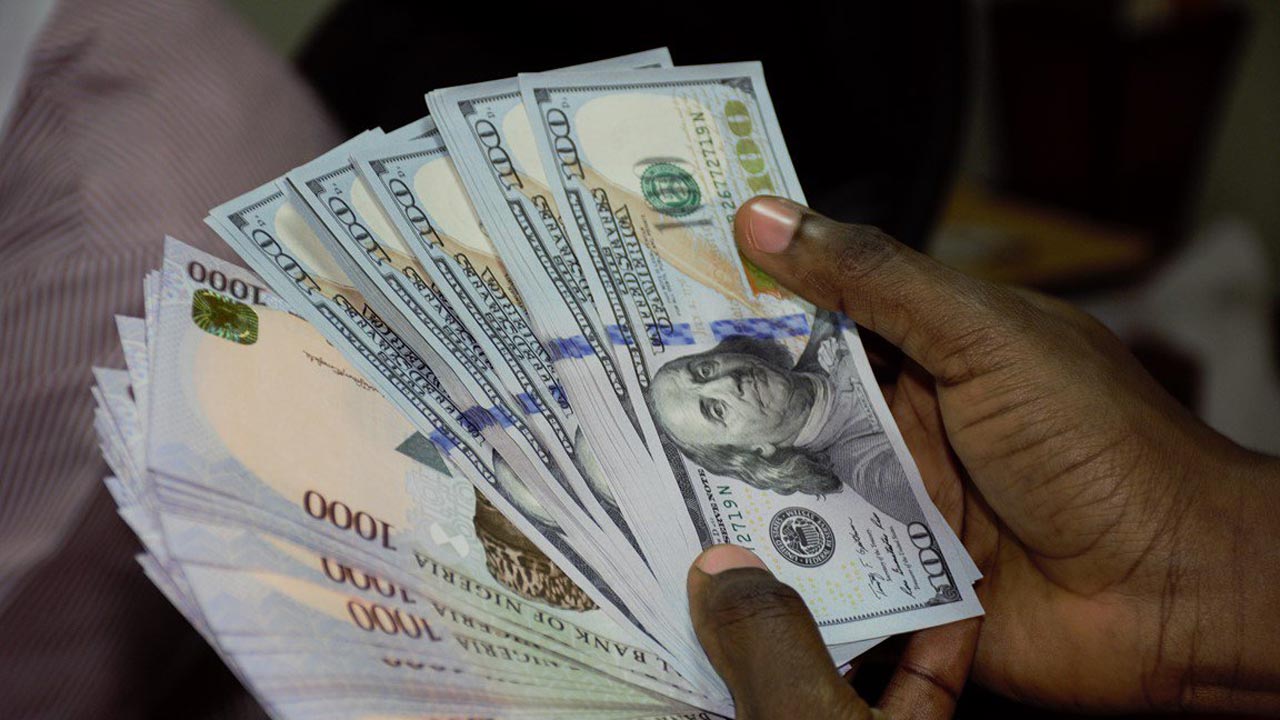
The Nigerian Naira staged a significant comeback in Tuesday’s trading session, hitting its strongest valuation in a month as aggressive central bank interventions and shifting global sentiments began to reshape the currency landscape.
Closing at “N1,345/$” at the official window, the Naira reached a level of stability not seen since mid-February. The performance suggests a cautious optimism among traders, even as the nation’s primary defense fund—the external reserves—showed signs of thinning under the pressure of maintaining this momentum.
Data released by the Central Bank of Nigeria (CBN) painted a picture of a remarkably disciplined market. Unlike the volatile swings that characterized the start of the year, Tuesday’s session saw the naira trade within a tight corridor.
Intraday High: N1,340/$
Intraday Low: N1,355/$
Weighted Average: N1,344.55/$
This narrow spread indicates a reduction in speculative bidding, a primary goal of the current administration’s monetary tightening. However, the victory comes at a cost.
Gross external reserves dipped to “$49.86 billion,” down from “$50.45 billion” in February. While still robust, the $590 million decline underscores the heavy lifting required by the CBN to keep the Naira afloat amid ongoing structural reforms.
The Naira’s ascent was aided by a cooling U.S. dollar. After a blistering run to a 10-month high—driven by “safe-haven” buying as conflict in the Middle East entered its third week—the U.S. Dollar Index (DXY) retreated to 99.56.
Investors appear to be recalibrating their portfolios ahead of a “Super Wednesday” of central bank activity. The U.S. Federal Reserve, along with the European Central Bank (ECB) and the Bank of England, is expected to hold interest rates steady.
This pause in the global “rate-hike cycle” has provided much-needed breathing room for emerging market currencies like the Naira.
International Snapshot
While the Naira found its footing, other major pairs showed mixed results:
Japanese Yen: Strengthened to 158.91/$ as risk-averse investors sought safety.
Euro: Held flat at $1.1538.
British Pound: Maintained a steady position at $1.3353.
As the market awaits the Federal Reserve’s policy announcement tomorrow, all eyes remain on the CBN’s ability to sustain this N1,340–N1,350 range.
For Nigerian importers and consumers, the reprieve is welcome, but with reserves trending downward, the sustainability of this “stronger Naira” remains the burning question on Broad Street.
WHAT YOU SHOULD KNOW
The Naira’s climb to N1,345/$—its strongest position in a month—is a fragile victory. While the currency has stabilized due to a cooling U.S. dollar and aggressive Central Bank support, this gain has come at the expense of a $590 million dip in national external reserves.
The naira’s strength currently depends more on the CBN’s willingness to spend its “war chest” than on a fundamental shift in trade, especially as global markets await a wave of interest rate decisions from the world’s major central banks this week.