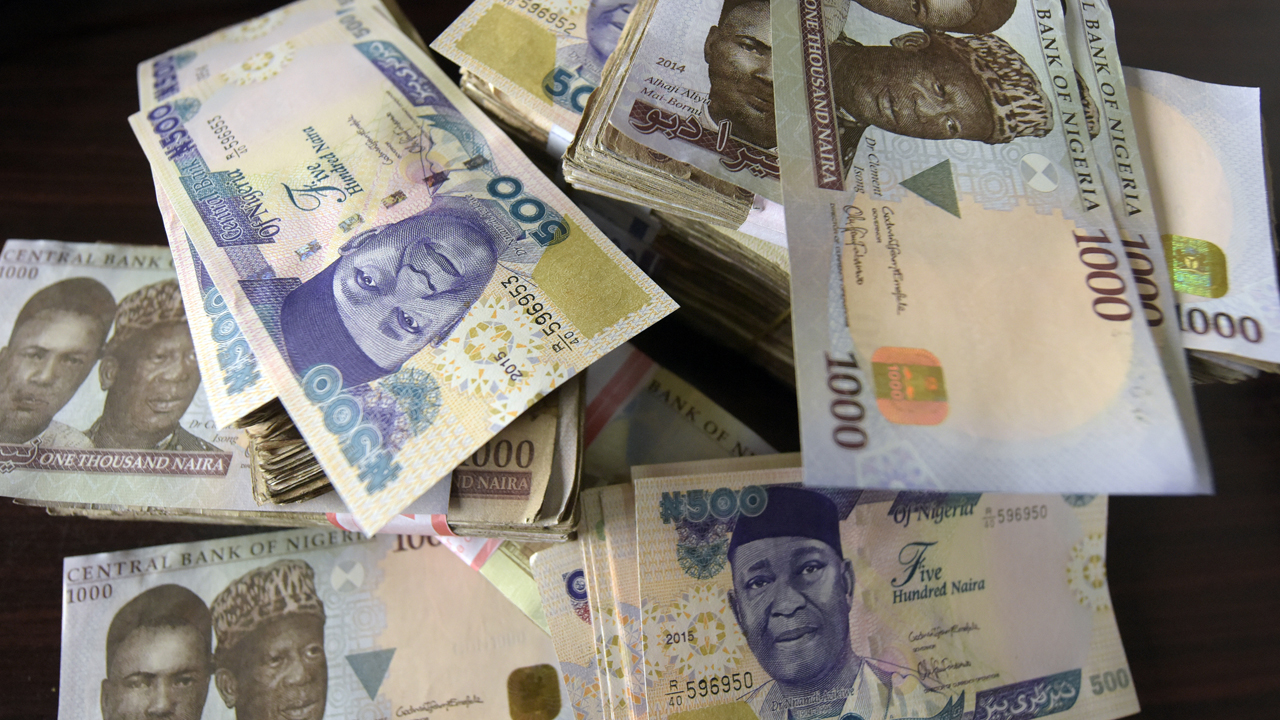
The Nigerian naira demonstrated signs of stabilization in Wednesday’s early trading, marking a modest recovery in both official and parallel markets as the Central Bank of Nigeria’s ongoing interventions begin to yield measurable results.
In the unofficial black market, the local currency appreciated slightly to N1,495 per dollar from N1,500, representing a marginal gain that market observers view as part of a broader stabilization trend. Concurrently, the official Nigerian Foreign Exchange Market (NFEM) recorded the naira trading at N1,464 to the dollar, an improvement from Monday’s rate of N1,464.5, according to data released by the Central Bank of Nigeria.
The movements, though modest in scale, signal what currency traders are calling a “short-term stabilization” amid persistent economic headwinds that have buffeted Africa’s largest economy throughout the year. However, the continued divergence between official and parallel market rates—with the black market premium standing at approximately 2%—underscores lingering supply-demand imbalances in Nigeria’s complex foreign exchange ecosystem.
Market analysts point to three primary factors driving the naira’s volatility: the Central Bank’s strategic market interventions, fluctuating dollar liquidity levels, and variable import demand pressures. These forces have created a dynamic trading environment where the currency has oscillated significantly, particularly in the parallel market, where retail buyers and small businesses typically source foreign exchange outside official channels.
The recent appreciation represents a pullback from higher exchange rates recorded earlier in the month, offering cautious optimism to businesses and households grappling with import costs and inflation.
Looking ahead, CardinalStone Research, one of Nigeria’s leading investment banking firms, has issued a bullish forecast for the naira’s trajectory through the remainder of 2025. The firm’s analysts predict the currency will close the year trading between N1,400 and N1,450 to the dollar, suggesting potential gains of up to 6% from current black market levels.
The investment bank’s optimism hinges on several macroeconomic factors converging favorably. Chief among these is the anticipated continued decline in Nigeria’s inflation rate, which CardinalStone believes will strengthen the naira’s purchasing power and attractiveness to investors. This disinflationary trend, coupled with a persistent current account surplus—indicating Nigeria is earning more foreign currency than it spends—creates fundamental support for currency appreciation.
Additionally, CardinalStone highlighted the steady accumulation of external reserves as a critical pillar supporting their projection. Nigeria’s foreign exchange reserves serve as a buffer against external shocks and provide the Central Bank with ammunition for market interventions when needed.
The currency’s performance in the coming months will likely depend on the CBN’s ability to maintain consistent liquidity provision to the official market, thereby narrowing the gap with parallel rates, while broader economic reforms continue to address structural imbalances in Nigeria’s foreign exchange system.
For now, Wednesday’s gains, though incremental, offer a glimmer of stability in what has been a turbulent year for the naira and the millions of Nigerians whose livelihoods depend on its value.
WHAT YOU SHOULD KNOW
The Nigerian naira has shown modest but encouraging signs of recovery, appreciating to N1,495/$ in the black market and N1,464/$ in the official market. The key takeaway: Nigeria’s currency appears poised for further strengthening through year-end, with leading investment bank CardinalStone projecting rates between N1,400 and N1,450/$ by December 2025.
This optimism is anchored on three critical factors working in the naira’s favor—declining inflation rates, a sustained current account surplus, and growing external reserves. While the gap between official and parallel market rates persists, signaling ongoing structural challenges, the combination of Central Bank interventions and improving macroeconomic fundamentals suggests the worst of the naira’s volatility may be behind us.
For businesses and households, this translates to potential relief from spiraling import costs and renewed currency stability in the months ahead.