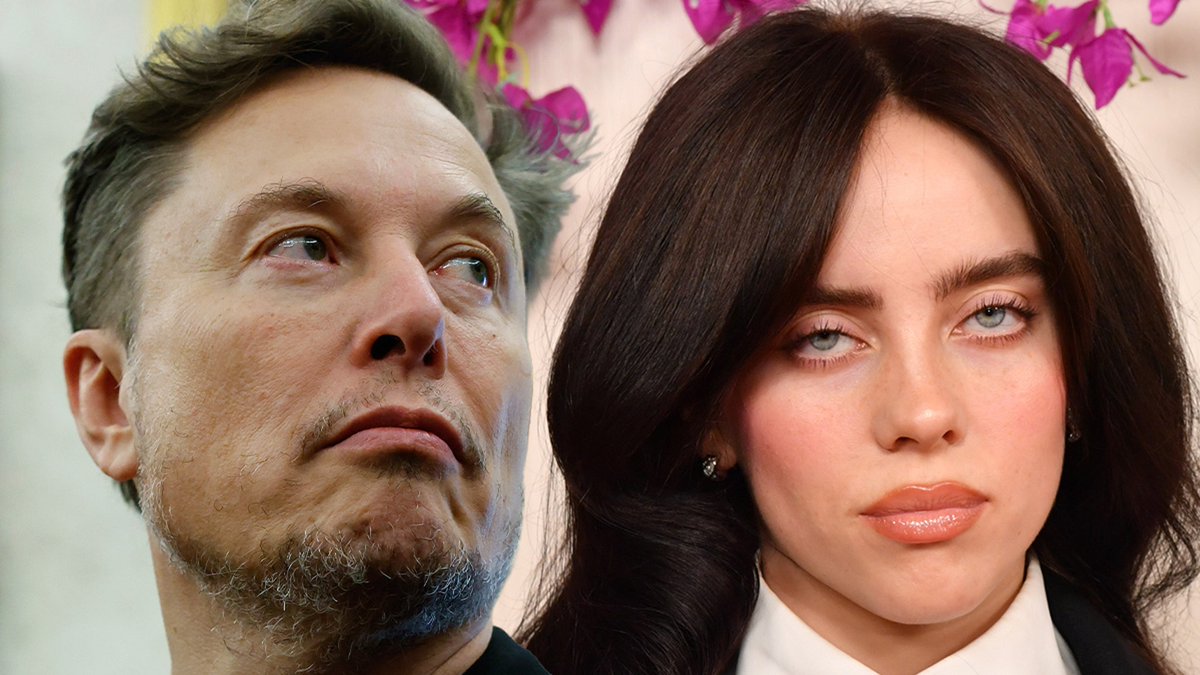
The simmering tensions between the world’s wealthiest entrepreneur and one of pop music’s most socially conscious voices exploded into public view this week, as Elon Musk fired back at Grammy-winning artist Billie Eilish following her blistering attack on his accumulation of wealth.
The confrontation began last Thursday when Eilish, 23, unleashed a profanity-laced tirade against the Tesla and SpaceX CEO on her Instagram Story. The “Bad Guy” singer didn’t mince words, calling Musk a “f***ing pathetic p***y b**** coward” as she took aim at what she characterized as his failure to use his vast fortune for humanitarian purposes.
Her criticism came on the heels of reports about a new Tesla compensation package that could potentially make Musk the world’s first trillionaire. In her Instagram post, Eilish laid out a stark vision of what she believes the billionaire could accomplish with his wealth, suggesting he could single-handedly end world hunger, rescue critically endangered species, or even finance the reconstruction of Gaza. Instead, she accused him of hoarding his fortune while global crises persist.
The tech entrepreneur remained silent for nearly a week before mounting his counterattack. On Wednesday evening, Musk took to X, the social media platform he owns, to respond. Reposting a screenshot of Eilish’s Instagram Story, he delivered a dismissive retort: “She’s not the sharpest tool in the shed.”
The exchange represents more than just a celebrity spat—it highlights a growing cultural divide over extreme wealth concentration and the responsibilities of the ultra-rich. Eilish has positioned herself at the forefront of young celebrities willing to challenge billionaire power directly, even in rooms filled with them.
Last month, the singer made waves at the Wall Street Journal Innovator Awards, where she stood before an audience that included Meta CEO Mark Zuckerberg and other titans of industry. “I love you all but there’s a few people in here that have a lot more money than me,” she told the gathering. “And if you’re a billionaire, why are you a billionaire?”
Eilish’s critique isn’t merely rhetorical. Shortly after that speech, she announced plans to donate $11.5 million in proceeds from her “Hit Me Hard and Soft” tour to causes including food equity, climate justice, carbon reduction, and combating the climate crisis—putting her money where her mouth is in a way she clearly believes billionaires should emulate.
The timing of the clash is particularly notable given ongoing debates about wealth inequality and the concentration of resources among a small number of individuals. Musk, whose net worth fluctuates with Tesla’s stock price but has been estimated at over $200 billion, has previously defended his wealth by arguing that most of it is tied up in company stock and that he’s using his resources to advance space exploration and sustainable energy.
For now, Eilish has not responded to Musk’s latest jab. Whether the singer will fire another salvo in this war of words remains to be seen, but given her track record of speaking truth to power, industry observers aren’t betting on her backing down.
As this modern David-versus-Goliath story unfolds on social media, it raises fundamental questions that resonate far beyond celebrity feuds: What obligations do billionaires have to society? Can individual wealth truly solve systemic problems? And in an age of unprecedented inequality, who gets to decide how concentrated wealth should be used?
One thing is certain: this debate isn’t ending anytime soon, and with personalities as outspoken as Musk and Eilish involved, the public will be watching closely for the next chapter.
WHAT YOU SHOULD KNOW
Pop star Billie Eilish and billionaire Elon Musk are engaged in a public feud over wealth inequality. Eilish called Musk a “coward” for not using his fortune—potentially making him the first trillionaire—to address global crises like world hunger or Gaza’s reconstruction.
Musk dismissed her as “not the sharpest tool in the shed.” The clash underscores a deeper cultural debate: Eilish, who’s donating $11.5 million from her tour to climate and equity causes, represents growing pressure on billionaires to use their wealth for societal good.
The core question remains—do the ultra-wealthy have a moral obligation to solve global problems, or is criticizing how they spend their money misguided? This celebrity spat reflects a larger reckoning with extreme wealth concentration in America.