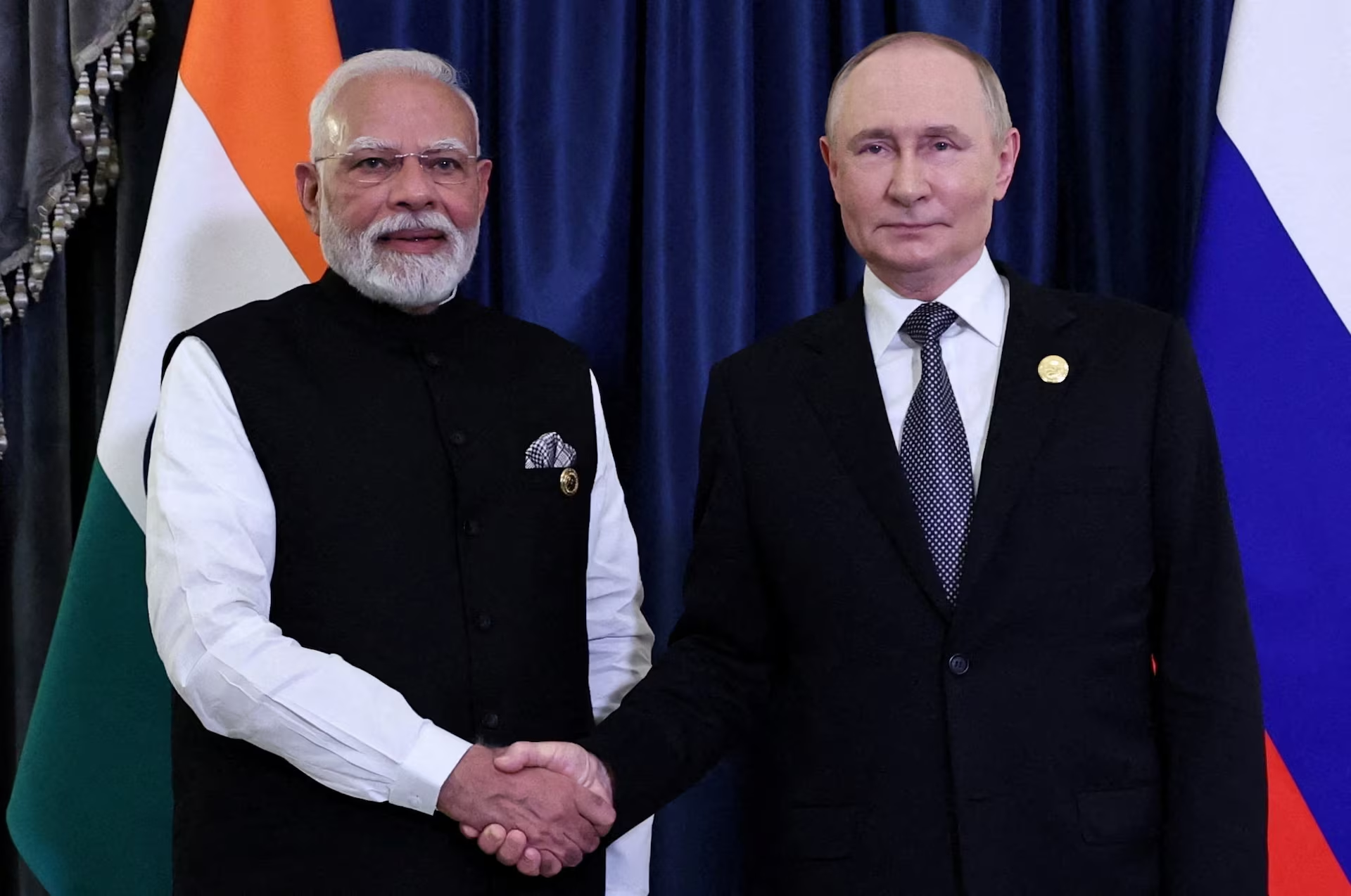
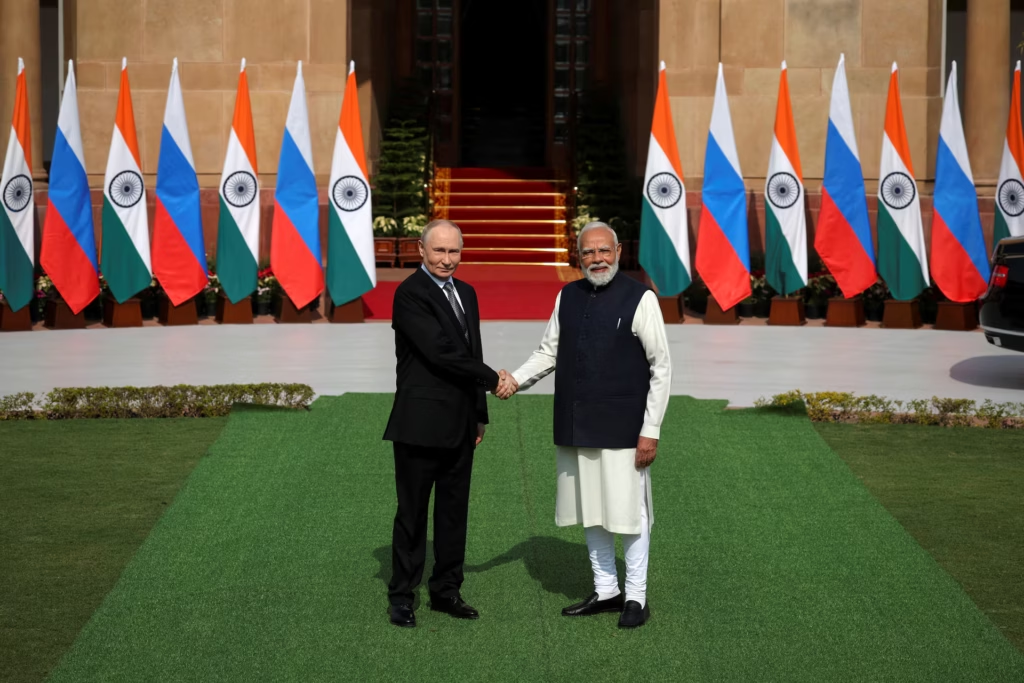
India’s Prime Minister Narendra Modi welcomed Russia’s President Vladimir Putin in New Delhi on Friday, placing defence cooperation and trade relations at the centre of their talks as India continues to navigate strong pressure from the United States to end its purchase of Russian oil.
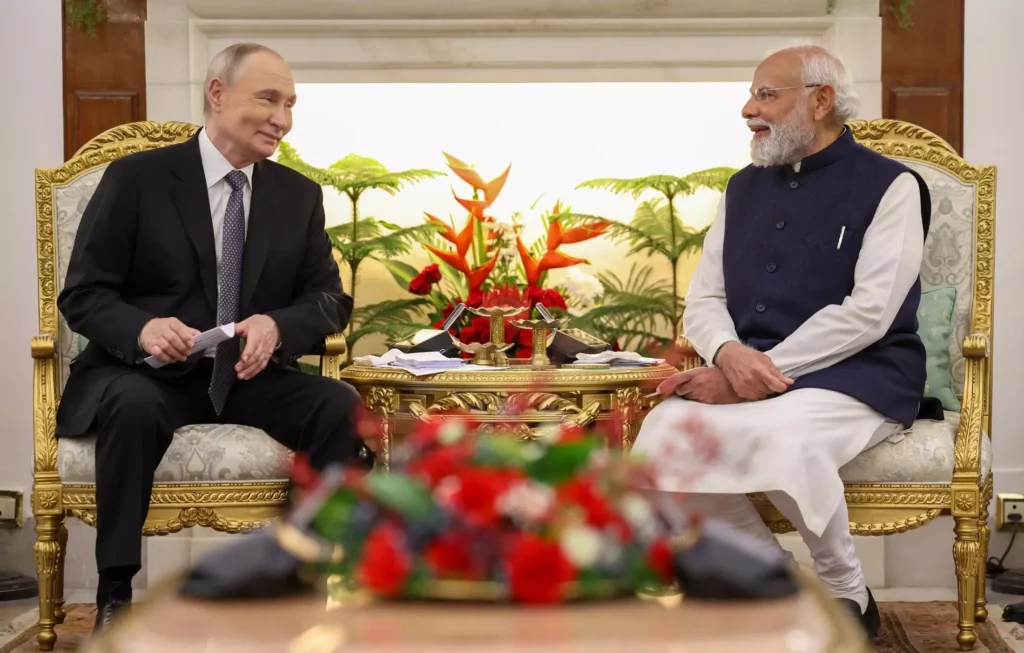
Putin received full state honours at the presidential palace before both leaders began their formal summit. His visit, the first since the outbreak of the Ukraine war, focuses on major defence agreements, joint production ventures, energy cooperation and broader economic engagement.
Seated beside Modi, Putin described the day’s agenda as “fruitful”, noting that several key documents across defence, aviation, technology and space will be addressed. Their meeting also touches on global tensions following the Russia-Ukraine war and the wider disruptions caused by tariffs imposed by US President Donald Trump.
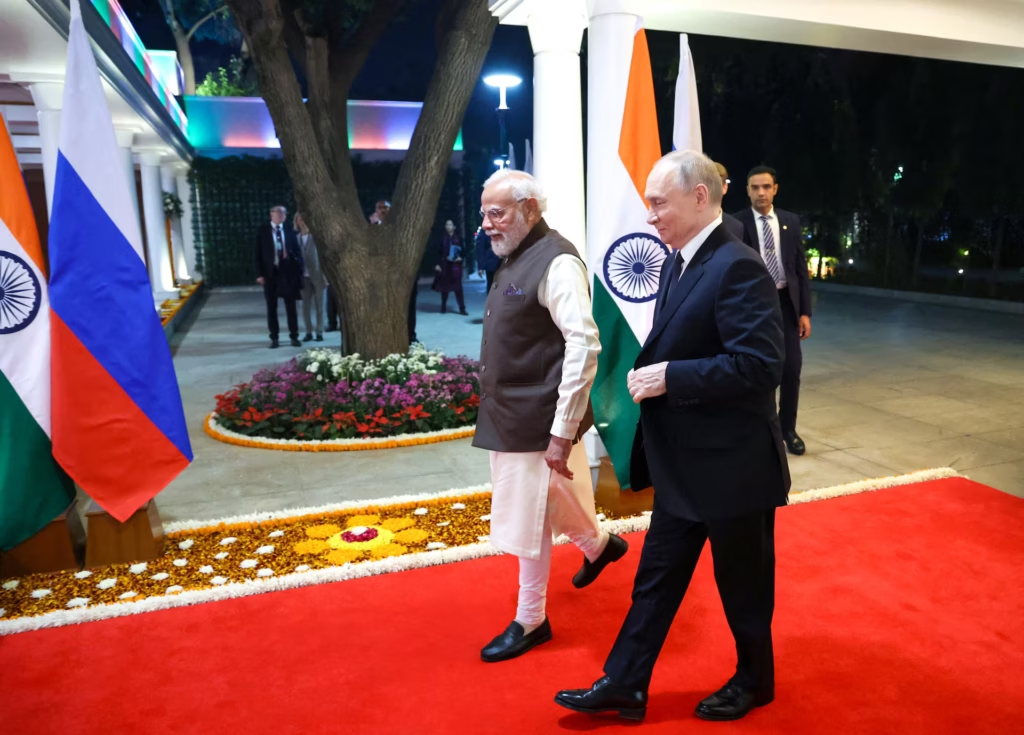
Modi personally welcomed Putin at the airport with a warm embrace on Thursday. The two leaders later shared a car ride to a private dinner, mirroring a similar gesture shown during their meeting in China last September. Modi wrote that the “India-Russia friendship is a time-tested one that has greatly benefitted our people.”
The symbolism comes as Trump enforces 50 percent tariffs on most Indian goods, arguing that India’s ongoing purchase of Russian oil indirectly funds Moscow’s war efforts. Putin said he had briefed Modi on developments in Ukraine and the work being done “with some partners, including the United States” toward a possible peaceful resolution. Modi reiterated that India stands “on the side of peace.”
Diplomatically, India is treading carefully, maintaining crucial Russian oil imports while managing tense tariff discussions with Washington. Experts note that such balancing is routine in India’s foreign policy strategy, especially as the country seeks to broaden its economic and strategic partnerships amid tariff-driven inflation and growing geopolitical uncertainty.
Putin will also meet with business leaders before attending a state banquet hosted by President Droupadi Murmu. India, now the world’s most populous nation, has become a key market for Russian oil after Europe blocked most Russian energy imports due to the Ukraine war. Putin recently told India Today that Modi is “not someone who gives in to pressure.”
Despite long-standing defence ties, Russia’s share of Indian arms imports has dropped from 76 per cent in 2009-13 to 36 per cent in 2019-23. India seeks to renegotiate defence purchases, explore advanced equipment, and secure wider access to Russia’s market to reduce its trade imbalance. Although bilateral trade reached $68.7 billion in 2024-25, Indian exports contributed only $4.88 billion.
What you should know
India’s meeting with Russia highlights its growing effort to balance global pressures while protecting its economic interests.
Modi’s engagement with Putin underscores long-standing defence ties and India’s dependence on discounted Russian oil, even as heavy US tariffs pose new challenges. The visit aims to strengthen cooperation in defence, energy and trade at a time when India is diversifying global partnerships.
The leaders also addressed the Russia-Ukraine conflict and potential diplomatic pathways. With a widening trade imbalance and evolving geopolitical shifts, India is using this visit to secure strategic advantages without straining relations with key global powers.