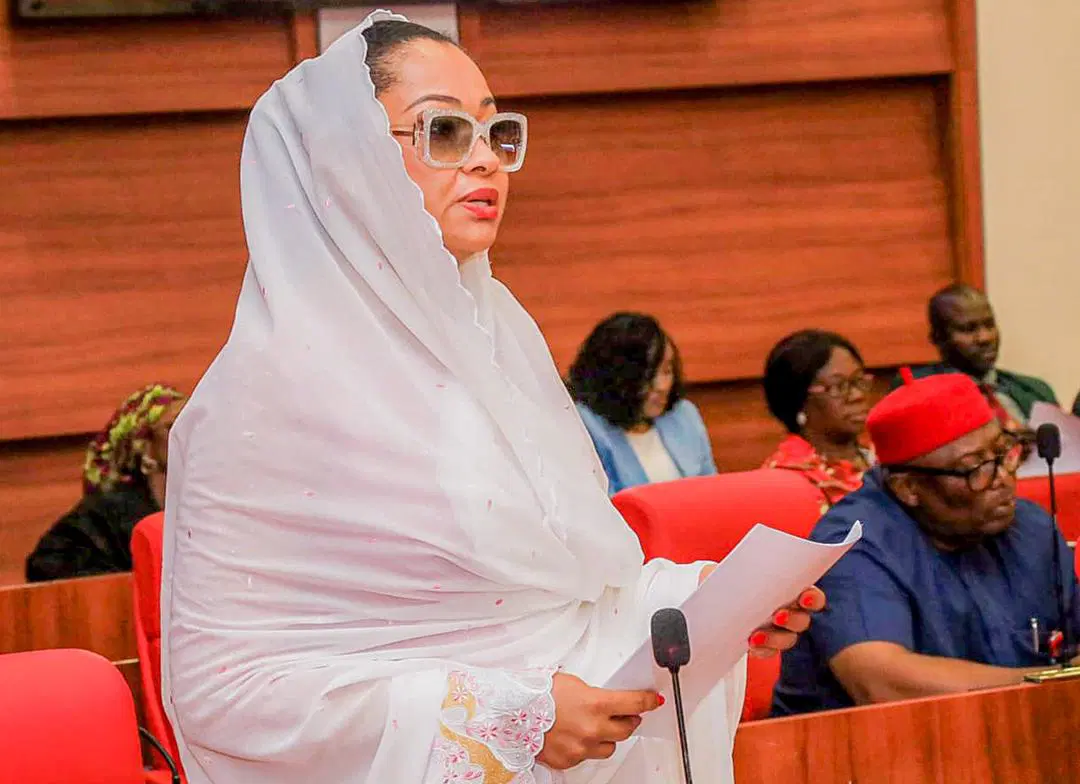
In what has become a recurring flashpoint between Nigeria’s booming film industry and Ghanaian television networks, prominent Nollywood actress Mercy Johnson has publicly called out a Ghanaian broadcaster for airing her movie without authorization.
Johnson took to Instagram to express her outrage after discovering that Blazing TV, a Ghanaian television station, was broadcasting her film “The Firstborn” without securing proper licensing or consent. The actress learned of the unauthorized screening through a fan who alerted her via social media.
“Ghana, Blazing TV. How is this even ok?” Johnson wrote in her Instagram post, accompanied by a screenshot of the fan’s message. “Blazing TV in Ghana is airing my movie, The Firstborn, without my consent. How does this even make sense? I am speechless at the audacity of it all.”
The incident marks the latest chapter in an escalating dispute between Nigerian content creators and Ghanaian media outlets, raising questions about intellectual property enforcement and cross-border media regulation in West Africa.
Johnson’s complaint follows a pattern of similar grievances voiced by other Nollywood stars throughout 2024. In April, actress Bimbo Ademoye publicly called out Ghanaian television stations for broadcasting her films without authorization, directly appealing to high-ranking Ghanaian officials, including Communications Minister Sam George and National Film Authority CEO Kafui Danku, for intervention.
The same month saw filmmaker Omoni Oboli issue stark warnings to Ghanaian broadcasters over copyright violations, particularly concerning unauthorized uploads of Nollywood content on YouTube platforms. Oboli, despite acknowledging her affection for Ghanaian colleagues, criticized what she described as the “saturation” of Ghanaian television with unlicensed Nigerian content, threatening to escalate the matter to Ghana’s presidency.
These incidents highlight broader challenges facing Africa’s creative industries as digital distribution and cross-border broadcasting expand without corresponding legal frameworks. The unauthorized use of Nigerian content appears particularly prevalent among Ghanaian broadcasters, who benefit from the popularity of Nollywood productions among local audiences.
The controversy also underscores the economic implications for Nigerian filmmakers, who lose potential revenue when their content is broadcast without proper licensing agreements. As Nollywood continues its growth trajectory as one of the world’s largest film industries by volume, protecting intellectual property rights across regional markets has become increasingly critical for sustaining the sector’s economic viability.
Neither Blazing TV nor Ghanaian broadcasting authorities have publicly responded to Johnson’s allegations. The pattern of complaints suggests a systemic issue that may require diplomatic intervention or enhanced regional cooperation on intellectual property enforcement to resolve.
The ongoing disputes reflect the complex dynamics of West Africa’s evolving media landscape, where cultural affinity and shared languages facilitate content distribution, but legal frameworks struggle to keep pace with industry growth and technological advancement.
WHAT YOU SHOULD KNOW
Nigerian actress Mercy Johnson has joined a growing list of Nollywood stars publicly condemning Ghanaian TV stations for broadcasting their films without permission, highlighting a serious regional copyright enforcement crisis.
This systematic pattern of unauthorized content use—affecting multiple actresses, including Bimbo Ademoye and Omoni Oboli, throughout 2024—represents more than isolated incidents; it signals a breakdown in intellectual property protection that threatens the economic foundation of Africa’s largest film industry.
The controversy exposes the urgent need for stronger legal frameworks and diplomatic intervention to resolve cross-border media piracy in West Africa, as Nollywood’s continued growth depends on securing revenue streams from regional markets where its content is increasingly popular but inadequately protected.