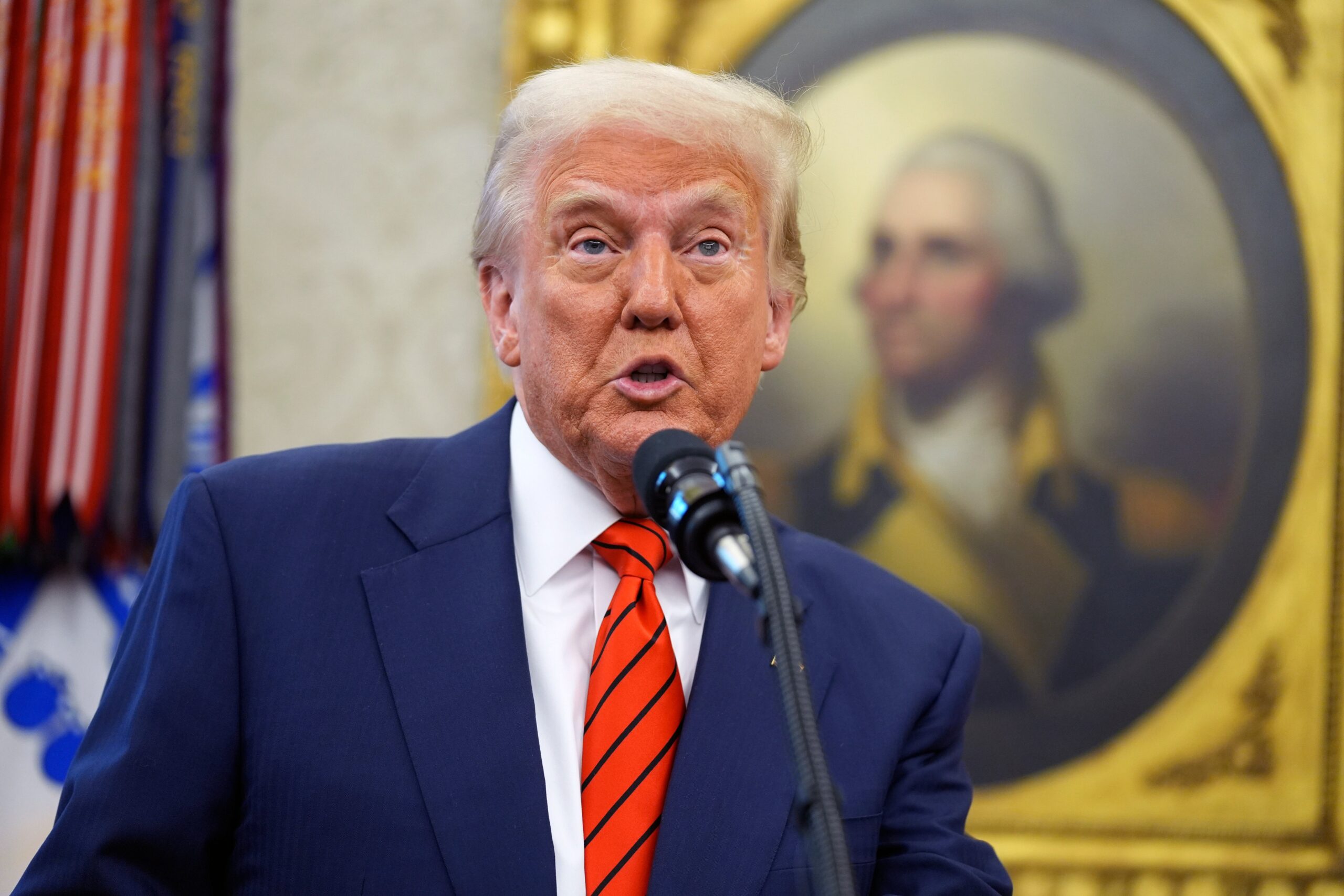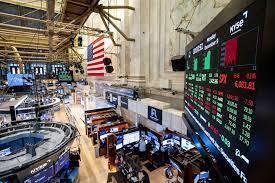
Wall Street emerged from a turbulent midday scare with modest gains on Wednesday, after markets were rattled by reports that U.S. President Donald Trump was considering firing Federal Reserve Chair Jerome Powell—a move that would mark an unprecedented intrusion into the central bank’s independence.
The volatility unfolded rapidly late Wednesday morning when Bloomberg News, citing an unnamed White House official, reported that Trump was exploring the possibility of replacing Powell. Almost simultaneously, Reuters followed with a similar report, citing its own source, confirming Trump’s openness to ousting the Fed chair.
Within minutes, the markets reacted: major U.S. indexes tumbled, the dollar slipped, and Treasury yields surged—a classic sign of investor unease. The S&P 500 sank by as much as 1%, the Nasdaq Composite fell 1.1%, and the CBOE Volatility Index (VIX) spiked to a three-week high, signaling rising investor anxiety.
However, calm returned just as quickly as it was lost when Trump publicly denied the reports, even while continuing his sharp criticism of Powell’s handling of interest rates. “One purpose of this, I suspect, was testing the market to see how it feels about this scenario,” said Alex Morris, Chief Investment Officer at F/m Investments, hinting at a possible strategic leak.
By early afternoon, markets had largely recovered. The Dow Jones Industrial Average rose 133 points (0.30%) to 44,156.42. The S&P 500 climbed 11.36 points (0.18%) to 6,255.12, and the Nasdaq edged up 26.92 points (0.13%) to 20,704.72.
Behind the headlines lies a broader tension: Trump has repeatedly lambasted Powell for not lowering interest rates fast enough, accusing the Fed of stifling economic growth. The central bank, however, has stood its ground, insisting on clearer data—especially around inflationary pressures linked to the administration’s aggressive tariff policies—before making any moves.
Wednesday also marked the second day of the earnings season, but strong reports from major banks weren’t enough to lift financial shares. Despite reporting a 22% earnings surge, Goldman Sachs gained only 0.4%. Bank of America and Morgan Stanley, which also posted stronger-than-expected profits from their trading operations, saw their stocks decline 0.6% and 2.2%, respectively.
Meanwhile, semiconductor stocks, which had soared earlier in the week on news that Nvidia would be allowed to sell its H2O chips in China, pulled back. The PHLX Semiconductor Index fell 1.2%, reversing gains that had pushed it to a 12-month high on Tuesday.
Despite the brief recovery, analysts say Wednesday’s episode underscores lingering uncertainty in markets over both economic policy direction and Trump’s unpredictable relationship with the Federal Reserve.
Although markets regained footing after President Trump denied firing Fed Chair Jerome Powell, the episode laid bare the fragility of investor confidence and highlighted the brewing standoff between the White House and the central bank over interest rate policy.
WHAT YOU SHOULD KNOW
Markets briefly plunged on Wednesday after reports claimed President Trump might fire Fed Chair Jerome Powell, highlighting investor fears over political interference in monetary policy. Although Trump denied the reports, the incident revealed ongoing tensions and uncertainty around interest rate decisions.