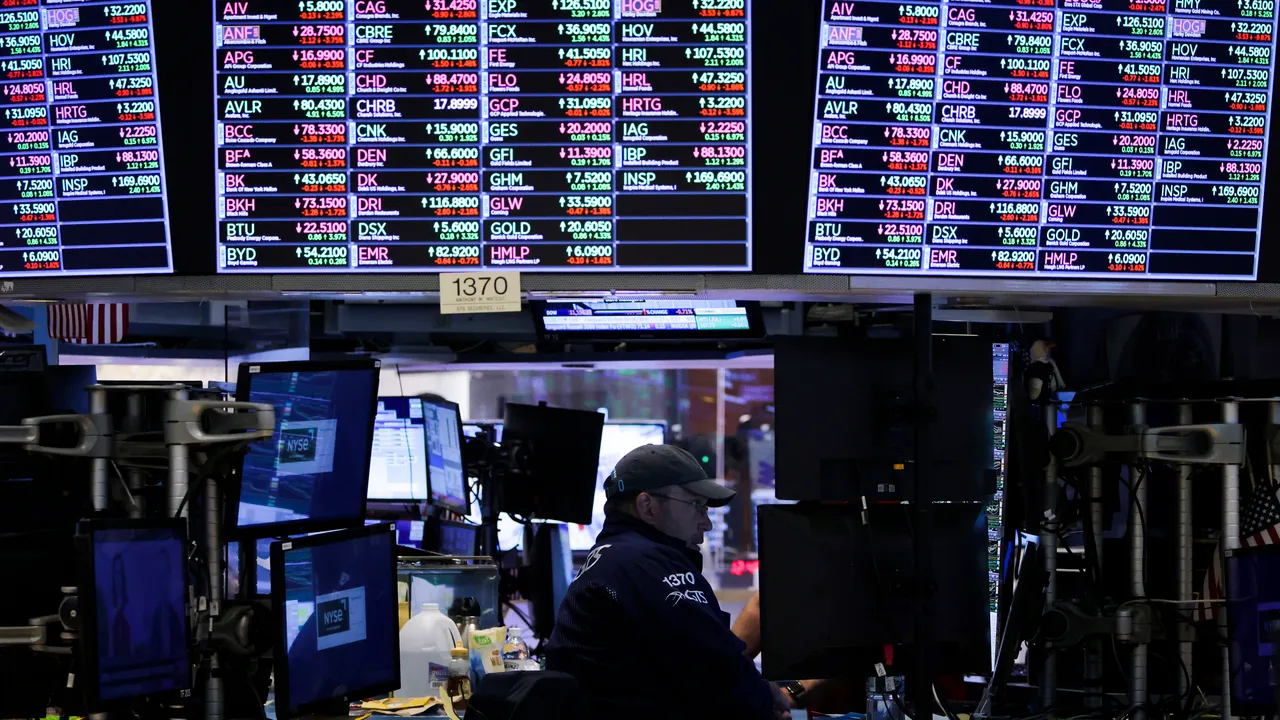
U.S. equity markets opened Wednesday under pressure, extending a technology-driven decline that has rattled investor confidence just days before Federal Reserve officials convene for their closely watched Jackson Hole symposium.
Futures contracts on major indices pointed to another challenging session, with Dow e-minis down 47 points, S&P 500 e-minis falling 6.75 points, and Nasdaq 100 e-minis declining 37.5 points as of 7:22 a.m. ET. The modest declines masked deeper concerns about market valuations and the trajectory of monetary policy.
Retail Earnings Paint Mixed Consumer Picture
The morning’s focus centered squarely on earnings from bellwether retailers, whose results serve as a critical gauge of American consumer health. Target Corporation delivered a sobering assessment, with shares plunging 10% in premarket trading following the announcement of new leadership and the company’s decision to maintain conservative annual forecasts first lowered in May.
The discount retailer’s struggles reflect broader challenges facing companies dependent on discretionary spending, as consumers increasingly prioritize essentials over non-essential purchases. The leadership change signals recognition that Target’s traditional retail model may need recalibration in an evolving economic landscape.
Cosmetics giant Estee Lauder faced similar headwinds, with shares tumbling 7.6% after the company projected annual profits below analyst expectations. Management specifically cited tariff-related pressures as a key factor dampening outlook, underscoring how trade policy uncertainty continues to ripple through corporate America.
In contrast, Lowe’s Companies provided a rare bright spot, gaining 2.7% after raising its annual sales forecast and announcing an ambitious $8.8 billion acquisition of Foundation Building Materials. The home improvement retailer’s optimism suggests resilience in sectors tied to housing and infrastructure spending.
Technology Sector Under Scrutiny
Tuesday’s session marked the worst performance for both the S&P 500 and Nasdaq in more than two weeks, as investors began questioning elevated valuations in the technology sector that had powered much of the market’s recovery from April lows.
The selling pressure intensified amid reports that the Trump administration is exploring equity stakes in semiconductor companies receiving grants under the CHIPS Act. Sources familiar with the matter indicated this government involvement could fundamentally alter the industry’s relationship with federal support, adding regulatory uncertainty to an already complex landscape.
Semiconductor heavyweights Nvidia, Advanced Micro Devices, and Intel all traded marginally lower in premarket activity. The timing proves particularly significant with Nvidia’s quarterly results scheduled for August 27, an event many analysts view as pivotal for the broader technology sector’s near-term direction.
“For now, this looks like a mild and possibly necessary correction after an extremely strong run for this space,” noted Danni Hewson, head of financial analysis at AJ Bell. “Nvidia’s quarterly earnings next week now look even more crucial than they already were.”
Federal Reserve in Focus
Market attention will shift Wednesday afternoon to the release of minutes from the Fed’s July meeting, where policymakers opted to keep interest rates unchanged. The document, due at 2:00 p.m. ET, could provide crucial context ahead of the Jackson Hole Economic Symposium running August 21-23.
Fed Chair Jerome Powell’s Friday address has emerged as the week’s marquee event, with investors parsing every word for signals about future monetary policy. Current market pricing reflects expectations for a 25-basis-point rate cut in September, but some strategists warn against assuming certainty.
“Traders remain wary that Powell could strike a more hawkish tone, emphasizing tariff-driven inflation risks and pushing back against the degree of easing expected by the market,” cautioned Bas Kooijman, CEO of DHF Capital S.A.
Additional Fed communications are scheduled throughout the day, with remarks from Governor Christopher Waller and Atlanta Fed President Raphael Bostic potentially offering further policy insights.
Tariff Tensions Escalate
Trade policy concerns gained fresh urgency on Wednesday as the Commerce Department imposed 50% import levies on more than 400 steel and aluminum derivative products. The action represents the latest escalation in ongoing trade disputes and reinforces corporate warnings about inflationary pressures.
Recent economic data suggests tariff impacts have yet to fully materialize across the broader economy, leaving strategists cautious about market prospects. Many expect persistent uncertainty to cap gains, potentially leaving the benchmark S&P 500 to close the year near current levels despite recent record highs.
As markets navigate this confluence of corporate earnings, monetary policy uncertainty, and trade tensions, investors face the challenging task of balancing optimism about economic resilience against growing concerns about policy-driven headwinds that could reshape the investment landscape in the coming months.
WHAT YOU SHOULD KNOW
U.S. markets are at a critical juncture as three major forces collide: technology stocks are cooling off after massive gains, retail earnings reveal a cautious American consumer grappling with tariff-driven price pressures, and all eyes turn to Fed Chair Powell’s Friday speech at Jackson Hole for clues on September interest rate cuts.
While the economy shows resilience, mounting policy uncertainties around trade and monetary decisions could cap market gains and keep volatility elevated through year-end.