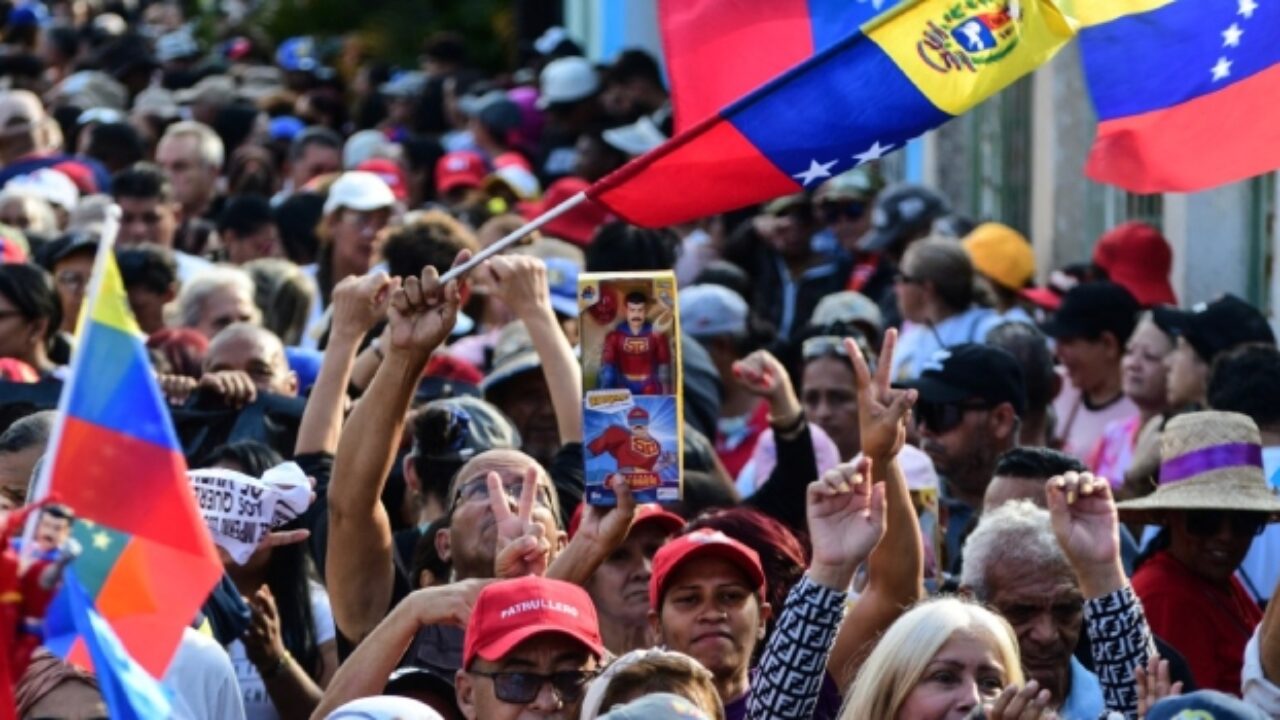
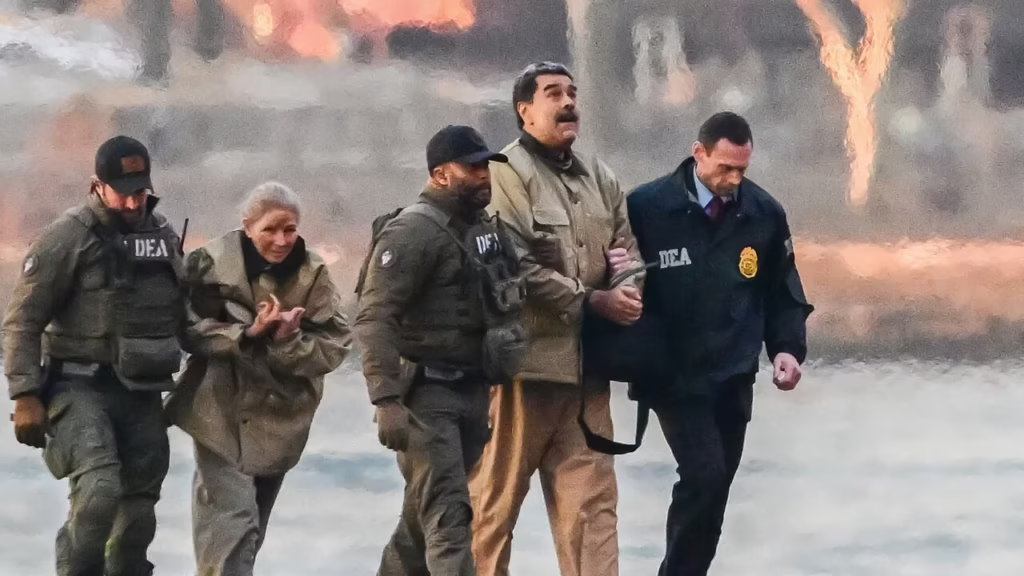
Hundreds of loyalists of ousted Venezuelan leader Nicolas Maduro took to the streets of Caracas on Saturday, one week after his dramatic capture by US forces, even as the interim authorities pushed ahead with efforts to repair relations with Washington and cautiously began freeing detainees.
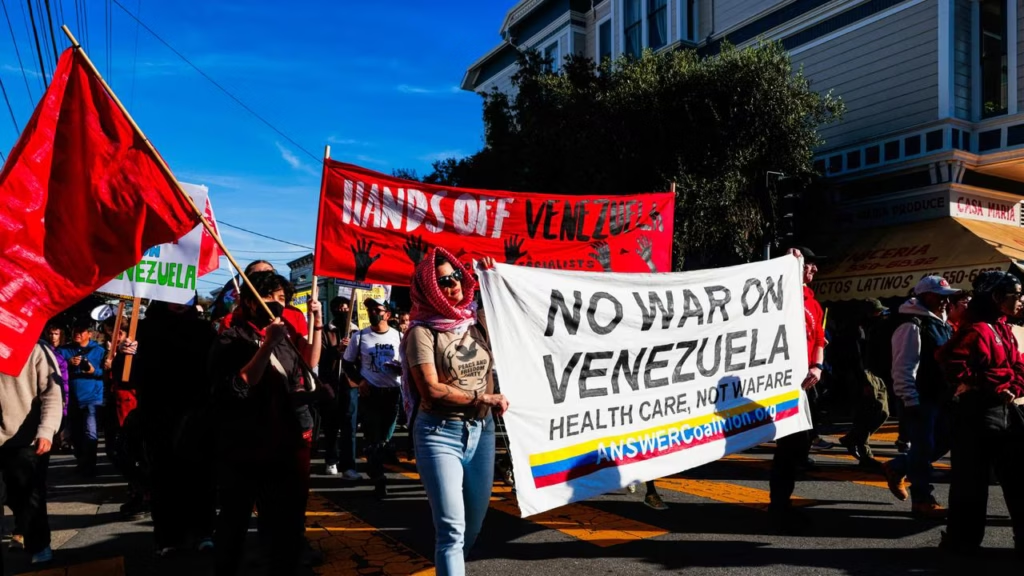
Carrying flags and placards bearing images of the moustachioed former president and his wife, Cilia Flores, roughly 1,000 demonstrators gathered in western Caracas, while a few hundred more assembled in the eastern Petare neighbourhood.
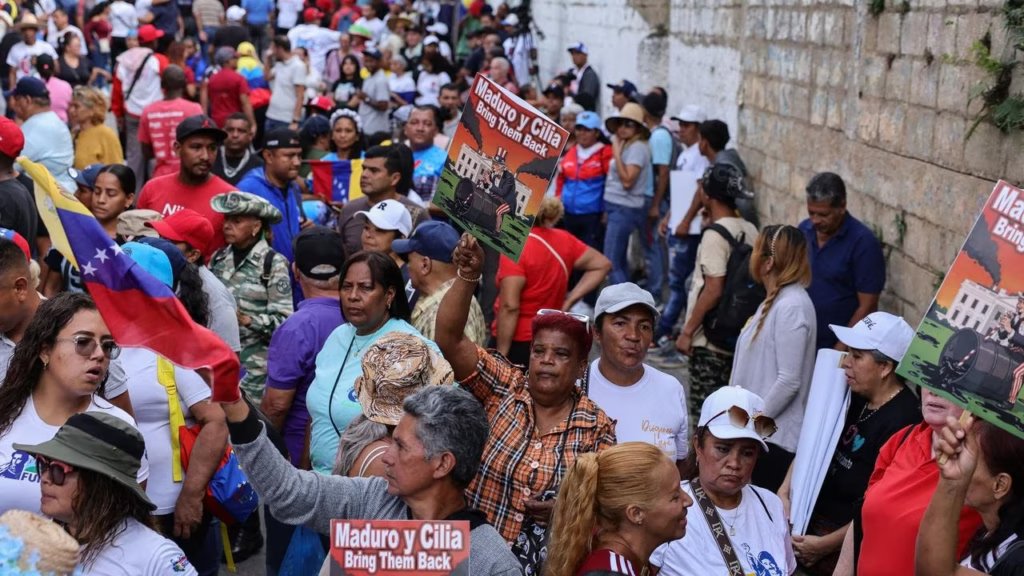
The turnout was notably smaller than the mass mobilisations Maduro’s allies have organised in the past.
“I’ll march as often as I have to until Nicolas and Cilia come back,” said 69-year-old protester Soledad Rodriguez, referring to the couple who were taken by US forces to New York to face drug-trafficking charges. “I trust blindly that they will come back—they have been kidnapped.”
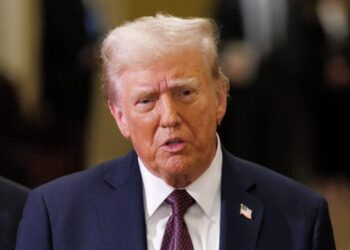
Strikingly, senior government figures were missing from the rallies. Officials have instead signalled a shift toward renewed diplomatic engagement with Washington, including discussions over cooperation linked to US President Donald Trump’s push for access to Venezuela’s oil resources.
Interim president Delcy Rodriguez did not attend the demonstrations, opting instead to appear at an agricultural fair, where she pledged on television that she would “not rest for a minute until we have our president back.” Other powerful figures, including Interior Minister Diosdado Cabello and Defence Minister Vladimir Padrino Lopez, were also absent from the protests.
– Diplomatic manoeuvres –
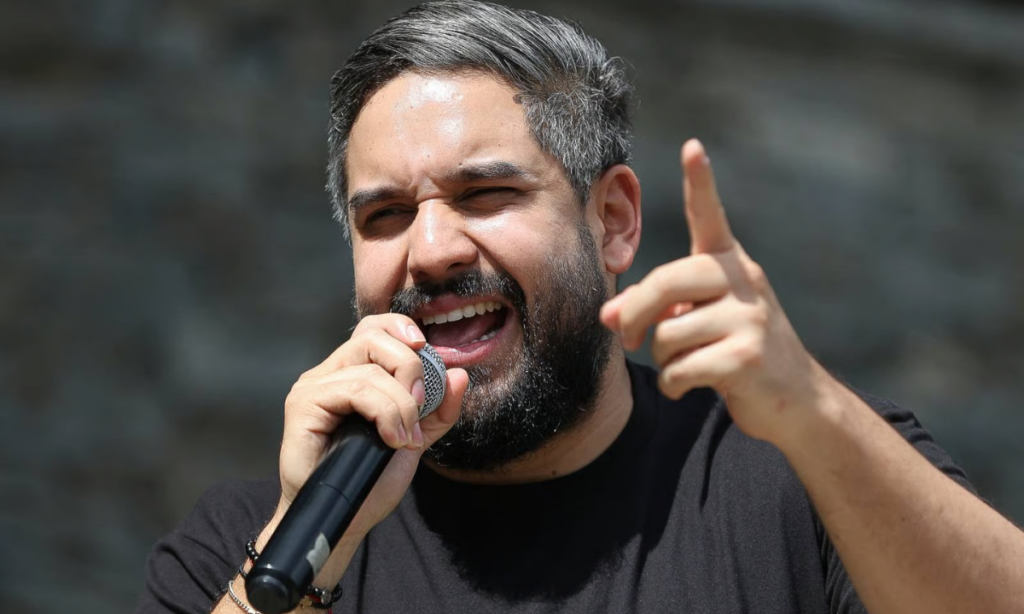
According to his son, Nicolas Maduro Guerra, the former leader claimed he was “doing well” in detention, as stated in a video released Saturday by his party.
Despite the shock that followed Maduro’s capture during deadly overnight raids on January 3, signs of tentative cooperation with Washington emerged on Friday, after Trump asserted he was now “in charge” of the South American nation.
Rodriguez said Venezuela would engage the United States via “the diplomatic route,” while Washington confirmed that US envoys visited Caracas on Friday to explore the reopening of the American embassy. The Venezuelan authorities declined to comment when asked whether the US delegation met directly with Rodriguez.
She has indicated a willingness to work with Trump on his demands related to Venezuela’s vast oil reserves, while simultaneously assuring supporters that the country is not “subordinate” to Washington.
Meanwhile, the US embassy in Colombia warned on Saturday that “the security situation in Venezuela remains fluid” and urged American citizens to leave the country “immediately” while commercial flights are still available.
– Anxiety over prisoners –
Outside Venezuela’s prisons, tension mounted as relatives waited for promised releases of political detainees. On Thursday, Rodriguez’s administration announced it had begun freeing prisoners jailed under Maduro, describing the move as a goodwill gesture that Washington publicly welcomed.
“Venezuela has started the process, in a BIG WAY, of releasing their political prisoners. Thank you! I hope those prisoners will remember how lucky they got that the USA came along and did what had to be done,” Trump wrote Saturday night on his Truth Social platform.
However, rights organisations and opposition figures said that by Saturday evening only 21 detainees had been freed, including several well-known opposition members. Advocacy groups estimate that between 800 and 1,200 political prisoners remain behind bars nationwide.
Families held candlelight vigils outside El Rodeo prison east of Caracas and El Helicoide, the intelligence service–run detention centre infamous for abuse allegations, holding placards bearing the names of detained relatives.
“I am tired and angry,” said 57-year-old Nebraska Rivas, who had been waiting outside El Rodeo for two nights in hopes of her son’s release. “But I have faith that they will hand him over to us soon.”
– Oil talks –
In the wake of Maduro’s arrest, Trump reiterated his intention to secure US access to Venezuela’s extensive oil reserves. The White House confirmed that he had signed an emergency order shielding US-held revenues from Venezuelan oil sales, preventing them from being claimed by courts or creditors.
Chevron remains the only American company authorised to operate in Venezuela under a sanctions exemption. At a White House meeting on Friday, Trump encouraged leading oil executives to invest in the country’s reserves, though the response was cautious.
Energy analysts note that Venezuela’s oil sector has suffered years of neglect, sanctions and mismanagement, leaving infrastructure in a fragile state.
What you should know
Venezuela is undergoing a volatile political transition following the capture of long-time leader Nicolas Maduro by US forces, an event that has reshaped domestic politics and foreign relations.
The interim government, led by Delcy Rodriguez, is attempting to balance outreach to Washington—particularly over oil cooperation—with efforts to retain the loyalty of Maduro’s political base. While small-scale protests show continued support for the former president, attention has shifted to diplomatic talks, oil revenue protection, and the slow release of political prisoners.
The situation remains tense, with security concerns, humanitarian pressure, and energy interests all converging.