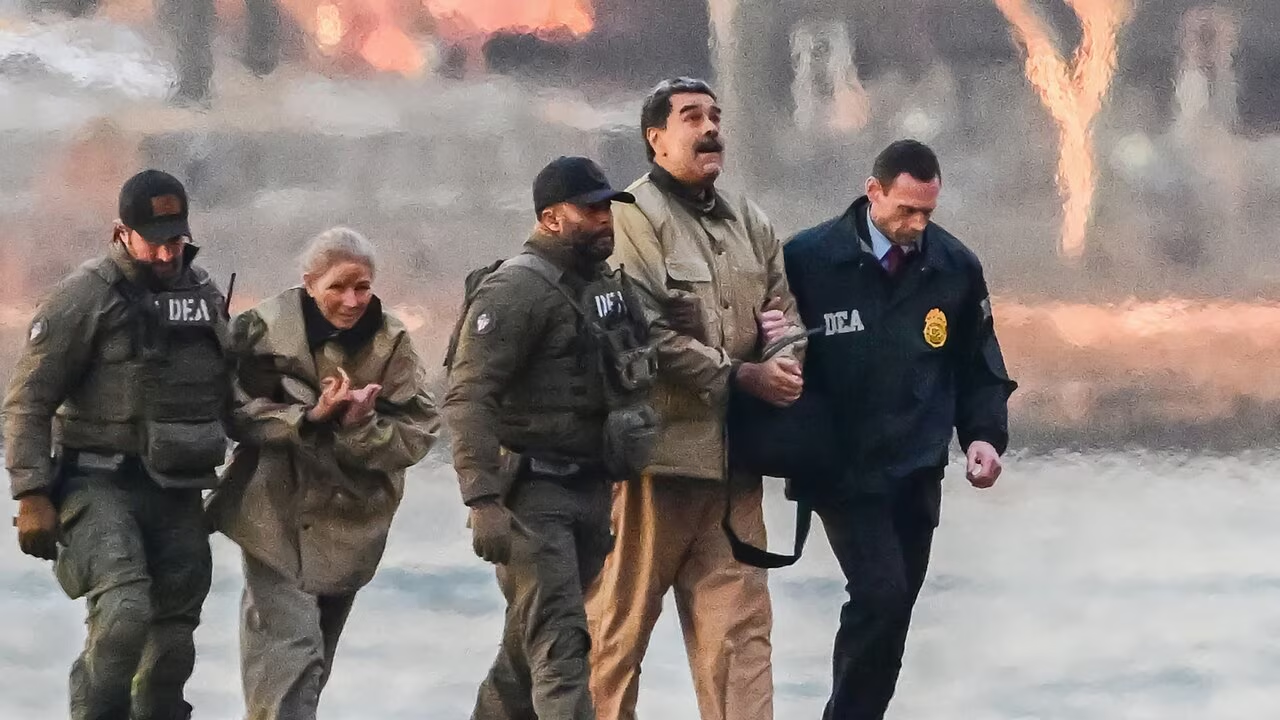
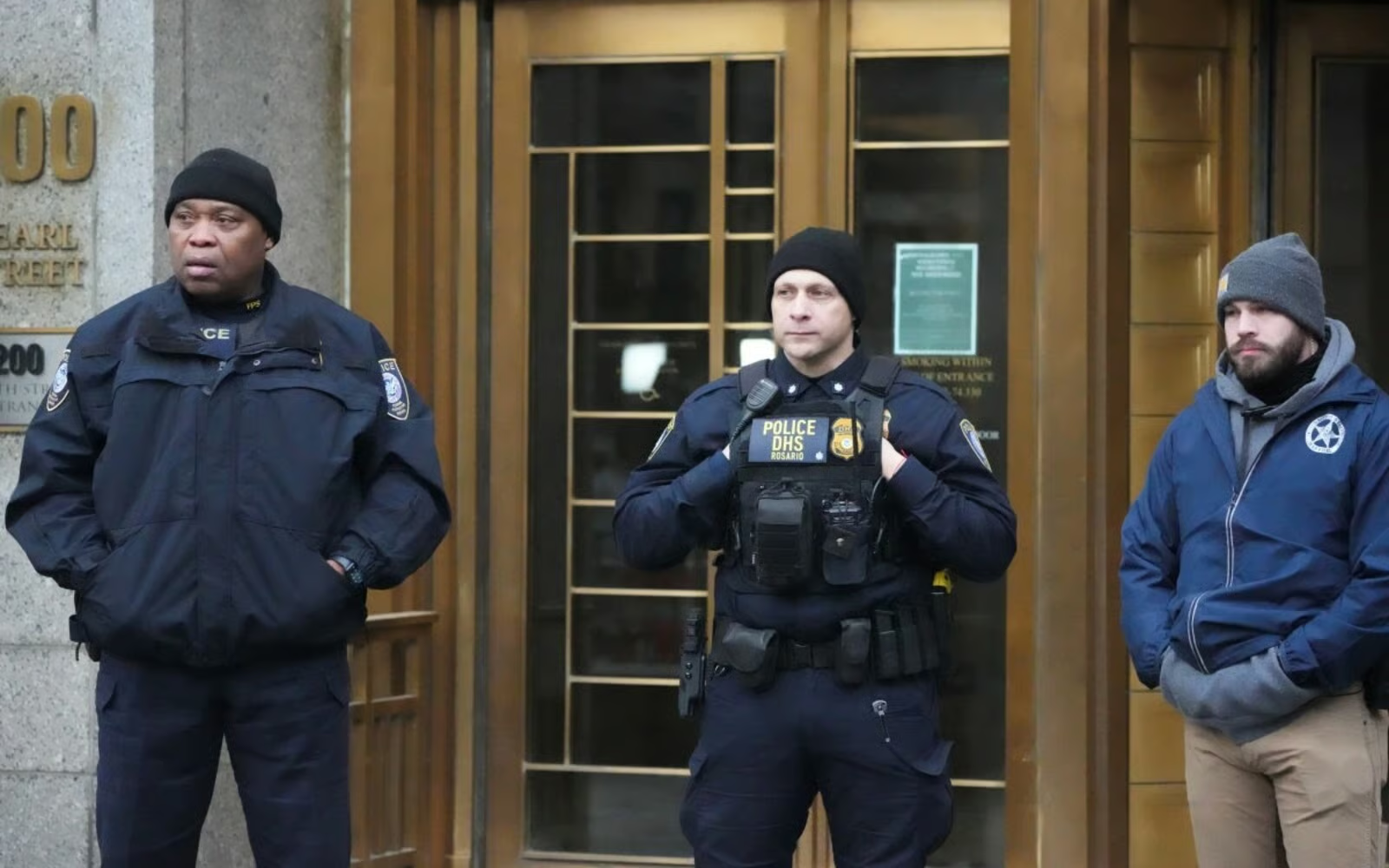
Deposed Venezuelan president Nicolas Maduro arrived at a New York courthouse on Monday, only days after being seized in Caracas during a shock United States military operation that has opened the door to Washington’s plans to assert control over the oil-rich South American nation.
Maduro, 63, is facing narcotrafficking charges alongside his wife, Cilia Flores.
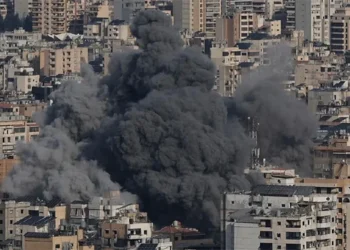
Both were forcibly removed from Caracas on Saturday in a US assault involving helicopters, fighter jet support and naval forces, as commandos moved in to capture the couple.
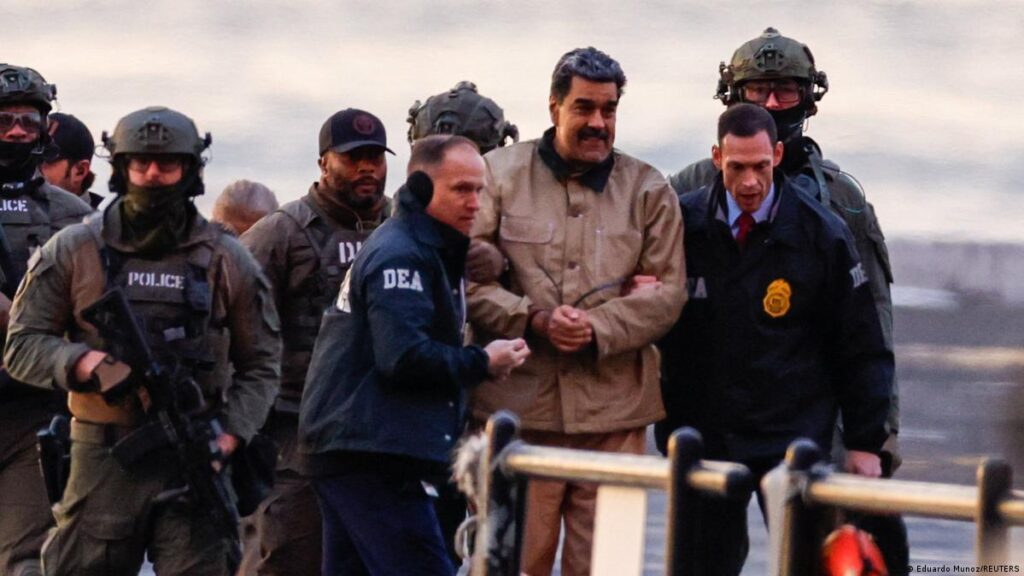
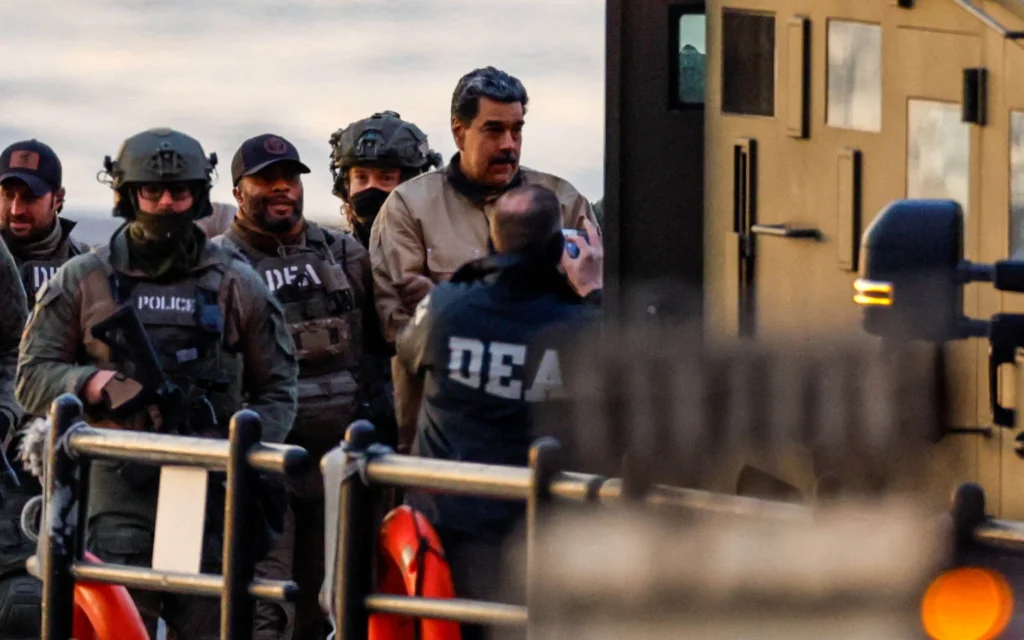
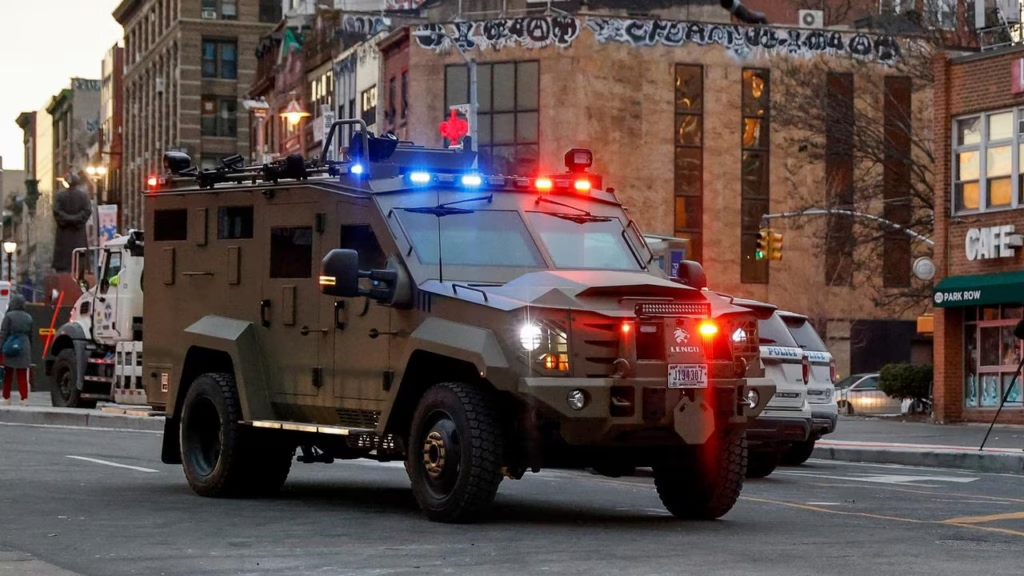
On Monday morning, Maduro was escorted to court in New York by heavily armed law enforcement officers, following his transfer by helicopter and armoured vehicle.
Attention is now fixed on Venezuela’s reaction to the fast-moving developments. Late on Sunday, interim leader Delcy Rodriguez softened her earlier defiant tone by signalling a willingness to cooperate with Washington.
“We extend an invitation to the US government to work together on an agenda for cooperation,” the former vice president said.
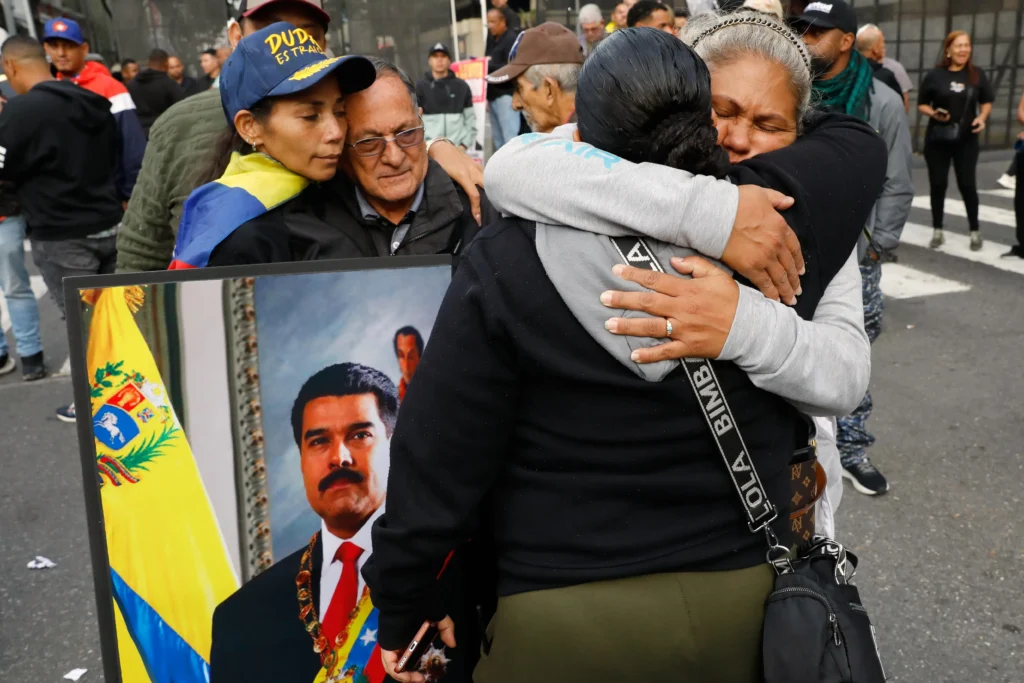
Earlier, around 2,000 Maduro supporters, including armed men riding motorcycles, gathered in Caracas, chanting and waving Venezuelan flags.
The Venezuelan military, which had remained loyal to Maduro, announced it recognised Rodriguez as interim leader and appealed for calm across the country.
No official death toll has been released, but Defence Minister Vladimir Padrino Lopez claimed that a “large part” of Maduro’s security team was killed “in cold blood,” along with military personnel and civilians.
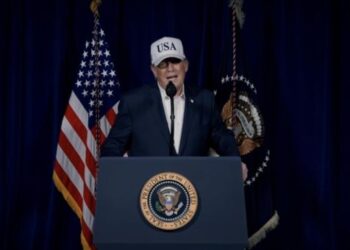
Trump said late Sunday that the United States was “in charge” of the South American nation, while US Secretary of State Marco Rubio described any discussion of elections following Maduro’s removal as “premature.”
When asked what Washington expected from Rodriguez, Trump said, “We need total access. We need access to the oil and other things in their country that allow us to rebuild their country.”
Venezuela holds the world’s largest proven oil reserves, and an increase in Venezuelan crude supply could worsen global oversupply and further pressure prices.
However, analysts caution that ramping up production would be difficult, slow and costly, given the country’s deteriorated infrastructure and political uncertainty. Oil prices dipped as markets assessed the potential impact.
The Trump administration says it retains leverage by blocking Venezuelan oil tankers and has warned that further military action remains possible. While no US forces are believed to be operating inside Venezuela, a large naval presence, including an aircraft carrier, is positioned offshore.
Opposition figure Edmundo Gonzalez Urrutia said that although the US intervention was “important,” without the release of political prisoners and recognition that he won the 2024 election, it was “not enough.”
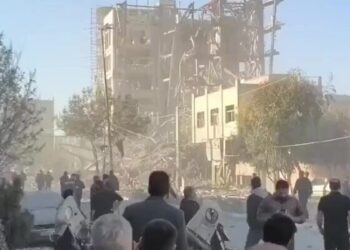
Details of the operation continued to emerge on Monday. Havana claimed that 32 Cubans were killed during the attack, while Trump suggested that Cuba itself was on the brink of collapse following Maduro’s capture.
“I don’t think we need any action. It looks like it’s going down,” Trump said.
At Venezuela’s request, the United Nations Security Council is scheduled to hold an emergency session on Monday.
Despite Maduro’s removal, many of his allies remain influential. The White House indicated it was not seeking full regime change, but rather Maduro’s exit and the installation of a cooperative government, even if led by his former associates.
Maduro, who was handpicked by Hugo Chavez before the late leader’s death in 2013, ruled alongside Flores and three other powerful figures: Delcy Rodriguez, now interim president; her brother, Jorge Rodriguez; and Interior Minister Diosdado Cabello.
“It’s like a club of five,” a diplomatic source in Caracas told AFP, speaking anonymously.
This approach has sidelined the Venezuelan opposition, which Washington says was denied victory by Maduro.
China, Russia and Iran, all longstanding allies of Caracas, swiftly condemned the US operation. Some American allies, including the European Union, also expressed concern.
China called for Maduro to be “immediately released,” describing the operation as a “clear violation of international law.” Iran said on Monday that its ties with Venezuela remained unchanged and also demanded Maduro’s release.
Colombian President Gustavo Petro labelled the US action an “assault on the sovereignty” of Latin America, warning it could spark a humanitarian crisis. He also dismissed Trump’s threats of military action against Colombia, after the US president accused him of drug trafficking.
What you should know
Maduro’s appearance in a New York court marks a dramatic escalation in Venezuela’s crisis, following an unprecedented US military operation that has reshaped the country’s power structure overnight.
While Washington insists it is not pursuing full regime change, its demand for “total access” to Venezuela’s oil has alarmed regional leaders and global powers.
Interim president Delcy Rodriguez’s shift toward dialogue reflects the pressure facing Caracas, even as protests, military claims of civilian deaths and international condemnation deepen uncertainty about Venezuela’s political future and sovereignty.