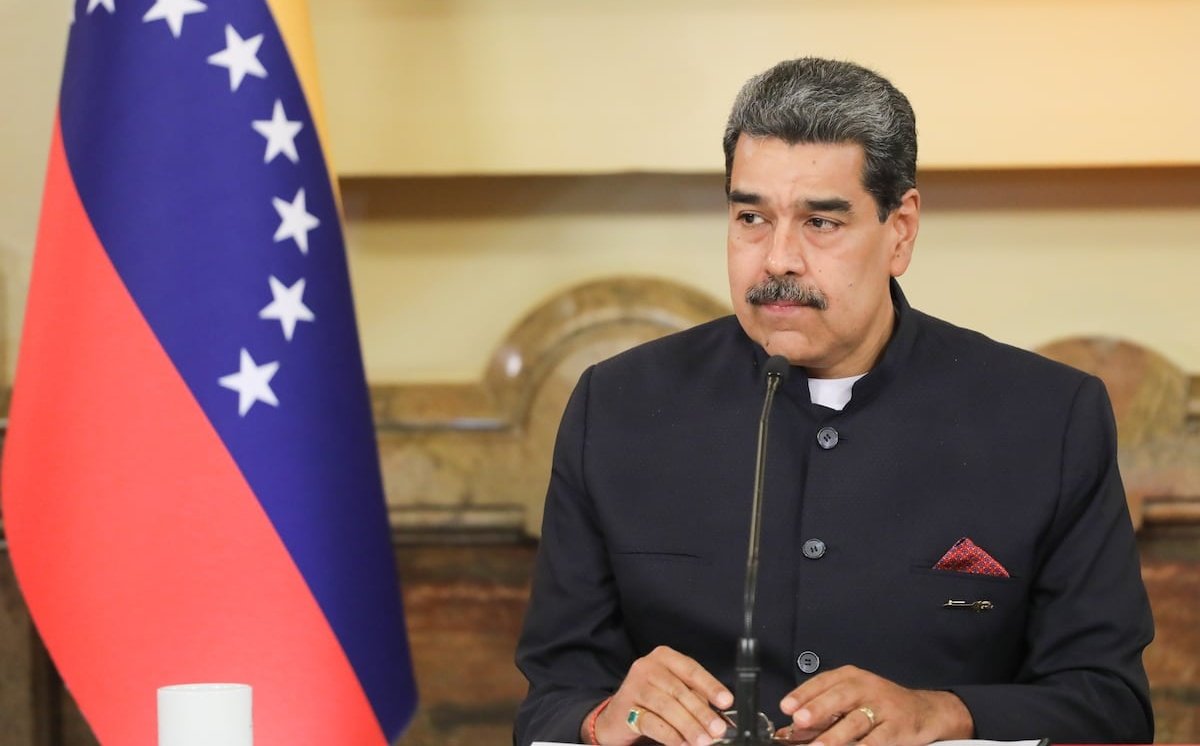
Venezuelan President Nicolas Maduro on Monday alleged that eight American naval vessels equipped with 1,200 missiles were positioned against his country, prompting him to declare Venezuela in a state of “maximum readiness to defend” itself.
The United States, which accuses Maduro of running a drug trafficking network, recently announced the deployment of warships to the southern Caribbean, describing the move as part of an anti-narcotics mission. Washington, however, has not issued any statement about plans for a military invasion.
Speaking at a press conference with international journalists in Caracas, Maduro condemned what he called “the greatest threat that has been seen on our continent in the last 100 years,” citing “eight military ships with 1,200 missiles and a submarine targeting Venezuela.”
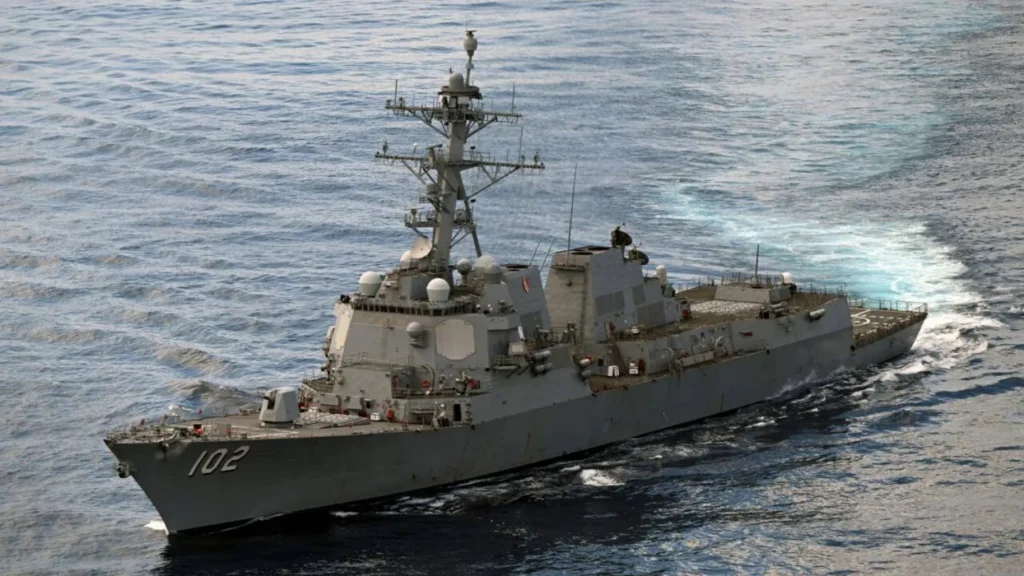
Reports confirmed that one of the vessels, a guided missile cruiser, was sighted passing through the Panama Canal on Friday night, moving from the Pacific Ocean to the Caribbean Sea.
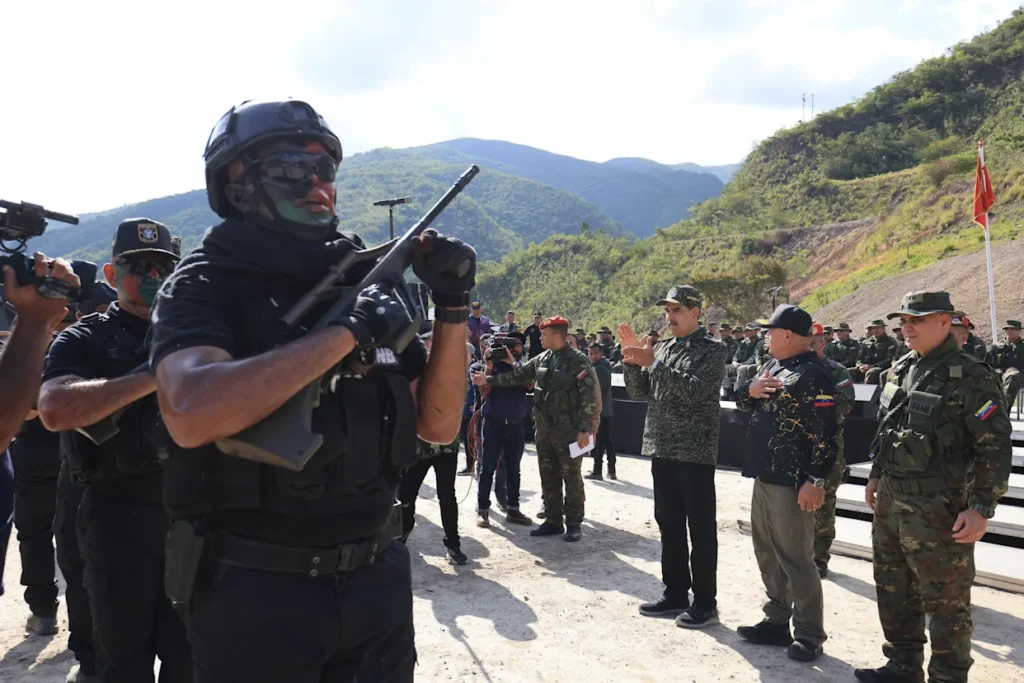
Maduro insisted that “in response to maximum military pressure, we have declared maximum readiness to defend Venezuela.” He also claimed that over eight million Venezuelans had signed up as reservists, while authorities have intensified patrols across the nation’s territorial waters.
Washington, which has long opposed Maduro’s rule, recently doubled its reward for his capture to $50 million. The US and much of the international community refused to recognize his victories in the 2018 and 2024 presidential elections, alleging widespread irregularities and voter suppression.
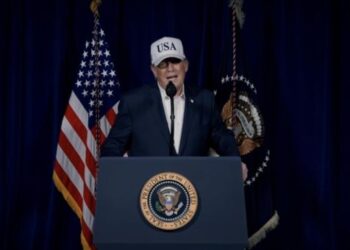
During Monday’s briefing, Maduro, known for his sharp criticism of Washington, declared that channels of dialogue with the United States had collapsed. He emphasized that Venezuela “will never give in to blackmail or threats of any kind,” while also accusing US Secretary of State Marco Rubio of trying to push President Donald Trump “into a bloodbath… with a massacre against the people of Venezuela.”
The US military’s presence in the region was, however, welcomed by Guyanese President Irfaan Ali, who said it represented “anything to eliminate any threat to our security.” The two nations remain locked in a bitter dispute over the oil-rich Essequibo region, which has been administered by Guyana for more than a century but is still claimed by Venezuela. The tension intensified after ExxonMobil discovered significant oil reserves off Essequibo’s coast nearly ten years ago.
Relations between Caracas and Washington have been fraught for years, particularly since Trump’s first term from 2017 to 2021, during which his administration imposed sweeping sanctions and an oil embargo in a bid to force Maduro from office. Yet those measures failed to dislodge him.
Analysts told AFP that the US naval deployment is unlikely to culminate in direct conflict, but rather serves to increase pressure on Maduro, who has long accused Washington of plotting regime change.
In response, Caracas petitioned the United Nations last week, demanding “the immediate cessation of the US military deployment in the Caribbean.” On Monday, Maduro escalated his stance further, stating Venezuela was prepared for “a period of armed struggle in defense of the national territory” should an attack occur.
What You Should Know
Nicolas Maduro, Venezuela’s leader since 2013, has repeatedly clashed with the United States, which accuses him of corruption, drug trafficking, and electoral fraud.
His declaration of “maximum readiness” comes amid heightened regional tensions, particularly over the oil-rich Essequibo territory disputed with Guyana.
The US military buildup in the Caribbean is officially described as an anti-drug operation, but Maduro insists it represents a direct threat to his government.