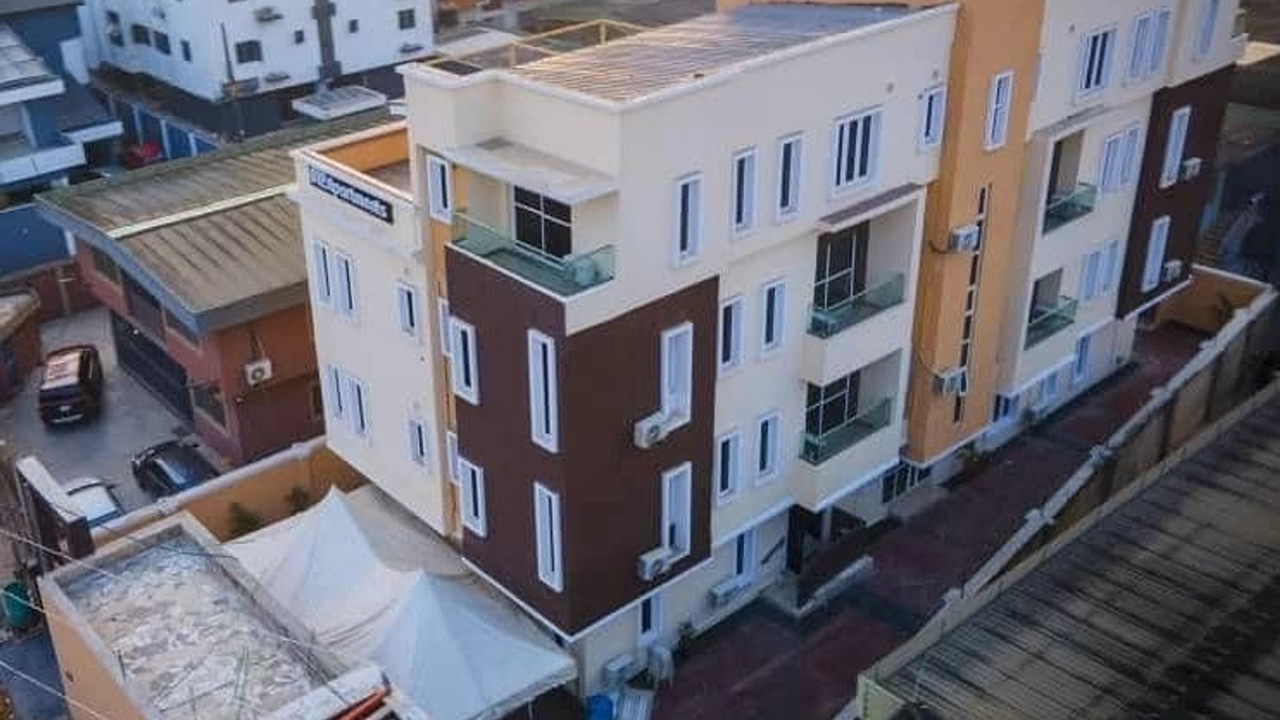
Nigeria’s booming short-term rental market generated an estimated N281.03 billion in revenue in 2025, according to a new industry report.
The figures, contained in The Lagos Shortlet Market Report 2025, released in March by real estate and development firm Edala Development, reveal a market at a crossroads, one that has matured significantly over five years of explosive growth but now faces the sobering economics of oversupply, tightening regulation, and intensifying competition among operators.
The 2025 revenue figure represents a 6.3 percent increase from the N264.3 billion recorded in 2024, a trajectory that, under different supply conditions, might have been cause for unqualified celebration. Instead, it has prompted frank self-assessment from the very analysts who once projected even stronger performance.
Temidayo Oloyede, co-founder and chief executive of Edala Development, was candid in his assessment of the gap between projection and outcome. “In our 2024 outlook, we projected the Lagos short-let market would reach N300 billion in total revenue by 2025,” he said. “While the market continued to expand, our tracked data indicates that 2025 revenue closed at an estimated N281.03 billion.”
The near-N19 billion shortfall, Oloyede explained, was not a symptom of weakened demand. Quite the opposite. “Demand remains strong,” he noted, “but the rapid increase in supply is making it more difficult for every property to maintain high occupancy levels.”
In other words, the problem is not that Lagosians and visitors are traveling less—it is that there are now simply more doors competing for every booking.
Edala Research, the firm’s dedicated analytics unit, based its estimates on a study of 6,398 listed units across Lagos—a dataset broad enough to offer the clearest picture yet of a sector that has, for much of its young life, operated without systematic scrutiny.
The Lagos shortlet story, as the report traces it, is one that mirrors property booms in cities across the developing world. Early movers—many of them individual landlords drawn by the promise of dollar-denominated returns or naira yields well above conventional long-term lettings—flooded into Victoria Island, Lekki, and Ikoyi, the upscale enclaves that form the commercial and leisure heartbeat of the city’s island corridor.
For several years, the formula was straightforward: acquire or furnish a well-located apartment, list it on a booking platform, and watch occupancy rates soar during peak travel seasons.
High demand, limited inventory, and a weakening naira that made Lagos an increasingly attractive destination for diaspora visitors and regional business travelers kept revenues buoyant with relatively little operational effort.
The surge in new listings that characterized 2023 and 2024 has fundamentally altered the competitive dynamics of the sector. Operators who once coasted on location alone are now investing in structured branding, professional property management, and hospitality standards more commonly associated with boutique hotels. The report is explicit on this point: market performance is “increasingly tied to professional management, operational standards, and regulatory compliance.”
For the individual landlord still managing bookings over WhatsApp with inconsistent cleaning schedules and no formal guest relations process, the writing is on the wall.
Perhaps the most striking finding in this year’s report is the emergence of Yaba as the market’s fastest-growing submarket, with a 25 percent increase in demand recorded in 2025.
Long regarded primarily as a student neighborhood and commercial district, Yaba has undergone a quiet transformation over the past decade, anchored by the growth of Lagos’ tech ecosystem along what has come to be informally known as “Yaba Valley.” Co-working spaces, startup campuses, and a steady influx of digital nomads and young professionals have created a tenant profile that is both reliable and growing.
Studio apartments now account for half of Yaba’s total shortlet inventory—a structural shift that reflects not just changing tenant preferences but also the economics of shortlet operation. Studios carry lower maintenance costs, turn over faster between guests, and have demonstrated what the report describes as “resilient revenue potential” even as competition increases elsewhere.
The mainland’s appeal, more broadly, is no longer simply about affordability. For a growing cohort of short-let guests—particularly tech workers and domestic business travelers—proximity to Yaba’s commercial district is itself a draw, one that the traffic-choked bridge crossings to the island make even more compelling.
Surulere, another mainland neighborhood, has similarly seen increased activity, benefiting from comparable dynamics of affordability and connectivity.
The regulatory environment around Lagos shortlets is evolving rapidly and not always in directions that favor operators.
The most consequential recent development has been the February 2026 ban on short-let operations within Banana Island, the exclusive residential enclave that represents perhaps the most prestigious postcode on the African continent.
The estate’s management association, citing concerns about security, community cohesion, and the character of the neighborhood, moved to prohibit short-term rentals entirely—a decision that sent a clear signal to operators across other high-end estates that similar restrictions could follow.
The Banana Island ban is symptomatic of a broader tension that has emerged as the short-let sector has grown: the competing interests of individual property owners seeking maximum returns and the communities and estates in which those properties sit. As more estate management associations and, potentially, government regulatory bodies develop clearer frameworks around short-term rentals, operators who have built businesses on informal arrangements face new and material risks.
For all its structural challenges, the Lagos short-let market retains formidable seasonal engines. Chief among them is the period Lagosians call “Detty December”—the month-long festive season that transforms the city into West Africa‘s premier entertainment destination and drives near-full occupancy across prime island locations.
The annual return of diaspora Nigerians, many of whom prefer the space and privacy of a short-let apartment to the formality of a hotel, continues to provide a demand spike that briefly resolves the market’s occupancy pressures and delivers some of the strongest revenue weeks of the operating calendar.
But the most structurally significant trend identified in the 2025 report may be the rapid rise of what the industry is beginning to call “Branded Residences”—multi-location short-let chains operated with the consistency, visual identity, and service standards of a hospitality brand. These operators, who may manage dozens or even hundreds of units across multiple Lagos neighborhoods under a single brand identity, are increasingly displacing the individual “one-off” listings that once dominated the market.
A traveler choosing between an anonymous listing with a handful of reviews and a branded operator with a recognizable name, a complaints process, and consistent standards will, with growing frequency, choose the latter. For investors, the emergence of professional short-term management companies also offers an institutional-grade vehicle for real estate returns without the operational burden of self-management.
The immediate outlook for the Lagos shortlet market is one of consolidation rather than expansion. Revenue growth will continue, but the era of easy returns for under-managed properties is closing. The operators who will define the next chapter of this market are those who bring genuine hospitality expertise, compliance rigor, and brand discipline to what has, until recently, been treated primarily as a real estate play.
For a city of Lagos’ scale, ambition, and growing international profile, a maturing shortlet sector is not a setback. It is an inevitability—and, managed well, a foundation for a more sustainable and professionally credible industry.
The numbers, after all, still tell a fundamentally positive story. N281 billion. Six thousand listed units. A city that the world is increasingly choosing to visit and stay in, one apartment at a time.
WHAT YOU SHOULD KNOW
Lagos’ short-let market closed 2025 with N281.03 billion in revenue—growth, yes, but a miss on the N300 billion target. The message is clear: the easy money era is over.
Demand remains strong, but a flood of new listings has squeezed occupancy rates, and operators who rely on location alone are losing ground. The market is now rewarding professionalism—structured management, consistent hospitality standards, and regulatory compliance are no longer optional extras; they are the price of staying competitive.
Yaba’s 25% demand surge signals that the market’s next growth frontier lies on the mainland, while tightening estate regulations—most notably Banana Island’s short-let ban—serve as a warning that operating environments can change overnight.