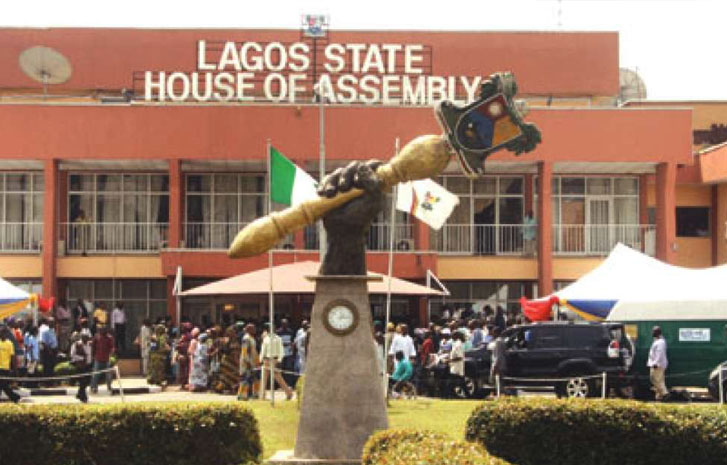
The Lagos State House of Assembly on Friday passed a N4.44 trillion budget for the 2026 fiscal year, marking another ambitious spending plan for Nigeria’s economic powerhouse as it grapples with persistent inflation and fiscal pressures facing sub-national governments across the country.
The approval of what Governor Babajide Sanwo-Olu’s administration has dubbed the “Budget of Shared Prosperity” came after extensive deliberations by lawmakers, who adopted recommendations from the House Committee on Economic Planning and Budget during Thursday’s plenary session.
The budget, which represents a significant increase from previous years, splits nearly evenly between recurrent and capital expenditure—N2.052 trillion and N2.185 trillion, respectively—signaling the state government’s continued emphasis on infrastructure development even as it manages day-to-day operational costs.
Presenting the committee’s report, Chairman Sa’ad Olumoh outlined the macroeconomic framework underpinning the budget projections. The spending plan assumes an exchange rate of N1,512 to the dollar, an inflation rate of 14.7 percent, daily oil production of 2.06 million barrels, and a benchmark crude oil price of $64 per barrel.
These assumptions reflect cautious optimism about Nigeria’s broader economic trajectory, though they also acknowledge the volatility that has characterized the country’s fiscal environment in recent years. The naira has experienced significant depreciation against major currencies, while inflation has stubbornly remained in double digits, eroding purchasing power and complicating budget planning for state governments.
The committee’s review revealed that Lagos achieved a 79 percent implementation rate for its 2025 budget as of November, with capital expenditure reaching 75 percent completion and recurrent spending hitting 87 percent. Revenue performance also stood at 79 percent, suggesting relatively strong internally generated revenue collection despite economic headwinds.
During the legislative review process, lawmakers added N171 billion to the original budget proposal submitted by the executive arm. Aro Moshood, representing the Ikorodu 2 constituency, confirmed the adjustment, while fellow legislators stressed the need for comprehensive revenue reforms and prudent debt management to ensure the state’s fiscal sustainability.
The approved budget projects a deficit of approximately N243 billion, which Olumoh explained would be financed through approved borrowing and other financing mechanisms. This deficit financing strategy reflects a common challenge facing state governments across Nigeria: the gap between ambitious development goals and available revenue.
Personnel costs, overheads, debt servicing, and loan repayments account for significant portions of the recurrent expenditure, underscoring the fixed obligations that limit fiscal flexibility even as the state seeks to expand infrastructure and service delivery.
The near-parity between capital and recurrent spending—with capital allocation slightly exceeding routine expenditure—represents a deliberate policy choice by the Sanwo-Olu administration to prioritize physical infrastructure and development projects across critical sectors, including transportation, housing, education, health, and public works.
Speaker Mudashiru Obasa characterized the budget as “realistic and balanced,” expressing confidence that it possesses the capacity to drive inclusive economic growth if implementation proceeds according to plan. He noted that revenue-generating agencies had assured the legislature of enhanced collaboration to meet, and potentially surpass, revenue targets for the fiscal year.
“This budget reflects our commitment to shared prosperity and sustainable development,” Obasa stated. “We have ensured that allocations align with the priorities of our constituents while maintaining fiscal responsibility.”
As Africa’s seventh-largest economy and Nigeria’s undisputed commercial hub, Lagos State’s fiscal trajectory carries implications beyond its borders. The state accounts for a substantial portion of the country’s non-oil revenue and serves as a bellwether for sub-national economic performance.
The size and ambition of the 2026 budget signal continued confidence in Lagos’ economic fundamentals despite broader national challenges. However, the projected deficit and heavy reliance on internally generated revenue also highlight vulnerabilities, particularly the state’s dependence on efficient tax administration, revenue collection systems, and disciplined expenditure management.
With Nigeria facing ongoing economic reforms, currency pressures, and the fiscal impacts of fuel subsidy removal, Lagos’s ability to successfully implement this budget while managing its deficit and debt obligations will be closely watched by investors, development partners, and other state governments looking for replicable models of fiscal management.
The approved budget now heads to the governor for assent, after which implementation will begin in earnest when the new fiscal year commences.
WHAT YOU SHOULD KNOW
Lagos State has approved a record N4.44 trillion budget for 2026, with capital spending (N2.185 trillion) nearly matching recurrent costs (N2.052 trillion)—demonstrating the state’s continued focus on infrastructure despite economic pressures.
The budget projects a N243 billion deficit to be financed through borrowing and assumes 14.7% inflation with an exchange rate of N1,512 to the dollar. With 79% implementation of the 2025 budget achieved, the success of this ambitious spending plan will depend heavily on improved revenue collection and disciplined fiscal management.