Kano State is currently facing a major political tension that could reshape its leadership.
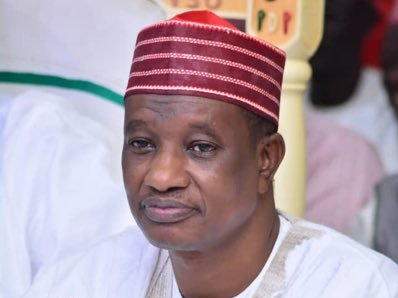
Governor Abba Kabir Yusuf’s recent defection from the New Nigeria Peoples Party (NNPP) to the All Progressives Congress (APC) has left his deputy, Aminu Abdussalam Gwarzo, in a delicate and uncertain position.
While the governor has embraced a new political direction, Gwarzo has refused to follow him, choosing instead to remain loyal to the NNPP and its prominent leader, Senator Rabiu Musa Kwankwaso.
This division has sparked discussions among lawmakers about the possibility of impeachment, highlighting the fragility of political alliances and the high stakes involved in party loyalty in Nigerian politics.
Background: Loyalty and Political Ties
Aminu Gwarzo was elected as deputy governor alongside Abba Kabir Yusuf on the NNPP ticket, a party closely associated with Kwankwaso’s political network.
Throughout his tenure, Gwarzo has maintained a reputation as a loyal ally of Kwankwaso, often aligning his decisions with the broader NNPP agenda.
His commitment to the party’s values and his refusal to follow the governor to APC have set him apart from other political figures who have shifted allegiance in recent months.
Governor Yusuf’s defection was not an isolated event. It came after a wave of political realignments, where many lawmakers and local leaders also left NNPP for APC.
This movement significantly altered the balance of power in the Kano State House of Assembly and reduced the deputy governor’s support within the legislature.
By staying loyal to the NNPP, Gwarzo has positioned himself as a symbol of party fidelity, but this stance has also made him vulnerable to political isolation and possible removal.
The Impeachment Threat
The discussions about impeachment are rooted in political strategy rather than legal violations.
Some lawmakers close to the governor see Gwarzo’s refusal to defect as an obstacle to consolidating power in the state assembly.
The idea of impeachment is being floated as a way to bring the deputy governor in line with the new political order and prevent potential challenges to the governor’s authority.
While these talks have attracted public attention, it is crucial to note that no formal impeachment process has begun.
There has been no official motion tabled in the state assembly, nor has any legal procedure been initiated against the deputy governor.
What is currently unfolding is largely political maneuvering, with legislators exploring options to either pressure Gwarzo into compliance or remove him from office if he continues to resist.
Political Implications
The standoff between Governor Yusuf and Deputy Governor Gwarzo has far-reaching consequences for Kano’s political landscape.
Gwarzo’s decision to remain with NNPP limits his influence within a legislature that now largely supports APC.
This may affect his ability to advocate for projects, policies, or political initiatives, effectively reducing his role in state governance.
The threat of impeachment, even if it does not materialize, serves as a tool of political pressure.
It also signals to Gwarzo and other politicians the consequences of resisting the prevailing political current.
At the same time, this tension could influence voter perceptions and loyalty ahead of future elections, with the public closely watching how party leaders handle dissent and loyalty within their ranks.
Furthermore, the situation in Kano reflects a broader pattern in Nigerian politics, where defections often lead to realignments of power, shifts in legislative support, and occasional confrontations between governors and their deputies.
Gwarzo’s choice to remain loyal to NNPP highlights the complexities of political ethics versus practical survival in a system where allegiance to party leadership can carry both risks and respect.
What You Should Know
Governor Yusuf’s defection to APC has changed the political balance in Kano State, leaving Gwarzo as one of the few high-ranking officials maintaining loyalty to NNPP.
Many lawmakers have followed the governor, giving APC significant control in the state assembly.
The impeachment talks are currently political speculation rather than formal legal action.
Gwarzo’s influence in state decisions is now under pressure due to the reduced support he has within the legislature.