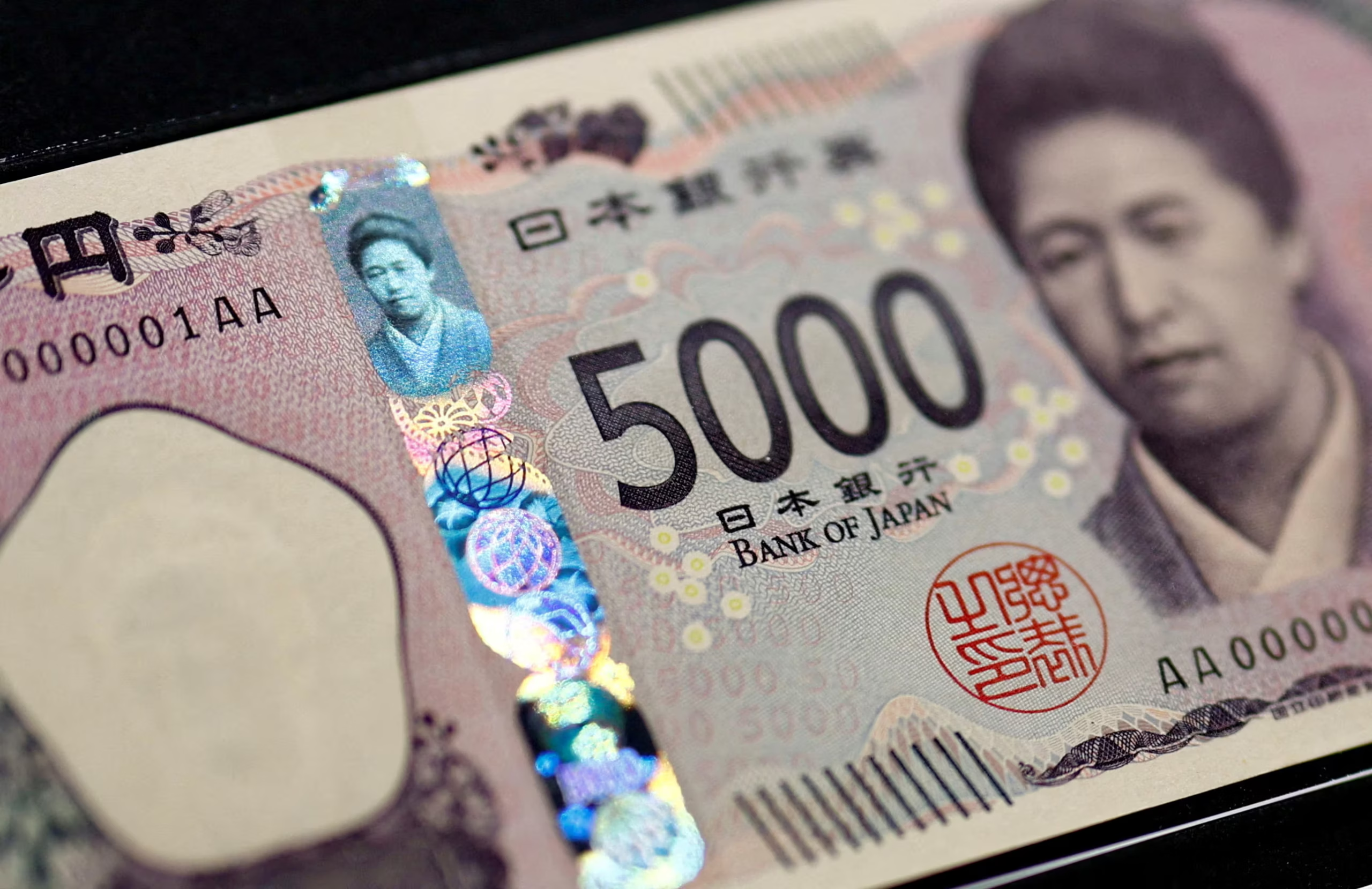
Market volatility dominated currency trading floors in Tokyo on Wednesday as the Japanese yen experienced dramatic swings amid conflicting developments on both political and trade fronts.
The currency saw-sawed between significant gains and losses as traders grappled with the implications of a major U.S.-Japan trade breakthrough overshadowed by mounting speculation about Prime Minister Shigeru Ishiba’s political future.
The yen initially surged to its strongest position since July 11, touching 146.20 against the dollar following President Donald Trump’s announcement of what he called a “massive deal with Japan, perhaps the largest deal ever made.” The agreement, which establishes a 15 percent tariff on Japanese exports and commits Japan to invest $550 billion in the US, initially buoyed investor confidence in Japan’s economic prospects.
However, the currency’s fortunes quickly reversed as reports emerged suggesting Ishiba has decided to resign and will announce this by the end of August following his ruling coalition’s devastating performance in recent upper house elections. The political uncertainty sent the yen tumbling before recovering to close relatively stable at 146.83 to the dollar after Ishiba denied media reports that he was considering resigning.
The trade agreement represents a significant de-escalation from Trump’s earlier threats of punitive tariffs on Japanese goods, particularly automobiles. Currency strategists view the deal as potentially game-changing for the Bank of Japan’s monetary policy stance, which has been cautiously navigating interest rate increases amid global economic uncertainty.
“A trade deal does allow more potential for the Bank of Japan to hike interest rates this year,” explained Jane Foley, head of FX strategy at Rabobank. The resolution of trade tensions removes a key obstacle that had previously constrained the central bank’s ability to normalize monetary policy, she noted, adding that such moves would be “yen positive and make a move back to 150 (yen per dollar) harder.”
The broader currency markets remained subdued, reflecting the pervasive uncertainty that has characterized global trade relationships under the Trump administration. The U.S. dollar, which has been under pressure since Trump’s announcement of sweeping tariffs in April, continued its recent weakness, though the pace of decline has moderated this month.
European currencies showed mixed performance, with the euro declining marginally to $1.1744 while remaining near four-year highs reached earlier this month. Sterling edged higher to $1.1354, while European equity markets rallied on hopes that the Japan agreement could signal a broader shift toward negotiated settlements rather than tariff wars.
The political uncertainty in Tokyo adds another layer of complexity to an already fragile global economic landscape. Should Ishiba follow through on reported resignation plans, it would mark yet another period of political instability for Japan, which has seen frequent leadership changes in recent decades.
Commodity-linked currencies benefited from the improved global sentiment, with the Australian dollar gaining 0.4% to $0.6581 as higher metal prices and reduced trade war fears provided support. However, analysts cautioned that sentiment remains fragile given the ongoing uncertainty surrounding trade negotiations with other major economies.
Trump announced that European Union negotiators would arrive in Washington today, suggesting that the Japan deal may serve as a template for broader trade discussions. The European Central Bank’s policy meeting on Thursday is expected to maintain current interest rates but could provide further insight into how policymakers view the evolving trade landscape.
For Tokyo’s financial markets, today’s volatility underscores the delicate balance between economic opportunity and political stability that continues to shape investor sentiment in one of the world’s largest economies.
WHAT YOU SHOULD KNOW
The Japanese yen experienced dramatic volatility today as two major developments pulled markets in opposite directions: President Trump’s landmark trade deal with Japan initially strengthened the currency by reducing tariff threats and opening the door for Bank of Japan interest rate hikes, but resignation rumors surrounding Prime Minister Ishiba quickly reversed those gains.
The trade agreement marks a significant de-escalation from previous tariff threats and could reshape Japan’s monetary policy landscape, but ongoing political uncertainty in Tokyo continues to undermine investor confidence. The yen’s wild swings reflect the broader market reality that economic progress can be quickly overshadowed by political instability in today’s interconnected global economy.