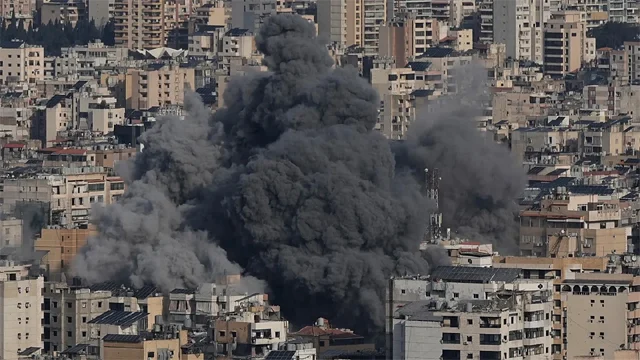
The escalating conflict involving Iran and Israel entered its seventh day on Friday, spreading across the Middle East and beyond as Israeli forces announced a “next phase” of military operations and launched air strikes on the southern suburbs of Beirut.
The Israel Defense Forces had earlier issued an unprecedented evacuation order covering the entire targeted area, warning residents to “save your lives and evacuate your residences immediately,” which triggered widespread panic and forced many people to flee their homes.
The conflict has also reverberated far beyond the immediate war zone. Off the coast of Sri Lanka, a United States submarine reportedly torpedoed an Iranian warship, while tensions rose in Azerbaijan after a drone strike hit an airport, prompting threats of retaliation.
On the political front, United States President Donald Trump dismissed the possibility of Mojtaba Khamenei, son of the late Iranian supreme leader Ali Khamenei, succeeding his father. Trump described him as a “lightweight” and indicated he would oppose such a transition.
“I have to be involved in the appointment, like with Delcy,” Trump told Axios in an interview, referencing political developments in Venezuela, where interim president Delcy Rodríguez has cooperated with Washington after the United States removed Nicolás Maduro in a military raid.
“Khamenei’s son is unacceptable to me. We want someone that will bring harmony and peace to Iran,” Trump said, warning that further conflict could follow if a more acceptable leadership alternative does not emerge.
His remarks suggest Washington may be willing to work with elements within the Islamic Republic rather than pursue a full government overthrow, despite earlier calls encouraging Iranians to rise against their leadership.
The conflict widened earlier this week when Hezbollah launched attacks on Israel on Monday, saying the move was in retaliation for the killing of Ali Khamenei. Israel responded with air strikes and ground operations in villages along the Lebanese border.
On Thursday, Israeli forces targeted southern Beirut, claiming the strikes were aimed at Hezbollah infrastructure. The evacuation warning triggered chaotic scenes as residents rushed to escape, creating massive traffic jams around the suburbs while some people fired guns into the air to alert neighbors to leave quickly.
Along the coast of Beirut, hundreds of displaced families gathered on a beach after fleeing their homes, many unsure where they would find shelter.
“We fled from the suburbs; we were humiliated,” one resident told AFP, declining to reveal his identity.
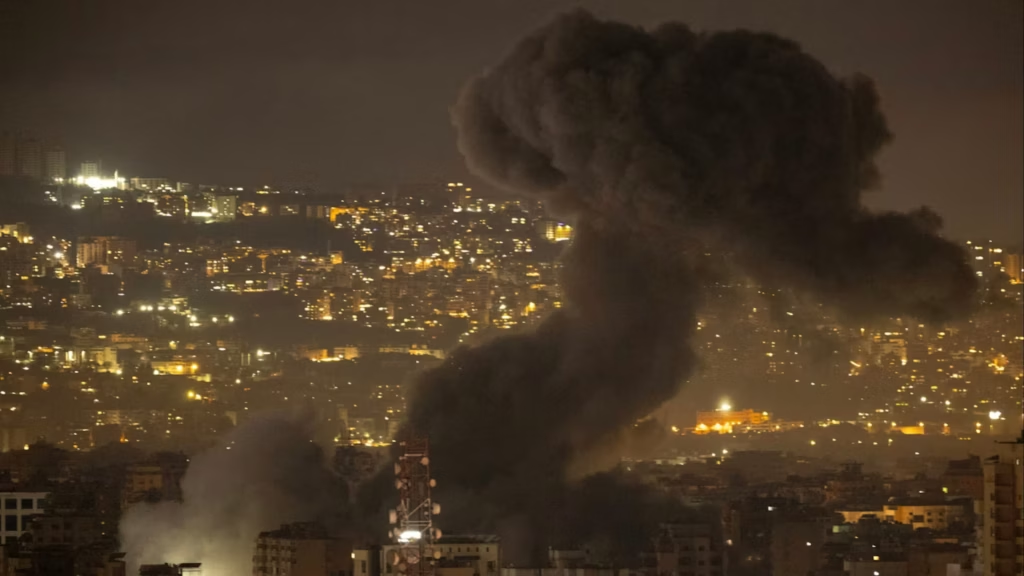
Lebanese authorities say at least 123 people have been killed since Monday, while 683 others have been wounded and at least 90,000 residents have been displaced.
The war has also sparked rising tensions along Iran’s northern border with Azerbaijan. Officials in Baku warned that a drone strike on an airport “will not go unanswered,” raising fears that another country could be drawn into the conflict.
Tehran denied responsibility for the attack and instead blamed Israel, but Azerbaijani President Ilham Aliyev accused Iran of “terrorism.”
Several other countries have begun preparing for possible involvement. Australia has deployed two military aircraft to the region, while Mark Carney, the Prime Minister of Canada, said he would not rule out sending Canadian forces if the situation worsens.
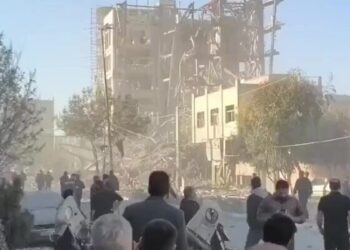
Fresh air strikes on Tehran have left visible destruction across parts of the city. Video footage showed burned-out vehicles and severely damaged buildings, with smoke still rising from several locations.
“We’re going through a very important page of our history, and I’m not afraid,” a 30-year-old resident of Tehran told AFP. “Hope is the only thing that we have right now.”
An Iranian state-run foundation reported that the death toll from joint U.S. and Israeli strikes had reached 1,230, although the figure could not be independently verified.
The United States military has confirmed that six of its personnel have been killed since the conflict began last Saturday.
Iran’s Foreign Minister Abbas Araghchi adopted a defiant tone, stating that Tehran had not sought a ceasefire and saw no reason to negotiate with the United States.
Regarding the possibility of a ground invasion, he told NBC News: “We are confident that we can confront them, and that would be a big disaster for them.”
Israeli officials say their forces have destroyed around 60 percent of Iran’s missile launchers and 80 percent of its air defence systems since the fighting began.
Announcing what he called the next phase of operations, Israeli army chief Eyal Zamir warned that the campaign would continue and hinted at further military actions.
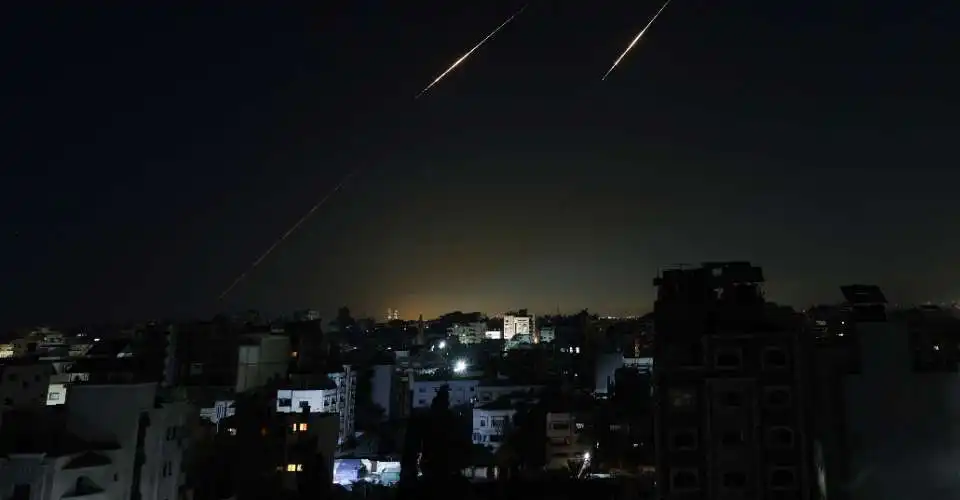
The latest Iranian missile barrage triggered multiple explosions across Tel Aviv, where firefighters battled to contain a blaze at a residential building near the city’s commercial center early Friday.
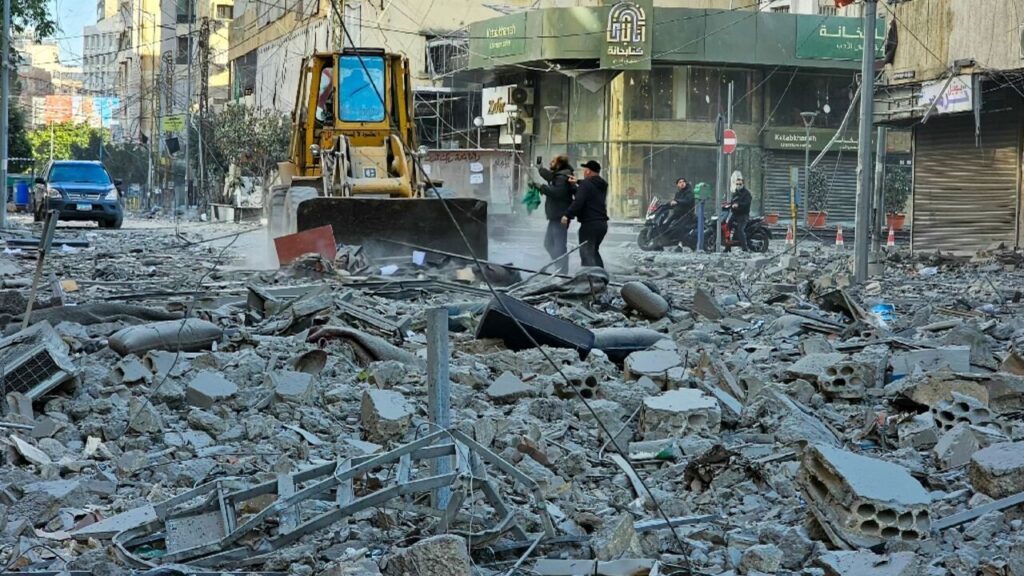
The conflict has also spread to the Gulf region, long considered relatively stable despite the wider Middle East tensions. Iran has targeted cities and energy infrastructure across several Gulf states.
Thirteen people, including seven civilians, have been killed across Gulf countries since the conflict began. Among the victims was an 11-year-old girl in Kuwait.
Bahrain reported that Iranian strikes hit two hotels and a residential building in the capital Manama early Friday, although officials said there were no fatalities.
Saudi Arabia announced it had intercepted three ballistic missiles heading toward one of its air bases.
In Qatar, authorities said air defense systems intercepted a missile attack on Thursday as powerful explosions shook the capital Doha, sending thick black smoke into the sky.
Officials in the United Arab Emirates also confirmed that falling debris from an intercepted drone injured six people in the capital Abu Dhabi.
What you should know
The conflict between Iran and Israel has rapidly expanded into one of the most serious regional crises in years, drawing in multiple countries across the Middle East and beyond.
Hezbollah’s involvement from Lebanon, missile exchanges across the Gulf, and international reactions from major powers have increased fears of a wider war.
With military actions now affecting several countries and critical infrastructure, analysts warn that the conflict could destabilize the region and trigger broader geopolitical consequences if diplomatic efforts fail.