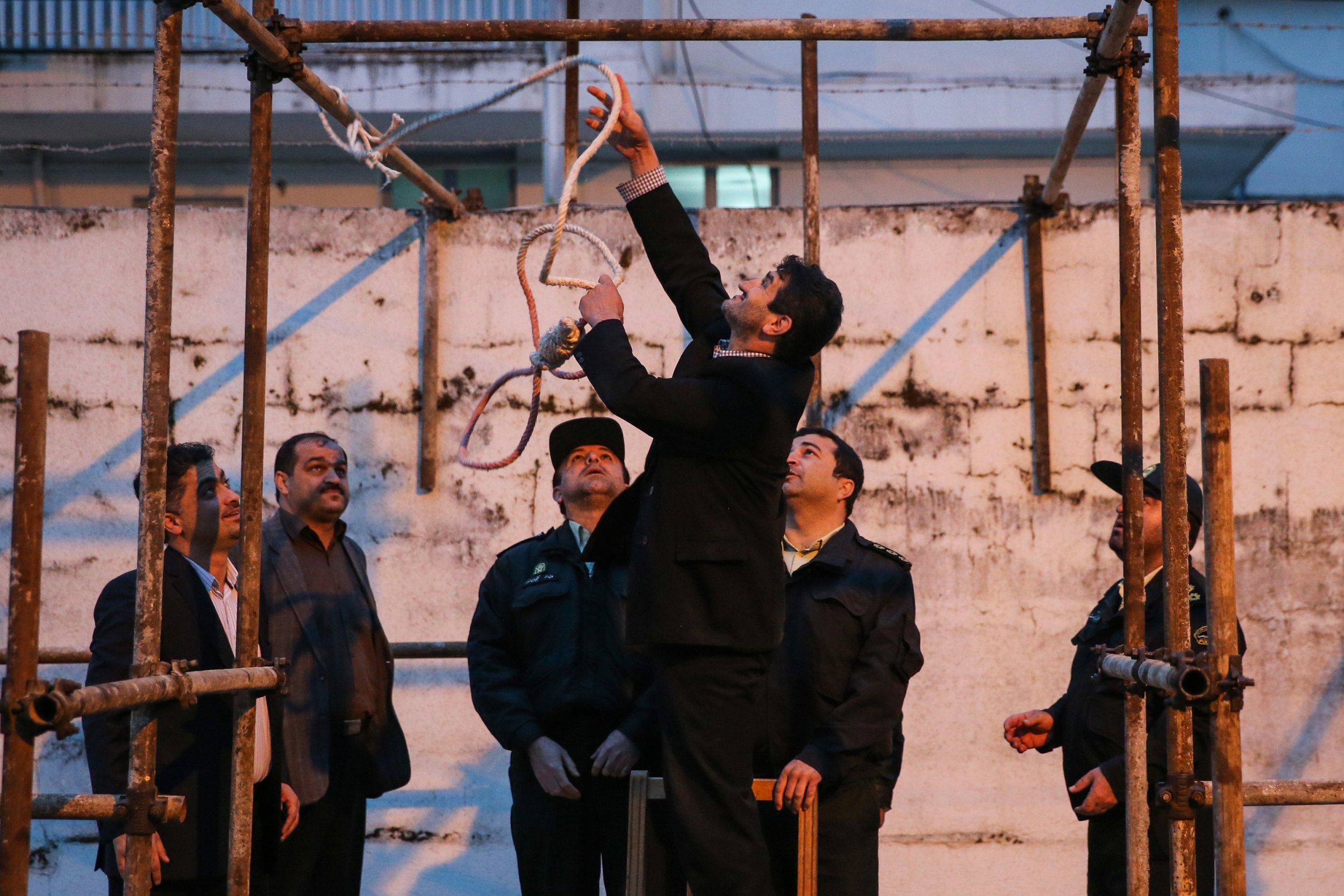
Iranian authorities on Saturday carried out a public execution of a man convicted of raping and murdering a young girl, following a highly emotional legal process that drew widespread public attention.
The execution took place in the northwestern city of Bukan and was approved by the victim’s family, who had formally requested that justice be served in a public setting.
The judiciary’s official news outlet, Mizan Online, reported that the case had stirred intense reactions across Iranian society. Due to the nature of the crime and the community’s response, the judiciary expedited the legal proceedings, with the provincial chief justice, Naser Atabati, emphasizing the gravity of the situation.
“The case was given special attention due to the emotional impact it had on public opinion,” Atabati stated.
The judiciary confirmed that the sentence was first issued in March 2025 and subsequently upheld by Iran’s highest court, clearing the way for the execution to proceed. According to Mizan Online, the public nature of the execution was granted “at the request of the victim’s family and citizens, due to the emotional impact the case had on society.”
While executions in Iran are typically carried out inside prisons, public hangings are still occasionally conducted, particularly in crimes considered especially egregious. Saturday’s execution was one such instance.
Under Iranian law, both murder and rape are capital offenses. Iran has long maintained the death penalty for these crimes, asserting that it serves both as retribution and deterrence. In this case, the execution was not only seen as justice for the grieving family but also as a societal statement against such acts of violence.
Iran remains one of the leading countries in terms of execution rates globally. Human rights organizations, including Amnesty International, have frequently criticized Iran’s use of capital punishment. According to these groups, Iran is the second most prolific executioner in the world, behind only China.
Critics argue that public executions may violate human rights standards and often call for reforms to Iran’s criminal justice system. However, Iranian officials have defended the practice, citing Islamic legal principles and the importance of maintaining public order.
The latest execution underscores the Iranian government’s continued use of the death penalty in cases involving crimes considered particularly heinous or destabilizing to the moral fabric of society.
What You Should Know
Iran frequently applies the death penalty for severe crimes like murder and rape, and occasionally permits public executions, especially when public sentiment is intense.
This latest case highlights the enduring tension between Iran’s justice system and international human rights perspectives.