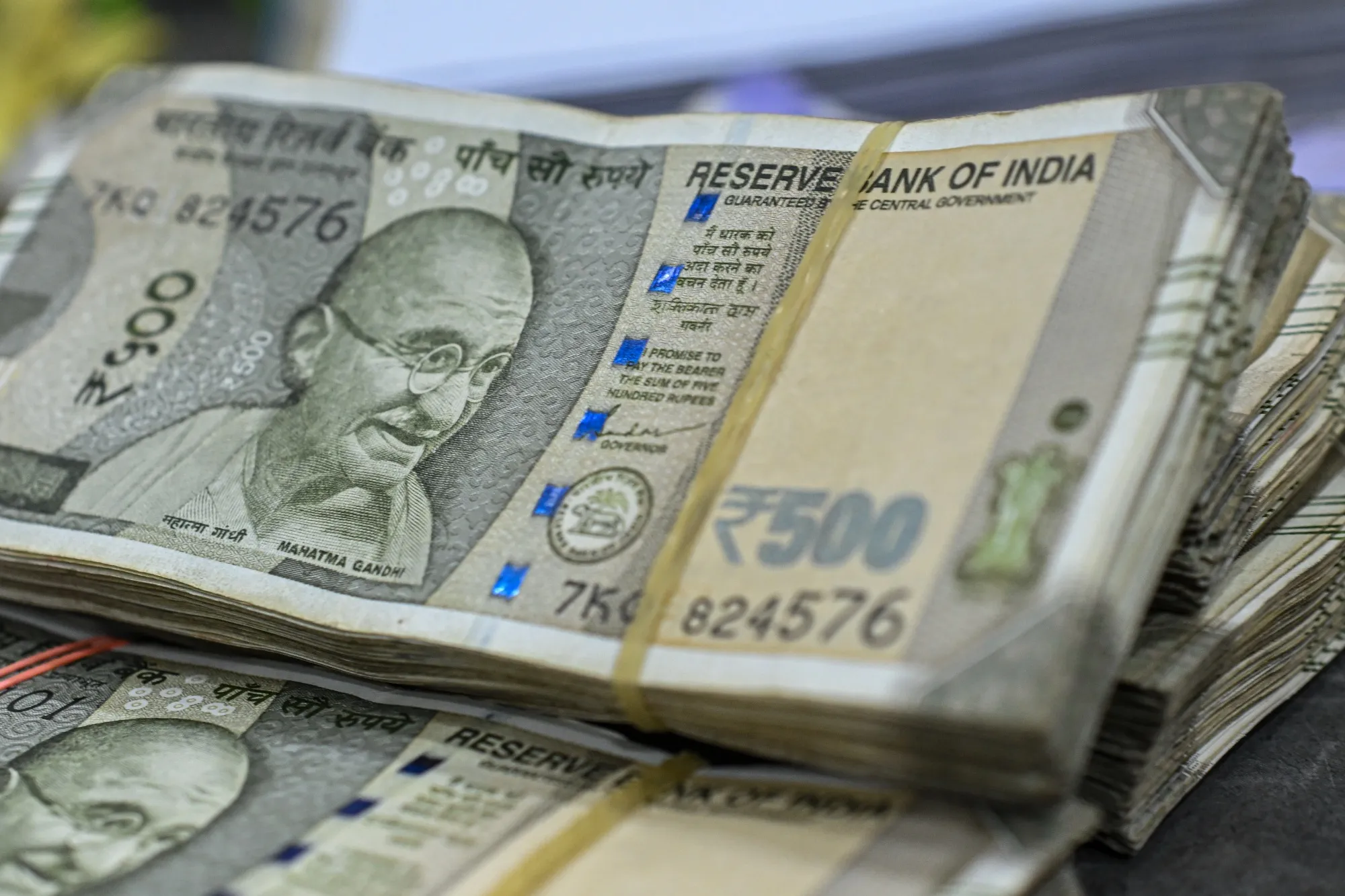
The Indian rupee suffered its steepest single-day decline in nearly two months on Friday, succumbing to a confluence of pressures that underscored the mounting challenges facing Asia’s third-largest economy as it navigates turbulent global currency markets.
The local currency closed at 90.8650 to the dollar, marking a sharp 0.6% drop that represented its worst performance since mid-November and brought it perilously close to the all-time low of 91.0750 recorded in December. Over the week, the rupee shed approximately 0.7%, extending a troubling pattern of depreciation that has persisted despite aggressive intervention by monetary authorities.
Market participants attributed Friday’s sell-off to a combination of elevated dollar demand from importers settling foreign obligations and the unwinding of positions in the non-deliverable forwards market, where offshore investors trade rupee derivatives. These twin forces created sustained pressure that even central bank intervention could only partially contain.
State-run banks were observed making intermittent dollar sales throughout the trading session, operations that dealers widely interpreted as proxies for the Reserve Bank of India. While these interventions prevented a more dramatic slide, they offered only temporary relief rather than a fundamental solution to the currency’s structural weakness.
The rupee’s deterioration rippled through related markets, pushing dollar-rupee forward premiums to three-week highs as importers scrambled to lock in hedges against further depreciation. Interbank traders maintained what market professionals describe as a “paying bias,” reflecting widespread expectation of continued currency weakness ahead.
The currency pressures come against a backdrop of persistent trade imbalances. Official data released Thursday revealed India’s merchandise trade deficit for December stood at $25.04 billion, highlighting the nation’s continued reliance on imports that must be paid for in foreign currency. The figures did show some bright spots, with exports to the United States demonstrating resilience despite facing steep tariffs, though this has done little to ease overall pressure on the rupee.
Analysts at ANZ warned that the depreciation trend appears entrenched, particularly absent a comprehensive trade agreement between India and the United States. “The depreciation pressure on the INR is likely here to stay, especially in the absence of an India-US trade deal,” the bank noted in its latest research.
The central bank’s intervention strategy, while successful in preventing sharper near-term declines, has created its own set of complications. By selling dollars to support the rupee, the RBI effectively drains rupee liquidity from the domestic banking system, which in turn places pressure on local borrowing costs at a time when the economy could benefit from easier monetary conditions.
This presents policymakers with an uncomfortable choice. “The optimal policy course will be to tolerate a more flexible exchange rate such that liquidity can be boosted to levels sufficient to support domestic demand,” ANZ’s analysts argued, suggesting the central bank may need to accept greater currency volatility to preserve economic growth.
India’s currency woes are playing out against a backdrop of dollar strength across global markets. Asian currencies remained largely range-bound on Friday, offering little relief to regional peers, while the dollar index hovered near six-week highs following upbeat U.S. economic data that has forced traders to dramatically reassess expectations for Federal Reserve monetary policy.
Market pricing now reflects a 67% probability that the Federal Reserve will hold interest rates steady in April, up sharply from just 37% a month ago, according to the CME FedWatch tool. The odds of rate cuts in January stand at a mere 5%, rising only to 20% for March, as robust American economic performance diminishes the urgency for monetary easing.
This shift in Fed expectations has bolstered the dollar across the board, creating additional headwinds for emerging market currencies like the rupee that must compete for capital flows in an environment where U.S. assets offer attractive yields with minimal risk.
As the rupee tests levels last seen during its December nadir, market observers are watching closely to see whether the 91 per dollar threshold represents a psychological barrier the RBI will defend aggressively or merely another milestone in a longer depreciation trend. With fundamental pressures showing little sign of abating and global monetary conditions remaining challenging, the path forward appears fraught with uncertainty for India’s beleaguered currency.
WHAT YOU SHOULD KNOW
The Indian rupee hit a two-month low on Friday, falling to 90.8650 per dollar—dangerously close to its all-time worst. The key takeaway: India faces a policy dilemma with no easy solutions.
While the Reserve Bank of India continues intervening to prop up the currency, this strategy drains liquidity from the banking system and raises borrowing costs, potentially stunting economic growth.
Meanwhile, the core problems persist—a $25 billion monthly trade deficit, strong dollar demand from importers, and a resurgent U.S. dollar as Federal Reserve rate cuts look increasingly unlikely.
Experts suggest India may need to accept a weaker, more flexible rupee to free up resources for domestic growth, but that means higher import costs and inflation risks. With no U.S.-India trade deal on the horizon and global conditions working against emerging markets, the rupee’s downward pressure looks set to continue.