The International Monetary Fund (IMF) is closely watching the economic ripple effects of the escalating war involving Iran, officials stated on Thursday, though no nation has yet sought emergency funding from the institution despite the ongoing crisis.
The assessment comes as tensions in the Middle East show no immediate signs of easing, raising fresh concerns about supply disruptions in a region critical to global energy markets.
While the IMF stopped short of issuing dire forecasts, its chief spokesperson laid out a clear warning: sustained higher energy costs could quickly translate into broader economic pain worldwide.
“If prolonged, higher energy prices will lead to higher headline inflation,” Julie Kozack told reporters during the fund’s regular press briefing in Washington.
Kozack, speaking on behalf of Managing Director Kristalina Georgieva, offered a quantitative yardstick for the risk. Drawing on what she described as “a broad rule of thumb,” she said that if crude oil prices remain above $100 a barrel for a year or longer, global headline inflation could rise by as much as two percentage points.
At the same time, world economic output would likely contract by roughly one percent.
The figures underscore the tight link between Middle East stability and everyday prices at the pump and in grocery stores. Energy costs feed directly into transportation, manufacturing, and food production, quickly rippling through supply chains and consumer wallets.
Central banks already grappling with sticky inflation in many advanced and emerging economies could face renewed pressure to keep interest rates higher for longer—a scenario that might further dampen growth.
Yet for now, the IMF appears to be in a watchful rather than reactive mode. Kozack explicitly confirmed that the fund “had not received any formal requests for emergency financing” linked to the US-Israel war on Iran. That stands in contrast to earlier crises, such as Russia’s invasion of Ukraine in 2022, when multiple countries swiftly sought IMF support as energy and food shocks hit home.
The absence of requests so far could reflect several factors: governments may still be assessing the duration and depth of the conflict, bilateral aid or regional support networks might be cushioning initial blows, or countries could be reluctant to signal vulnerability by approaching the fund publicly. Still, IMF staff are already modeling various scenarios, Kozack indicated, ready to respond if the situation deteriorates.
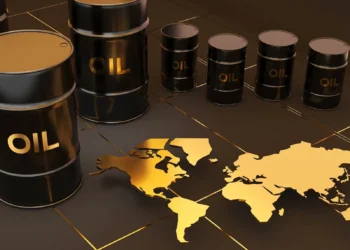
The briefing comes against a backdrop of volatile oil markets. Brent crude has climbed sharply in recent weeks on fears of supply interruptions from Iranian fields and potential Strait of Hormuz disruptions, though prices have yet to settle into the sustained $100-plus range that would trigger the fund’s more pessimistic projections.
Economists outside the IMF have echoed similar cautions. Prolonged conflict risks not only direct supply shocks but also secondary effects—reduced investor confidence, higher shipping insurance costs, and possible spillover into neighboring oil producers.
For import-dependent economies in Europe, Asia, and Africa, the combination of elevated fuel bills and slower growth could strain budgets already stretched by post-pandemic debt.
The IMF’s measured tone on Thursday reflects its institutional role: neither alarmist nor complacent. By flagging the inflation-output trade-off early, the fund hopes to give policymakers time to prepare, whether through targeted subsidies, strategic petroleum releases, or accelerated diversification away from fossil fuels.
As the conflict enters what could prove a protracted phase, the global economy is once again reminded of an old truth: in today’s interconnected world, a spark in the Middle East can quickly become a fire at the gas station and on the balance sheet.
The IMF is watching closely, and the world’s finance ministers will be listening even more intently.
WHAT YOU SHOULD KNOW
The IMF’s latest assessment is this: If the conflict involving Iran keeps oil prices above $100 per barrel for a year or more, global inflation could rise by up to 2 percentage points while world economic output falls by about 1%, a serious double hit to prices and growth that no country has yet asked the IMF for emergency help to counter.