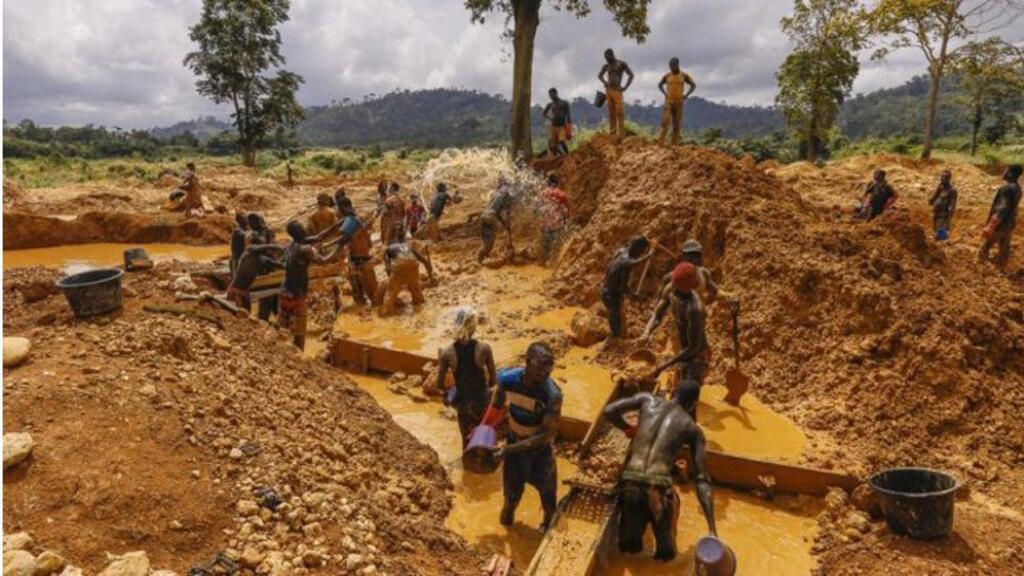
The Commissioner of Police for the Federal Capital Territory (FCT), Ajao Adewale, has described illegal mining as one of the country’s gravest national security threats, warning that it has become a cartel-driven enterprise sustained by influential Nigerians and foreign collaborators.
Speaking in Abuja at a media parley organised by the Nigeria Union of Journalists (NUJ) FCT Council themed “The Fight Against Illegal Mining: Role of the Media”, Adewale revealed that Nigeria loses an estimated $9 billion (N13.7 trillion) annually to illegal mining and gold smuggling, citing figures from the Nigeria Extractive Industries Transparency Initiative (NEITI).
“Illegal mining is not just a mere economic crime; it fuels insecurity, degrades our environment, undermines lawful investment, and robs our nation of vital resources,” he said. “Reports have shown that powerful Nigerians are the primary drivers of these operations, using foreigners merely as fronts, while banditry and terrorism are bankrolled through this criminal network.”
The FCT Police Commissioner identified Zamfara, Nasarawa, Kogi, Kaduna, Niger, Kwara, Osun, and parts of Abuja as major hotspots. He disclosed that over 72 suspects had been arrested in the FCT alone between 2023 and 2024 for engaging in illegal mining.
According to him, the operations of these cartels bear all the hallmarks of organised crime. “A global definition of organised criminal mining underscores that when criminal groups control mining at scale, especially in remote, unmonitored areas, the operations resemble cartel-like behaviour. In Nigeria’s context, these networks may exhibit coordinated control over land, extraction and smuggling,” Adewale explained.
The Minister of Solid Minerals Development, Dr. Dele Alake, has also previously warned that illegal mining is driven by “well-connected Nigerians” who use foreigners as proxies. These activities, officials said, directly fund banditry and terrorism in the country.
In Abuja, the affected areas include Gwagwalada, Asokoro, Gaube, Kuje, and Katampe Extension, where the police, EFCC, and NSCDC have made several arrests.
Enforcement Efforts and Media’s Role
The Commander of the Mining Marshals, Attah Onoja, also addressed journalists at the forum, stressing that enforcement agencies alone cannot defeat illegal mining without the active support of the media.
He accused cartels of sponsoring “rogue journalism” to discredit government operations. “We will not cave to any blackmail designed to weaken our resolve. Illegal mining cannot be defeated by enforcement agencies alone, and this is why we are calling on the media to be partners in this fight,” he said.
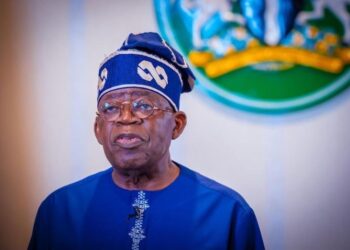
The Mining Marshals, a special unit of the NSCDC created under President Tinubu’s administration on the directive of Dr. Dele Alake, have dismantled several illegal camps, prosecuted offenders, and restored order in volatile mining corridors. While acknowledging challenges such as entrenched interests and logistical constraints, Onoja insisted the campaign is essential for Nigeria’s survival.
“Our message is clear: Nigeria’s mineral wealth belongs to all Nigerians—not to be plundered by a few,” Onoja declared.
Stakeholders Raise Concerns
The National President of the Miners Association of Nigeria (MAN), Dele Ayanleke, echoed the concerns of security agencies, warning that the menace thrives on corruption, poverty, and weak governance.
“From child labour in Nasarawa’s lithium fields to mercury poisoning in Zamfara’s gold sites, the costs are severe. Illegal mining undermines legitimate investors, destroys communities, and fuels insecurity. Only sustained attention, especially from the media, can help dismantle these cartels,” he said.
Chairman of NUJ FCT Council, Grace Ike, charged journalists to go beyond mere reportage by conducting investigative journalism that exposes financiers, amplifies community voices, and pressures policymakers into action.
“As gatekeepers of truth, we must investigate, expose, and educate the public on the devastating effects of illegal mining,” she said. “Through balanced and accurate reporting, the media can illuminate hidden dangers, portray the human and environmental costs, and urge policymakers to take decisive actions.”
She reaffirmed the NUJ FCT’s commitment to amplifying the struggles of affected communities, stressing that empowering citizens with accurate information will enable them to demand stronger regulatory oversight and environmental protections.
What you should know
Nigeria loses about $9 billion (N13.7 trillion) yearly to illegal mining, according to NEITI, with powerful Nigerians said to be the main financiers of the cartels.
These operations not only strip the country of vital resources but also fund banditry and terrorism. Hotspots include Zamfara, Nasarawa, Kogi, Niger, Kwara, Osun, Kaduna, and the FCT. Between 2023 and 2024, security agencies arrested over 70 suspects in Abuja alone.
The Mining Marshals, created under the Tinubu administration, are leading enforcement efforts. Stakeholders stress that the media must play a central role in exposing financiers and sustaining public pressure for accountability.