A brewing legal confrontation between human rights lawyers and Nigeria’s National Youth Service Corps (NYSC) has thrust the country into a heated debate over constitutional freedoms and administrative transparency, following the controversial extension of Lagos-based corps member Ushie Rita Uguamaye’s service year.
The case has attracted heavyweight legal interventions, with seasoned human rights lawyer Inibehe Effiong threatening immediate legal action against the NYSC, while former Vice President Atiku Abubakar and renowned rights advocate Femi Falana have joined the chorus of condemnation against what they characterize as institutional overreach.
The Controversy Unfolds
In March 2024, Ushie Rita Uguamaye, an NYSC member serving in Lagos State, posted a video decrying the cost-of-living crisis and the poor state of the welfare of corps members. The video, which featured sharp criticism of President Bola Tinubu’s economic policies, quickly went viral and catapulted the young woman into national prominence.
Now, over a year later, as Raye—as she is popularly known—approached the completion of her mandatory service year, the NYSC extended her service by two months, citing her failure to attend the April 2025 biometric clearance. “Rita is among the 131 Corps Members whose Certificates of National Service (CNS) were withheld for valid disciplinary reasons,” the NYSC explained in its official statement.
However, this explanation has been met with fierce resistance from Raye’s legal team and civil rights advocates who smell a pattern of political persecution.
Legal Firepower Mobilizes
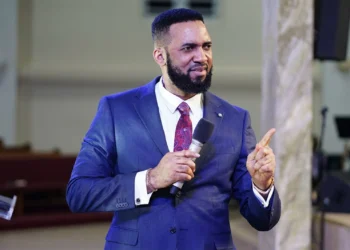
Speaking on Channels Television’s The Morning Brief, Effiong laid out a systematic legal strategy that escalates through Nigeria’s constitutional hierarchy. His approach reflects decades of experience navigating Nigeria’s complex legal and political landscape, beginning with direct engagement with NYSC leadership before potentially involving the highest office in the land.
“We want to allow them to redeem themselves, and the DG must ensure that the image of the scheme is not tarnished,” Effiong stated, demonstrating the calculated approach of a lawyer who understands both legal procedure and public relations dynamics.
The timing of the NYSC’s action has particularly incensed legal observers. Effiong pointedly questioned the administrative logic: “Why should they have waited until she was about to pass out before giving her this reason? It is an embarrassment and an aberration.”
Conflicting Narratives Emerge
The heart of the dispute lies in sharply contradictory accounts of the April biometric clearance incident. The NYSC maintains that Rita’s service year was extended by two months because she failed to attend the April 2025 biometrics clearance, a critical requirement for all Corps Members, and that this decision aligns with its bye-laws, which mandate equal treatment and disciplinary procedures.
However, Effiong has categorically disputed this version of events, asserting that his client was present for the clearance but was “deliberately denied the privilege by NYSC officials in the Eti-Osa Local Government Area of the state.”
This fundamental disagreement over basic facts has transformed what might have been a routine administrative matter into a broader question about institutional accountability and the right to political expression.
High-Profile Political Intervention
Former Vice President Atiku Abubakar has raised alarm over allegations that Ushie Rita Uguamaye, a former National Youth Service Corps (NYSC) member, has been denied her discharge certificate, reportedly due to her public criticism of economic hardship under President Bola Tinubu’s administration.
The involvement of such prominent political figures signals that this case has transcended individual grievance to become a litmus test for democratic freedoms under the current administration. When former vice presidents and constitutional lawyers unite in opposition to government actions, it typically indicates broader systemic concerns about democratic backsliding.
Activist Response and Planned Protests
The controversy has sparked outrage among activists who accuse the NYSC of unjust treatment, with planned mass mobilization efforts being organized to protest what they view as an attempt to silence dissenting voices.
The case has also attracted the attention of prominent activist Omoyele Sowore, indicating that civil society organizations view this as part of a broader pattern requiring organized resistance.
Constitutional and Democratic Implications
Effiong’s assertion that “what they are trying to achieve through Raye is to quell the voice of dissent in our country” touches on fundamental questions about Nigeria’s democratic trajectory. His warning that “Nigeria should not be deceived; this has nothing to do with monthly clearance” suggests a deeper concern about the use of administrative mechanisms to achieve political ends.
The case occurs against the backdrop of increasing economic hardship in Nigeria, with youth unemployment and inflation creating conditions where young voices like Raye’s resonate powerfully with public frustrations.
Legal Strategy and Constitutional Protections
Effiong’s methodical approach—beginning with direct engagement with NYSC leadership, escalating to presidential intervention if necessary, and ultimately pursuing legal action—demonstrates a sophisticated understanding of Nigeria’s administrative and judicial systems. His reference to “Section 20 of the NYSC Act” shows careful attention to statutory procedures that could strengthen any eventual court challenge.
The case also raises important questions about the extent to which government agencies can use administrative procedures to respond to political criticism and whether such actions violate constitutional protections for freedom of expression.
Broader Context and Future Implications
This controversy emerges at a critical moment in Nigeria’s democratic development, as economic pressures intensify public scrutiny of government performance. The outcome could establish important precedents about the boundaries between legitimate administrative action and political retaliation.
For the NYSC, an institution that processes hundreds of thousands of young graduates annually, the case presents significant reputational risks. The organization’s handling of this matter could influence public trust in its fairness and political neutrality for years to come.
As this legal and political drama unfolds, it serves as a crucial test of Nigeria’s commitment to constitutional governance and democratic accountability, with implications extending far beyond one young woman’s service certificate.
WHAT YOU SHOULD KNOW
The NYSC’s extension of corps member Ushie Uguamaye’s service year represents a critical flashpoint in Nigeria’s struggle between administrative authority and constitutional freedoms. What began as a viral video criticizing economic hardship has evolved into a high-stakes legal battle involving former Vice President Atiku Abubakar and prominent human rights lawyers.