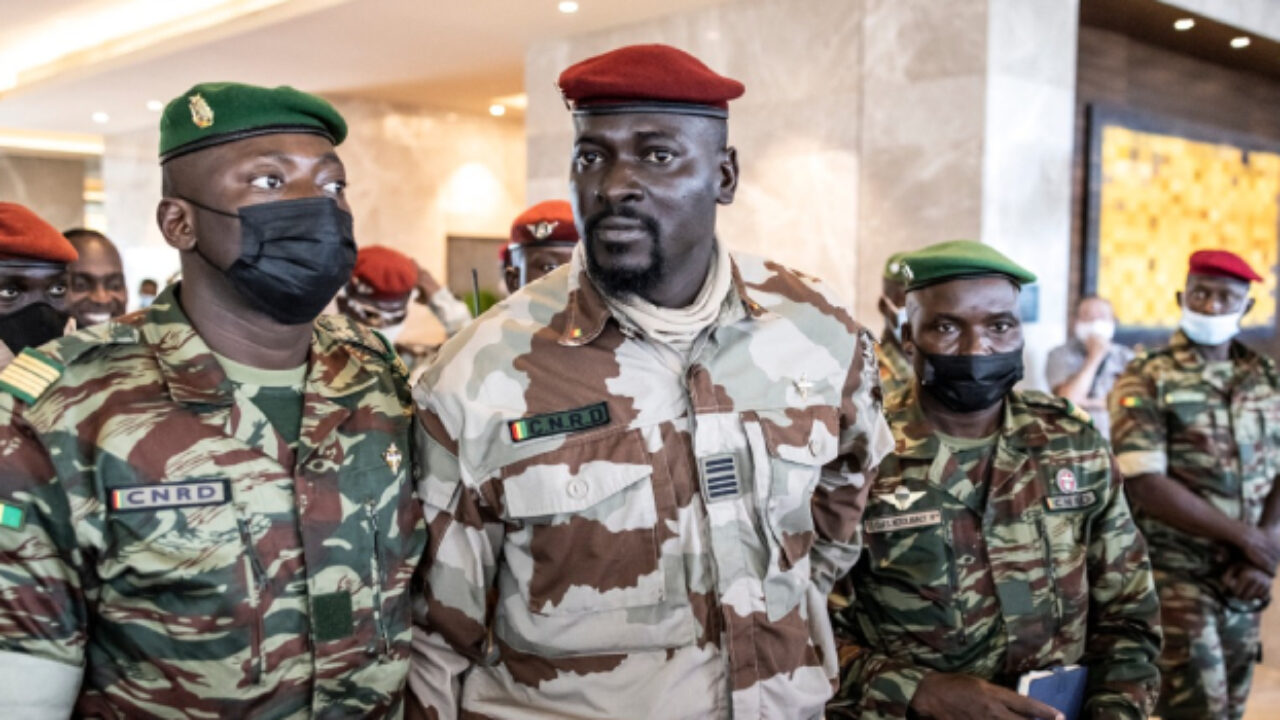
Guinea’s military ruler, Mamady Doumbouya, has swapped his familiar combat fatigues for civilian attire, yet his grip on power remains firm as he moves to formalise his leadership through presidential elections scheduled for Sunday.
The 41-year-old junta chief, who has governed the West African nation since seizing power in a 2021 coup, is attempting to secure electoral legitimacy despite widespread criticism and the exclusion of key opposition figures from the race.
In a carefully staged video released in early December, Doumbouya appeared seated behind a desk, dressed in a white cap and T-shirt bearing his name and the slogan “Building Together.” In the clip, he pledged “peace and stability” for Guinea. The message marked his only direct public communication throughout the campaign period, reinforcing his preference for controlled visibility.
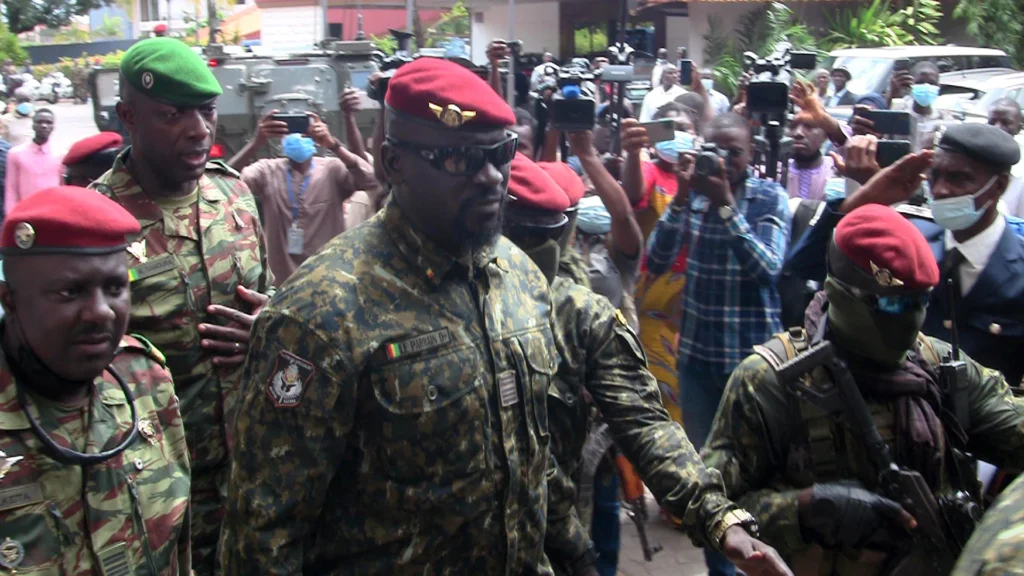
Although Doumbouya initially assured Guineans that the military would oversee a transition back to civilian rule without participating in elections, he has since reversed that position. As the vote draws closer, the former colonel has made rare public appearances in civilian clothing, consistently flanked by heavily armed members of the Special Forces Group, the elite military unit that forms the backbone of his authority.
It was as commander of these forces that Doumbouya led the dramatic assault on the presidential palace in September 2021, overthrowing long-serving civilian leader Alpha Condé, who had ruled for about 11 years. At the time, many Guineans welcomed the coup, following violent crackdowns on protests linked to Condé’s controversial third-term bid.
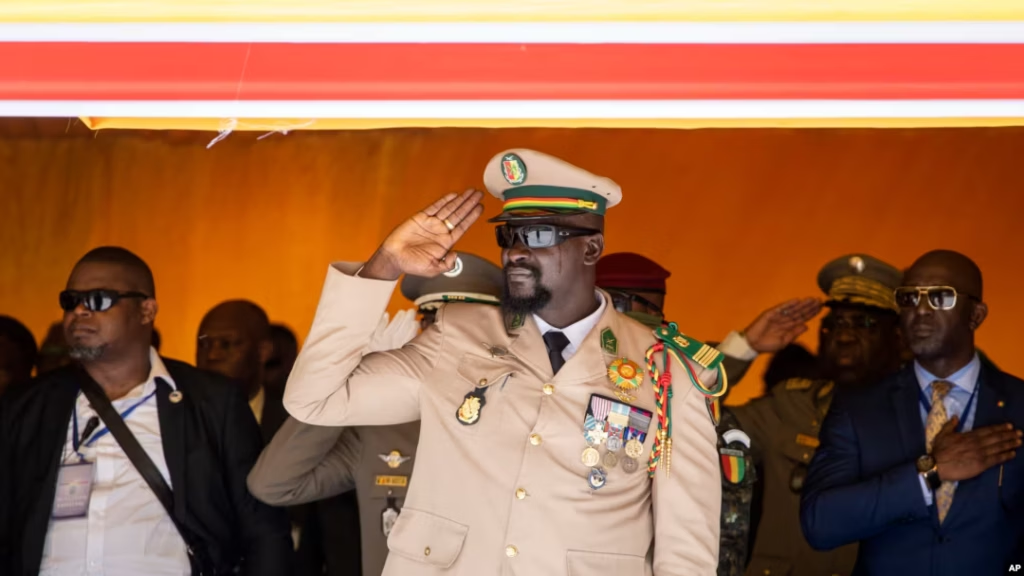
Once in power, Doumbouya promised that members of the ruling junta would not contest elections designed to restore civilian governance. Over time, however, he promoted himself to the rank of general, reneged on that pledge, and steadily consolidated power while suppressing dissent.
Under his rule, multiple political parties and media organisations have been suspended. Public demonstrations were banned in 2022 and forcefully dispersed, while opposition politicians and civil society leaders have faced arrests, convictions, or exile. Reports of enforced disappearances and abductions have also increased, according to rights groups.
Operating largely from the Mohammed V presidential palace overlooking the Atlantic Ocean in Conakry, Doumbouya rarely addresses the public. Instead, his prime minister, Amadou Oury Bah, and government spokesman, Amara Camara, have toured the country campaigning on his behalf. Running as an independent candidate, Doumbouya is backed by a political movement known as GMD—Generation for Modernity and Development—formed around his leadership.
Born in Kankan in eastern Guinea, Doumbouya belongs to the Malinke ethnic group, the country’s second-largest. His personal and professional ties to France remain significant. He joined the French Foreign Legion in 2002 and took part in operations in Afghanistan and the Central African Republic. His official biography states that he holds a master’s degree in defence and industrial dynamics from Paris’s Panthéon-Assas University and trained at France’s École de Guerre. He is married to a former French gendarme and has four children.
A resurfaced 2017 video shows Doumbouya, then an officer in Guinea’s army, lamenting the lack of ammunition, claiming politicians feared a coup. Ironically, he would later lead one.
Doumbouya rose to power at a time when several Sahelian states under military rule were distancing themselves from former colonial power France and the ECOWAS bloc while strengthening ties with Russia. Unlike some of his counterparts, however, he has maintained cordial relations with France and other international partners.
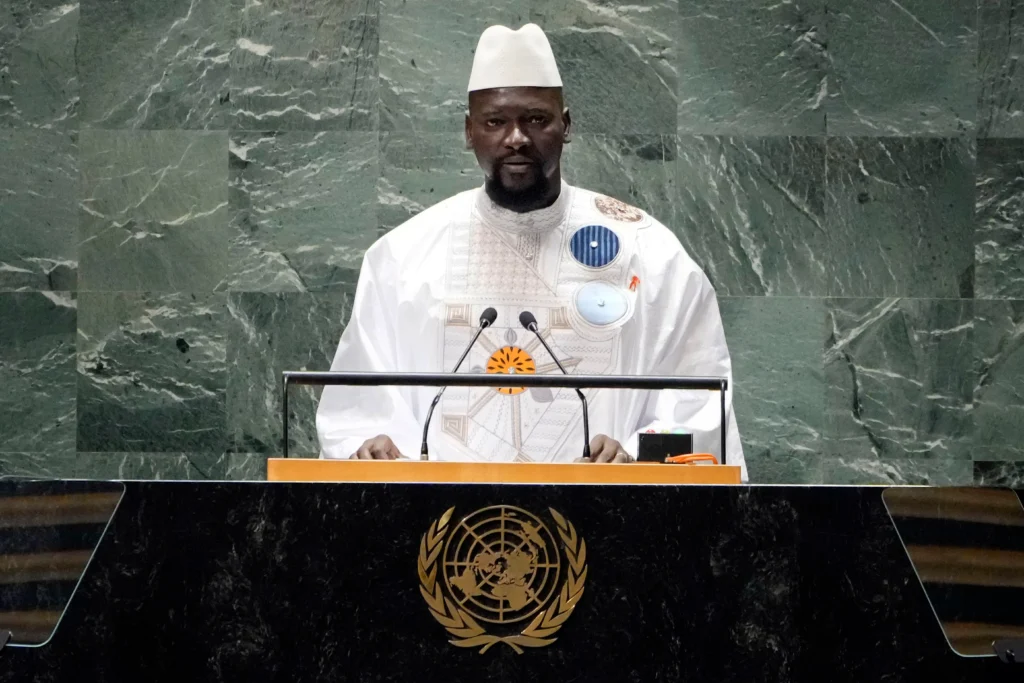
Addressing the United Nations General Assembly in 2023, Doumbouya defended the wave of military takeovers in Africa, criticising a democratic system he said had been “imposed” on the continent. He framed his stance as non-aligned, insisting he was neither anti-American, anti-Russian, nor anti-French, but “simply pro-African.”
According to political analyst Kabinet Fofana of the Conakry-based think tank Les Sondeurs, this “neither-nor” approach has served him well. The international community, Fofana noted, is handling Doumbouya cautiously in an effort to keep him as a strategic partner.
Foreign observers have also welcomed signs of economic progress under his leadership, particularly the commencement of operations at the massive Simandou iron ore project in southeastern Guinea, a development seen as crucial to the country’s long-term economic prospects.
What you should know
Mamady Doumbouya is Guinea’s military ruler who came to power through a 2021 coup after overthrowing President Alpha Condé.
Although he initially promised a transition to civilian rule without junta members contesting elections, he is now running for president in a vote that excludes major opposition figures. His leadership has been marked by repression, bans on protests, and arrests of critics, alongside efforts to maintain international partnerships.
Doumbouya presents himself as non-aligned globally and “pro-African,” while promoting economic reforms such as the launch of the Simandou iron ore project.