
Google has unveiled its largest-ever investment in Germany, committing €5.5 billion ($6.4 billion) toward the construction of a new data centre and several other projects aimed at advancing artificial intelligence and digital growth across the country.
The move marks a significant step in Europe’s efforts to close the AI gap with the United States and China.
The announcement follows last week’s revelation of a joint initiative between Nvidia and Deutsche Telekom to establish a high-tech AI hub in Germany designed to accelerate the continent’s adoption of artificial intelligence technologies.
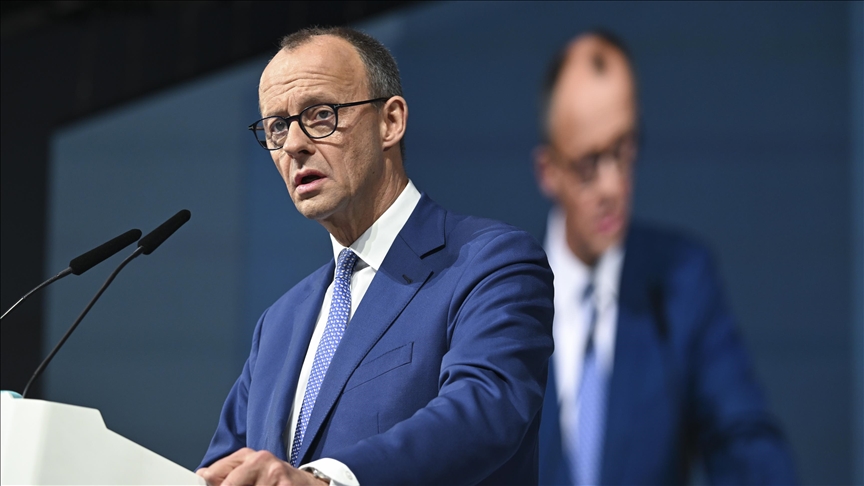
Chancellor Friedrich Merz welcomed Google’s investment, emphasizing its importance for both the German economy and Europe’s digital future. “We are driving growth in Germany,” Merz said, adding that “our country is and will remain one of the most attractive places for investment in the world.”
Under the plan, Google will construct a new data centre in the western state of Hesse while expanding an existing one to strengthen AI computing power. The company also intends to enlarge its offices in Berlin, Frankfurt, and Munich, alongside launching several sustainability projects aimed at reducing greenhouse gas emissions.
Among the environmental initiatives are the purchase of renewable wind and solar energy and a “heat recovery project” that will repurpose excess heat from data centres for use by local residents. Google stated that the new developments will support around 9,000 jobs annually in Germany.
“Google is deepening its roots in Germany, extending our investments in the country and creating new avenues for AI-driven transformation,” said Philipp Justus, Google’s Country Manager for Germany.
The investment comes as Chancellor Merz’s coalition government works to attract foreign investment to rejuvenate Germany’s digital economy amid concerns that the nation’s traditional industrial giants are losing momentum.
The Nvidia and Deutsche Telekom project, which involves a €1 billion investment in a Munich-based computing hub, will provide European companies—from startups to large corporations—improved access to AI resources.
Germany’s digital infrastructure is growing rapidly. By 2030, the country’s data centre computing power is expected to increase by 70 percent, according to Bitkom, a German digital business association. However, Europe still lags behind other global leaders, with a total computing capacity of just 16 gigawatts compared to 48 in the United States and 38 in China.
While Google’s expansion is widely viewed as a positive development, it has reignited debates about Europe’s dependency on US tech giants in critical sectors such as AI. With tensions between Europe and the US increasing since President Donald Trump’s return to power, some European leaders are calling for greater “digital sovereignty”—ensuring that data generated within Europe is stored and managed under European laws and values.
Addressing these concerns, Google highlighted that its new “sovereign” cloud computing solutions would enable customers to utilize AI technology “while adhering to local requirements and European values.”
Kristina Sinemus, Hesse’s Minister for Digital Strategy and Development, also dismissed fears that partnerships with US tech firms could endanger data security. “We don’t automatically hand over all the data to the US with a US investor,” she said, noting that strict agreements ensure data remains within Europe. “We need to stop thinking in black and white terms, because it’s a bit more complex than that.”
What You Should Know
Google’s €5.5 billion investment represents a major milestone in Germany’s push to become a leader in artificial intelligence and cloud computing.
Beyond job creation and infrastructure expansion, the move signals Europe’s growing ambition to compete with global tech powers.
By balancing innovation with data sovereignty, Germany hopes to build a secure, sustainable, and AI-driven digital economy that aligns with European values.