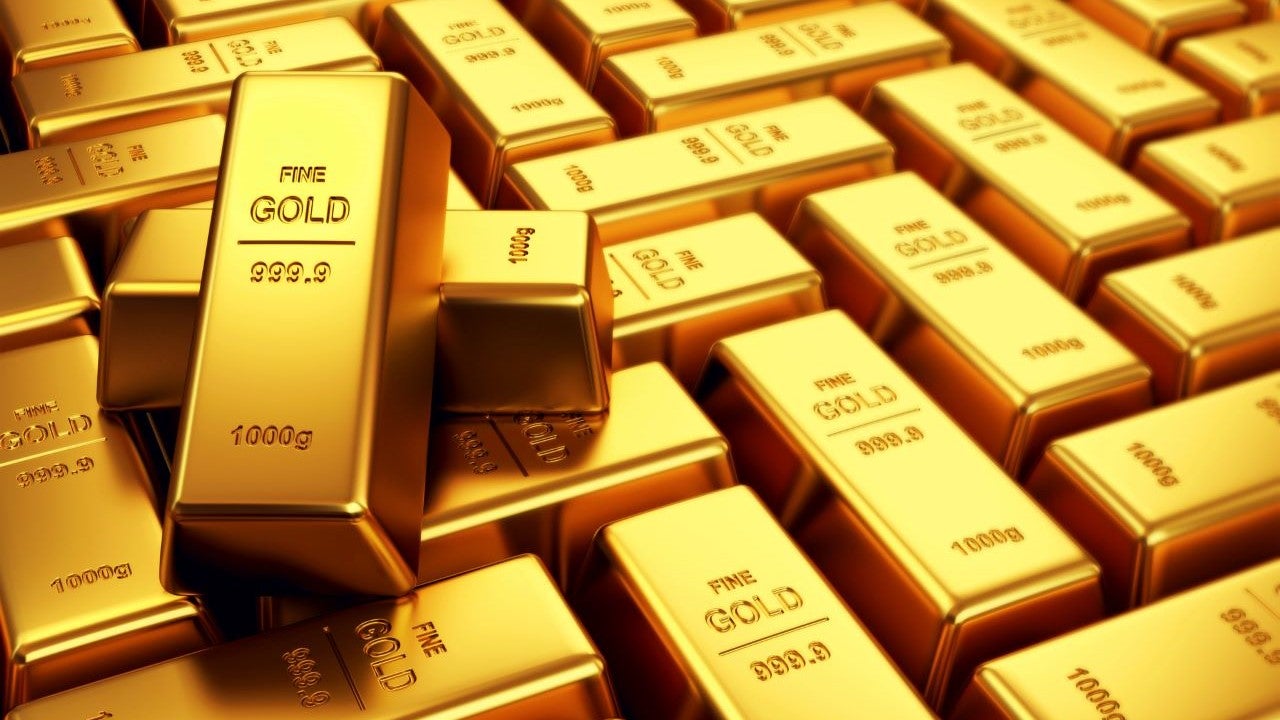
Gold prices shattered previous records on Tuesday, surging past the $4,100 threshold as investors sought refuge amid escalating trade tensions between Washington and Beijing, while anticipation builds for an imminent Federal Reserve interest rate reduction.
Spot gold climbed 0.5% to reach $4,129.16 per ounce by mid-morning European trading, after touching an all-time peak of $4,179.48 earlier in the session. U.S. gold futures for December delivery advanced 0.4% to $4,147.10, extending the precious metal’s remarkable rally.
The breakthrough comes as gold has posted an extraordinary 57% gain year-to-date, first breaching the psychologically significant $4,100 level on Monday. The historic surge reflects a confluence of factors that have transformed gold into one of this year’s best-performing assets: persistent geopolitical uncertainties, growing expectations of monetary policy easing, aggressive accumulation by central banks worldwide, and substantial inflows into gold-backed exchange-traded funds.
Trade War Fears Reignite
“Renewed concerns over a global trade war have pushed gold above the psychological $4,100 level,” explained Han Tan, chief market analyst at Nemo Money. “The next leg up towards mid-$4,000 territory may require dovish surprises out of this month’s FOMC meeting.”
The latest uptick in safe-haven demand follows fresh developments in U.S.-China relations. While diplomatic channels remain open—U.S. Treasury Secretary Scott Bessent confirmed Monday that President Donald Trump is still scheduled to meet Chinese leader Xi Jinping in South Korea later this month—economic friction continues to intensify.
Both nations are preparing to implement port fees on ocean shipping firms, a move that could affect the transportation of goods ranging from consumer products to energy commodities.
Fed Policy in Focus
Market participants are now laser-focused on Federal Reserve Chair Jerome Powell’s upcoming address at the National Association for Business Economics (NABE) annual meeting on Tuesday, seeking clarity on the central bank’s monetary policy trajectory.
The case for rate cuts has strengthened in recent days. Philadelphia Federal Reserve President Anna Paulson noted Monday that mounting risks to the labor market have reinforced the rationale for additional rate reductions.
Such a policy shift would particularly benefit gold, which traditionally thrives in low-interest-rate environments as the opportunity cost of holding the non-yielding asset diminishes.
Bullish Forecasts Emerge
Wall Street’s confidence in gold’s continued ascent is evident in increasingly bullish price targets. Analysts at both Bank of America and Societe Generale are now projecting gold could reach $5,000 per ounce by 2026—a forecast that would have seemed outlandish just months ago but now appears increasingly plausible given current market dynamics.
Silver’s Dramatic Move
While gold captured headlines, silver delivered an even more volatile performance. Spot silver retreated 1.6% to $51.49 per ounce after hitting its own record high of $53.60 earlier in the session. The white metal has been propelled by the same fundamental factors supporting gold, compounded by acute supply tightness in physical markets.
“The short squeeze in London has been the obvious catalyst for silver’s new record high, even as bulls were already benefiting from the broader safe haven play,” Tan observed, referring to market dynamics forcing traders who had bet against silver prices to frantically cover their positions.
Platinum Group Metals Advance
The precious metals complex showed broad strength, with platinum rising 0.2% to $1,648.32 per ounce and palladium gaining 1.5% to $1,496.24, though both remained well below gold and silver’s headline-grabbing performances.
As markets digest today’s developments and await Powell’s remarks, the question facing investors is whether gold’s meteoric rise represents a sustainable trend driven by fundamental shifts in the global economic landscape—or whether prices have run too far, too fast.
With trade tensions unresolved and monetary policy in flux, volatility appears likely to remain elevated in precious metals markets for the foreseeable future.
WHAT YOU SHOULD KNOW
Gold has hit an unprecedented high above $4,100 per ounce, driven by a perfect storm of factors: escalating U.S.-China trade tensions pushing investors toward safe-haven assets, expectations of imminent Federal Reserve rate cuts that make non-yielding gold more attractive, and sustained demand from central banks and institutional investors.
With gold already up 57% this year and major banks forecasting $5,000 per ounce by 2026, the rally reflects deep-seated concerns about global economic stability and trade conflicts. The immediate catalyst remains the U.S.-China standoff, while the Federal Reserve’s next move on interest rates could determine whether gold continues its historic climb or takes a breather.
For investors, gold’s surge signals mounting uncertainty in traditional markets and a fundamental shift toward protective assets.