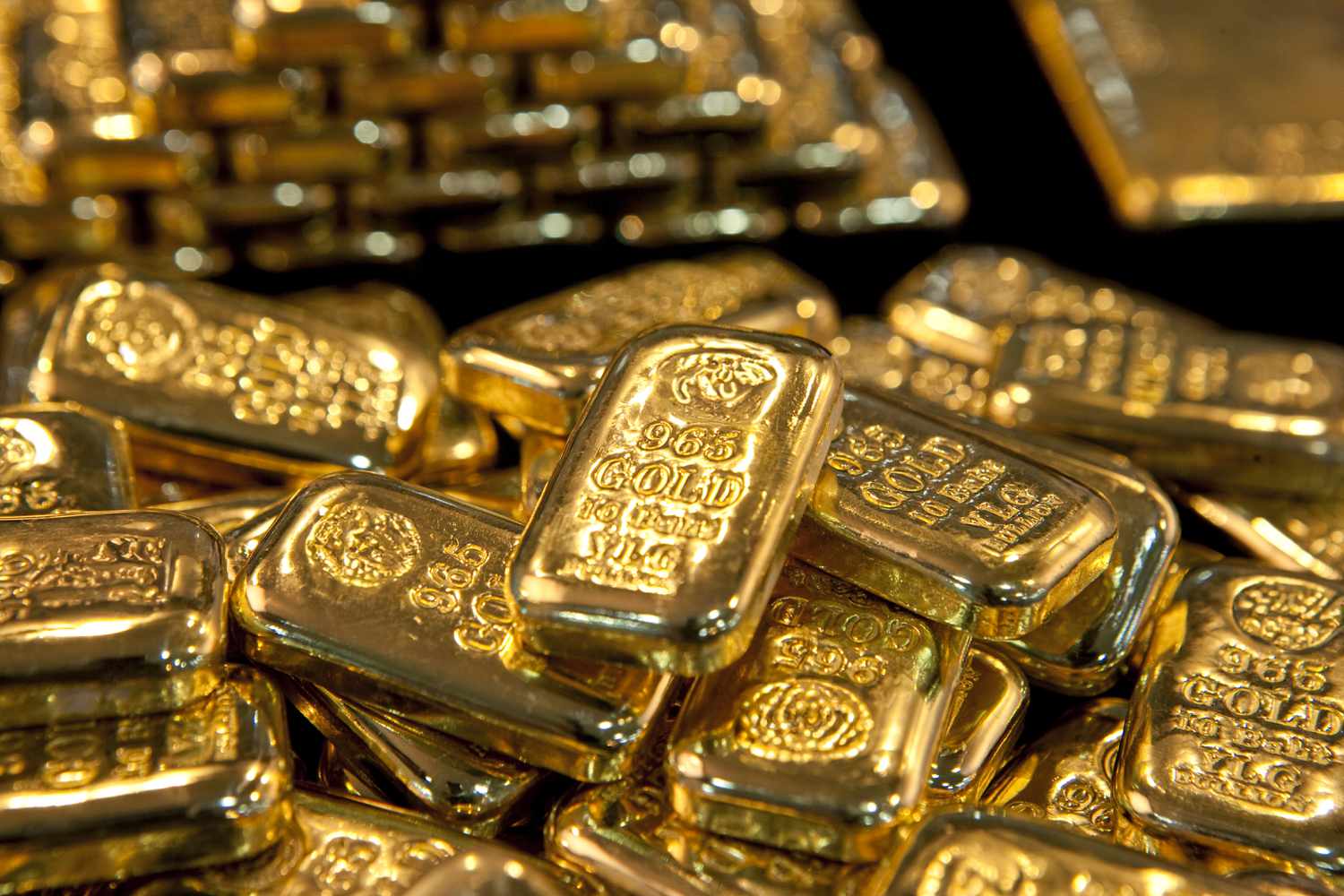
Gold prices shattered the $5,300-per-ounce threshold for the first time in history on Wednesday, extending a remarkable rally that has seen the precious metal gain over a fifth of its value since January, as mounting concerns over the U.S. dollar’s stability sent investors scrambling for safe-haven assets.
Spot gold climbed 2.3% to reach $5,305.65 per ounce by 8:32 a.m. GMT, after touching an intraday record of $5,311.31. U.S. gold futures for February delivery posted even steeper gains, surging 4.3% to $5,301.90 per ounce, underscoring the intensity of demand across both physical and paper markets.
The latest surge comes as the U.S. dollar languishes near four-year lows, with currency analysts describing the greenback’s predicament as a full-blown “crisis of confidence.” Market anxiety intensified following President Donald Trump‘s comments that the dollar’s current value is “great,” a statement interpreted by traders as tacit approval of further currency weakness—a marked departure from traditional American strong-dollar policy.
“What we’re witnessing is due to the very strong indirect correlation with the dollar,” explained Kelvin Wong, senior market analyst at OANDA. “Trump’s remark to a casual question about the dollar implied that there is a broad-based consensus within the White House to have a weaker greenback going forward.”
A declining dollar makes gold—priced in the U.S. currency—more attractive to international buyers, amplifying demand from overseas markets and creating additional upward pressure on prices.
The gold rally is unfolding against the backdrop of heightened uncertainty surrounding Federal Reserve policy. The central bank’s January monetary policy meeting is currently underway, with officials widely expected to hold interest rates steady. However, recent political developments have cast a shadow over the Fed’s traditional independence.
President Trump announced that he would soon reveal his selection for Fed chair and predicted that interest rates would decline once his nominee assumes the position—comments that have raised concerns about potential White House interference in monetary policy.
“Given the tension between the Fed’s mandates and the White House, I think the markets are just getting defensive ahead of Fed Chair Jerome Powell‘s remarks later today,” said Ilya Spivak, head of global macro at Tastylive.
Gold, which generates no yield, typically thrives in low-interest-rate environments, as it becomes more competitive relative to interest-bearing assets. The prospect of easier monetary policy ahead has bolstered the precious metal’s appeal.
Gold’s extraordinary performance has been accompanied by equally impressive gains across the broader precious metals complex. Silver climbed 1.5% to $114.68 per ounce on Wednesday, having already struck a record high of $117.69 on Monday. The white metal has rocketed nearly 60% higher in 2026, outpacing even gold’s stellar returns.
Platinum advanced 2.3% to $2,703.11 per ounce, following Monday’s all-time peak of $2,918.80, while palladium gained 2.2% to trade at $1,976.62. The synchronized strength across multiple precious metals suggests investors are seeking broad exposure to tangible assets amid currency and geopolitical uncertainties.
Major financial institutions are projecting additional gains ahead. Deutsche Bank issued a forecast on Tuesday predicting gold could reach $6,000 per ounce during 2026, citing “persistent investment demand as central banks and investors increase allocations to non-dollar and tangible assets.”
The bank’s outlook reflects a growing trend among global central banks to diversify their reserves away from traditional dollar-denominated holdings, a shift that has provided fundamental support for gold prices even as Western investors have also ramped up their positions.
As markets await Chair Powell’s post-meeting press conference later Wednesday, traders will be parsing his comments for any indication of how the Federal Reserve intends to navigate the increasingly complex intersection of monetary policy, political pressure, and currency stability—factors that will likely determine whether gold’s historic rally has further room to run.
WHAT YOU SHOULD KNOW
Gold has surged past $5,300 per ounce—up over 20% this year—driven primarily by a collapsing U.S. dollar and growing uncertainty around Federal Reserve independence. President Trump’s apparent endorsement of a weaker dollar, combined with his plans to replace the Fed chair and push for lower interest rates, has triggered a crisis of confidence in the greenback.
Investors are flooding into gold and other precious metals as safe-haven assets, with analysts now predicting prices could reach $6,000 per ounce in 2026. The bottom line: currency instability and political interference in monetary policy are fueling gold’s historic rally.