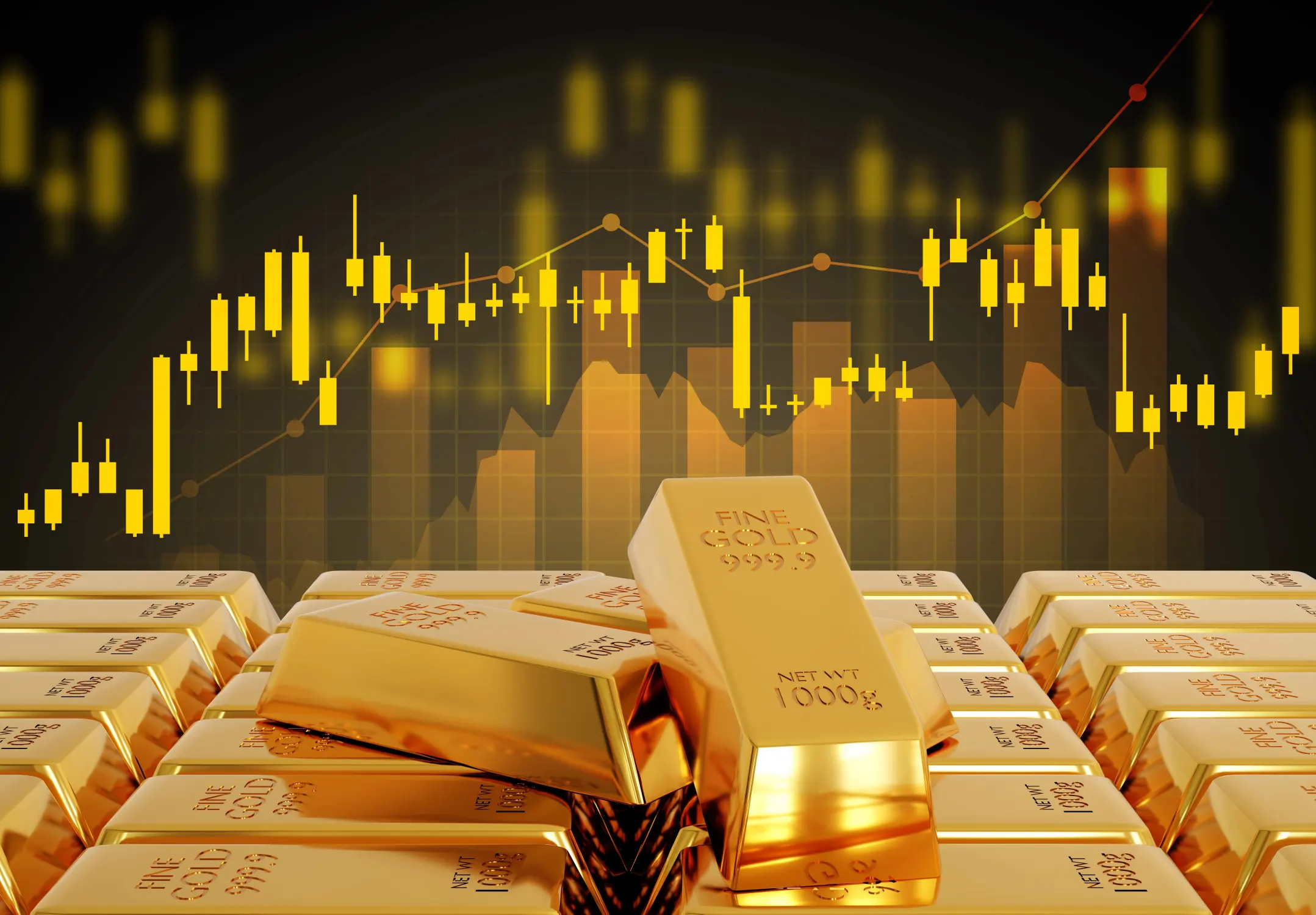
Gold retreated on Thursday, surrendering early gains as a firmer U.S. dollar and mounting doubts over near-term Federal Reserve rate cuts outweighed the traditional safe-haven appeal of escalating violence in the Middle East.
Spot gold was trading 0.2 percent lower at $5,167.15 per ounce by 0718 GMT, while U.S. gold futures for April delivery eased 0.1 percent to $5,173.10. The modest declines came despite fresh Iranian attacks on shipping and energy infrastructure that have sent crude oil surging above $100 a barrel and raised the specter of a supply crisis not seen since the 1970s oil shocks.
The U.S. dollar firmed 0.2 percent against a basket of currencies, rendering dollar-denominated bullion more expensive for foreign buyers and exerting classic downward pressure on the precious metal.
“I think the USD strength and interrelated rates story is a slight headwind for gold despite the actual violence that’s taking place, which is otherwise supportive of gold,” said Nicholas Frappell, global head of institutional markets at ABC Refinery.
The geopolitical catalyst unfolded rapidly. Iran warned the world to brace for oil at $200 a barrel after its forces struck merchant vessels on Wednesday and stepped up assaults on oil and transport facilities across the region.
Tehran has deployed roughly a dozen mines in the Strait of Hormuz, according to shipping sources, a move that threatens to paralyze one of the world’s most critical chokepoints for oil and liquefied natural gas.
Tankers remain stranded in the narrow waterway for more than a week, while producers have begun suspending output as onshore storage tanks approach capacity. The International Energy Agency has urged an immediate, massive release of strategic petroleum reserves to cushion what it called one of the worst supply disruptions in decades.
The oil price spike is already feeding directly into inflation expectations. Goldman Sachs pushed back its forecast for Federal Reserve rate cuts, now anticipating only quarter-point reductions in September and December rather than earlier moves. The bank cited “rising inflation risks linked to the Middle East conflict” as the primary reason for the delay.
U.S. consumer price data released earlier reinforced those concerns. The February CPI rose 0.3 percent month-on-month, matching forecasts but accelerating from January’s 0.2 percent gain, while the annual rate stood at 2.4 percent, also in line with expectations. Investors now turn their attention to Friday’s release of the delayed January Personal Consumption Expenditures (PCE) price index, the Fed’s preferred inflation gauge.
The combination of hotter inflation readings and higher energy costs has dimmed hopes for aggressive monetary easing, stripping gold of one of its key supports even as geopolitical uncertainty continues to simmer.
Not all precious metals followed gold lower. Spot silver bucked the trend, rising 0.3 percent to $86.06 per ounce. Platinum gained 0.3 percent to $2,176.14, while palladium climbed 0.9 percent to $1,651.11, reflecting industrial demand resilience amid the energy turmoil.
With the Strait of Hormuz effectively bottled up and central bankers forced to recalibrate their easing calendars, traders are bracing for continued volatility.
For now, the dollar’s strength and inflation worries have the upper hand—but any further escalation in the Middle East could quickly flip the script for the yellow metal once again.
WHAT YOU SHOULD KNOW
Gold prices dipped modestly today as a stronger U.S. dollar and fading expectations for imminent Fed rate cuts outweighed safe-haven buying.
The dominant factor driving markets right now: surging oil prices above $100/barrel—triggered by Iran’s attacks and mining of the Strait of Hormuz—are reigniting serious inflation fears and forcing analysts to delay anticipated interest-rate cuts.