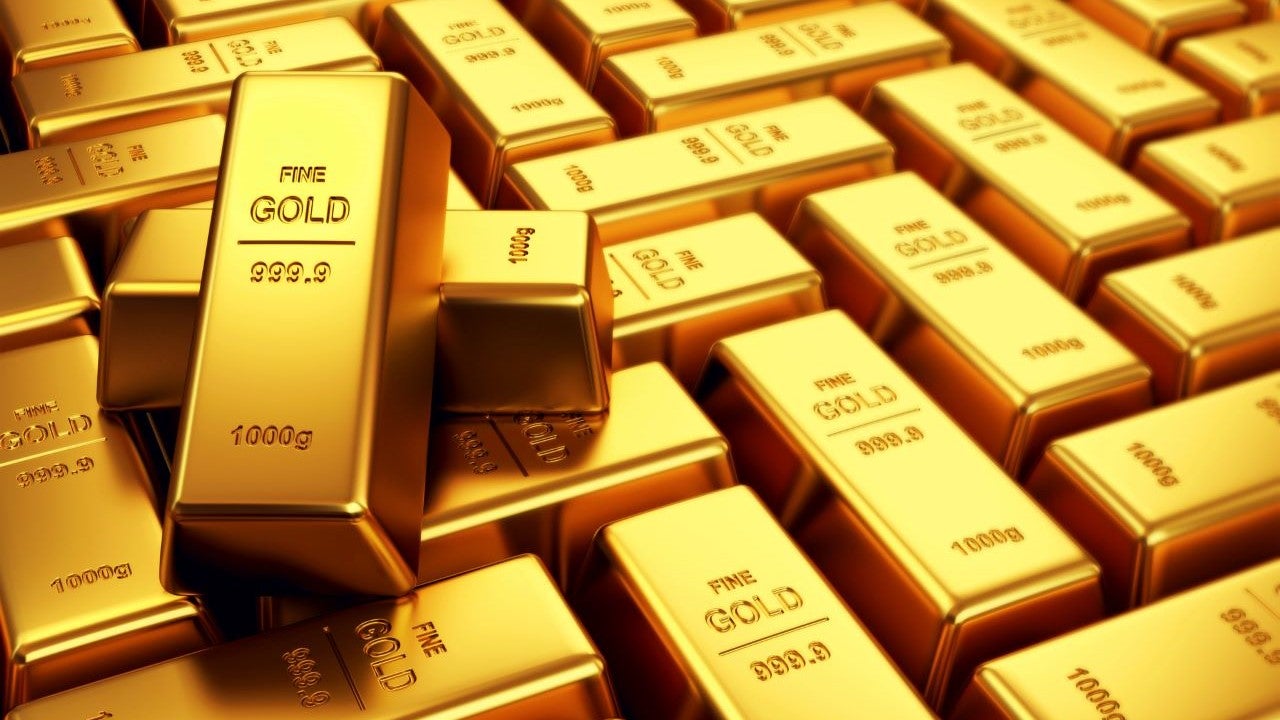
Gold prices shattered records for a fifth consecutive trading session on Thursday, propelled by a perfect storm of geopolitical turbulence, economic uncertainty, and expectations of aggressive monetary easing by the Federal Reserve.
Spot gold climbed 0.6% to $4,233.39 per ounce as of 0810 GMT, after touching an unprecedented high of $4,241.77 earlier in the session. U.S. gold futures for December delivery surged even higher, gaining 1.1% to $4,247.10, underscoring the metal’s remarkable 61% advance so far this year.
The latest rally comes as investors scramble for safety amid deteriorating relations between Washington and Beijing. On Wednesday, U.S. officials sharply criticized China’s sweeping expansion of rare earth export controls, warning the measures pose a grave threat to global supply chains and could disrupt critical industries from defense manufacturing to consumer electronics.
“Renewed trade frictions are adding to uncertainty across global supply chains, and investors are increasingly turning to gold,” explained Nitesh Shah, commodities strategist at WisdomTree. Shah noted that gold’s breakout also reflects growing investor unease over U.S. policy credibility, with political dysfunction in Washington compounding concerns about the world’s largest economy.
The precious metal’s historic run has been fueled by a confluence of supportive factors rarely seen simultaneously in financial markets. Beyond trade tensions, a two-week federal government shutdown is inflicting mounting economic damage, with a Treasury official warning Wednesday that the paralysis could be costing the U.S. economy as much as $15 billion weekly in lost production.
Market participants are now betting heavily on the Federal Reserve to step in with substantial interest rate relief. Traders are pricing in a 25 basis-point cut in October with 98% certainty, followed by another reduction in December, seen as a 95% probability. Such cuts would make non-yielding assets like gold more attractive compared to interest-bearing alternatives.
“Gold’s rally has been driven by a cocktail of factors, including expectations of interest rate cuts, ongoing political and economic uncertainty, solid central bank buying, inflows into gold exchange-traded funds, and a weak dollar,” Shah said, adding that there’s a strong likelihood the metal remains above the psychologically significant $4,200 level.
The bullish sentiment extends well into next year. Aakash Doshi, head of gold metals strategy at State Street Investment Management, suggested that $5,000 per ounce in 2026 is within reach—though he cautioned such gains would require sustained physical demand alongside continued strength in financial allocations to the yellow metal.
The broader precious metals complex presented a mixed picture on Thursday. Spot silver retreated 0.6% to $52.77 per ounce after hitting its own record high of $53.60 on Tuesday. The white metal has largely tracked gold’s ascent while benefiting from tightness in spot market availability. Platinum eased 0.4% to $1,653.93, while palladium bucked the downward trend with a 0.3% gain to $1,540.21.
As traditional safe-haven assets continue attracting capital during what many analysts describe as an unprecedented period of overlapping crises, gold’s status as a store of value during instability appears more relevant than ever. With no immediate resolution in sight to either the U.S.-China trade dispute or Washington’s government paralysis, market watchers expect haven demand to persist well into the final quarter of the year.
WHAT YOU SHOULD KNOW
Gold hit a record high of $4,241.77, up 61% this year, driven by a dangerous convergence of crises: escalating U.S.-China trade tensions over rare earth exports, a costly two-week U.S. government shutdown draining $15 billion weekly from the economy, and near-certain Fed rate cuts in October and December. Investors are fleeing to safety as confidence in U.S. policy erodes, with analysts eyeing $5,000 gold by 2026 if the chaos continues.