Summary
The United Nations has raised a grave alarm over the global fight against HIV and AIDS, warning that sudden and severe international funding cuts have dealt the most damaging blow to progress in decades.
UNAIDS Executive Director Winnie Byanyima, during a briefing in Geneva, said, “The global response to HIV has suffered its most significant setback in decades,” stressing that many low- and middle-income countries are already feeling the shock.
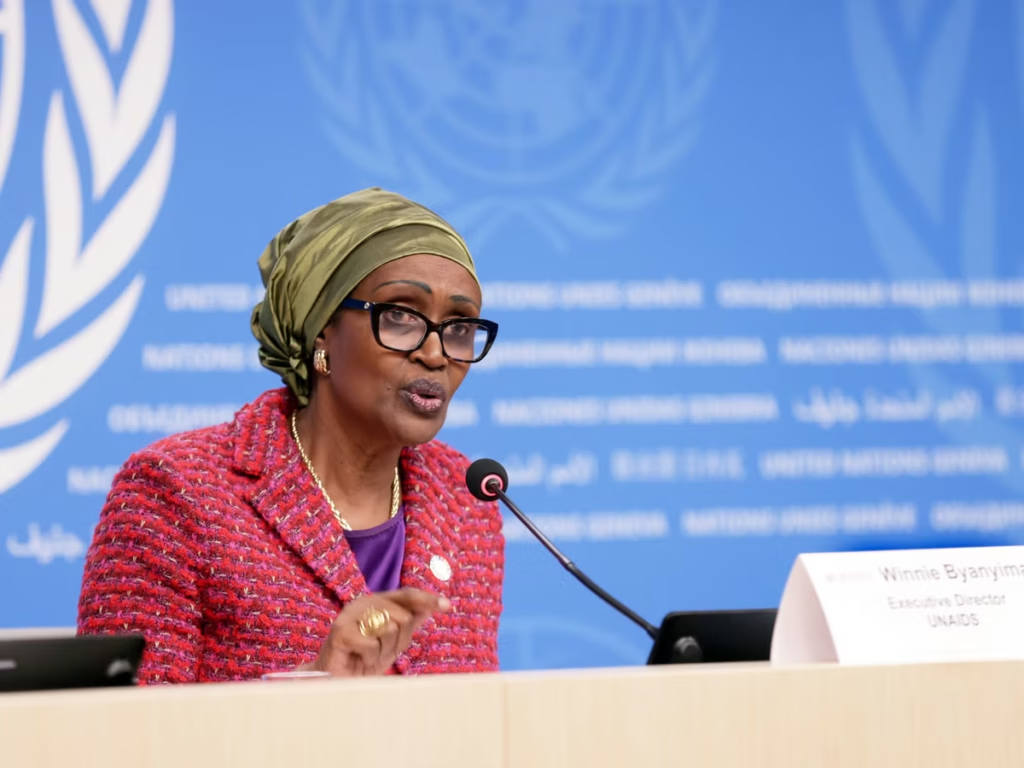
Presenting a new report, Byanyima lamented the “devastating consequences of abrupt international funding cuts for many international donors, which sent shock waves through low- and middle-income countries.” She pointed specifically to “the abrupt pause by the United States” following President Donald Trump’s return to the White House earlier this year, while noting that several other major donors had also slashed their foreign aid budgets.
According to her, “the cuts are dramatic across the board,” describing how the support structure that has long sustained HIV services has been “shaken to its core” since the beginning of the year.
Byanyima expressed deep concern over what she termed a “collapse” in HIV prevention services, warning that failure to urgently address the funding gaps could lead to “3.3 million additional new infections” by 2030.
She emphasised that the current trajectory is unsustainable and risks reversing years of hard-won progress, making it harder for vulnerable nations to maintain testing, treatment, and preventive care.
What You Should Know
UNAIDS is warning that global HIV programs are at risk of unraveling due to steep cuts in donor funding, including a major pause from the United States.
These reductions are already constraining vital HIV prevention and treatment services across vulnerable countries.
If the situation persists, millions more people could be infected by 2030, threatening to reverse decades of progress in the global HIV response.