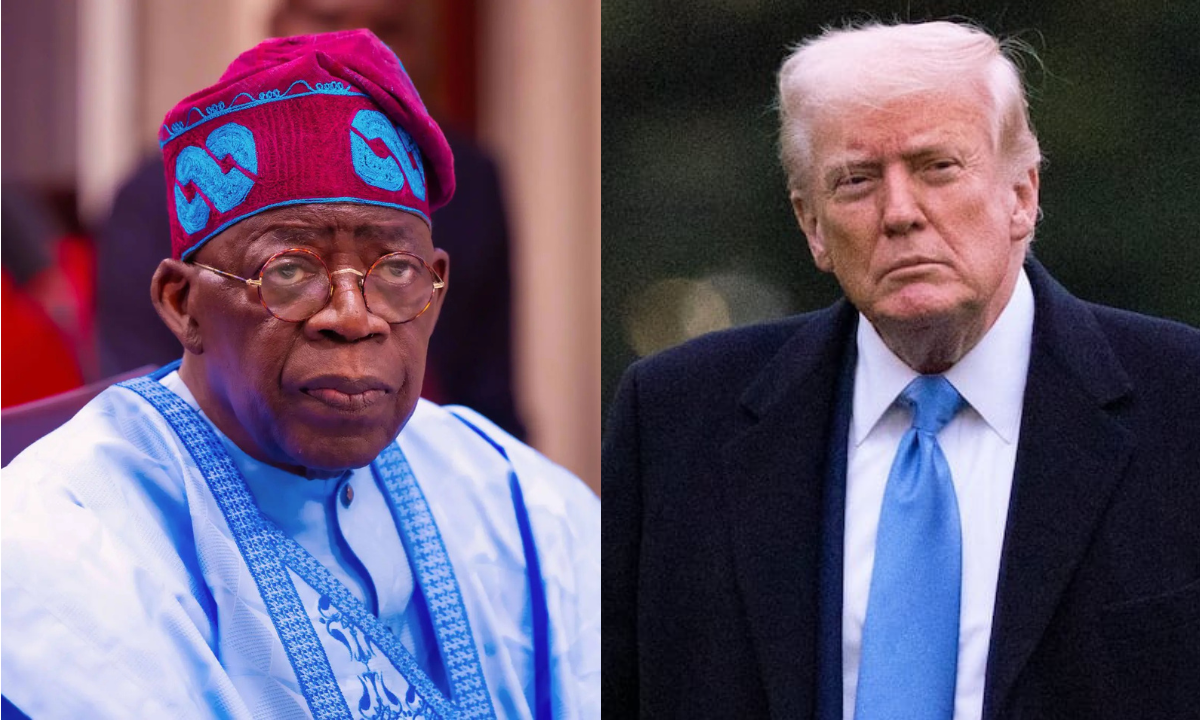
The Nigerian government has leveled serious accusations against the United States Mission in Nigeria, accusing it of launching what it describes as a “relentless smear campaign” aimed at undermining the country’s international reputation.
Officials have described the actions of the US Mission as contrary to the spirit of diplomacy, asserting that such conduct violates established international conventions and could further erode the goodwill between the two nations.
The recent spark in tensions followed the distribution of a critical report by The Africa Report, a Paris-based publication, which was shared by the US Mission. The article alleged that Nigerian political elites were wasting public funds on opulent government buildings while citizens suffered economically. It particularly singled out the governments of Oyo and Gombe states, portraying recent construction projects as emblematic of waste and insensitivity.
However, Nigerian officials have strongly rejected the report’s claims, arguing that the criticism is not only unfounded but also misrepresents the realities on the ground. According to sources within the government, the governors of the states in question—Seyi Makinde of Oyo and Inuwa Yahaya of Gombe—are among the most financially responsible and effective leaders in the country.
One official, speaking anonymously, asserted that both governors have shown exceptional fiscal management and governance, with Governor Makinde consistently recognized for his performance and accountability, while Governor Yahaya has maintained a record of paying salaries, building hospitals, and improving residents’ quality of life.
“These are hardly the faces of mismanagement,” the source said, dismissing the report’s narrative as misleading.
Officials went further to argue that by distributing the report, the US Mission had gone beyond its diplomatic boundaries. A senior diplomat cited Article 41(1) of the Vienna Convention on Diplomatic Relations, emphasizing that diplomatic personnel are expected to refrain from interfering in the domestic matters of their host nations.
The recent actions by the US Mission, the official noted, stood in direct contradiction to this principle.
This controversy is the latest in a series of strains in the bilateral relationship between the two countries. Nigerian officials pointed to previous instances where they believe the US exhibited a pattern of negative projections about the country.
Notably, they referenced past predictions by American agencies that inaccurately forecasted Nigeria’s collapse by the year 2000. They also criticized a recent travel advisory issued by the US State Department on July 15, 2025, which warned American citizens to avoid 18 Nigerian states due to terrorism, kidnappings, and inadequate healthcare systems.
Many Nigerian analysts have dismissed the advisory as exaggerated and lacking in context. They argued that it failed to acknowledge the safety and vibrancy of key urban centers like Lagos and Abuja. One observer pointed out the irony in the warning by drawing attention to America’s own domestic issues, particularly gun violence. According to projections, approximately 47,000 Americans are expected to die from gun-related incidents this year alone.
“It’s a distorted mirror,” the analyst said, suggesting that the US portrays Nigeria as uniquely dangerous while ignoring its own internal crises.
Despite their strong reservations, Nigerian officials reiterated that they still value their country’s longstanding relationship with the United States. A senior government aide acknowledged the importance of the support Nigeria has received from Washington over the years but emphasized that such a relationship must be mutually respectful.
“We appreciate decades of US support,” the aide said. “But this relationship cannot come at the cost of Nigeria’s sovereignty or our dignity.”
With these diplomatic tensions mounting, the Nigerian government has sent a strong message to the US Mission: refrain from promoting “jaundiced narratives” and adhere to diplomatic etiquette, or risk further straining ties with Africa’s most populous and influential democracy.
What You Should Know
The Nigerian government has accused the US Mission of violating diplomatic norms by promoting critical narratives about the country, including a report portraying state-level infrastructure spending as wasteful.
Officials argue these portrayals ignore the achievements of fiscally responsible governors and highlight America’s own domestic challenges, like gun violence.
Despite the criticism, Nigeria emphasizes the need for respectful bilateral relations rooted in mutual dignity.