The Federal Government has announced plans to connect all schools across Nigeria to reliable internet services as part of efforts to strengthen digital learning and expand access to modern educational tools.
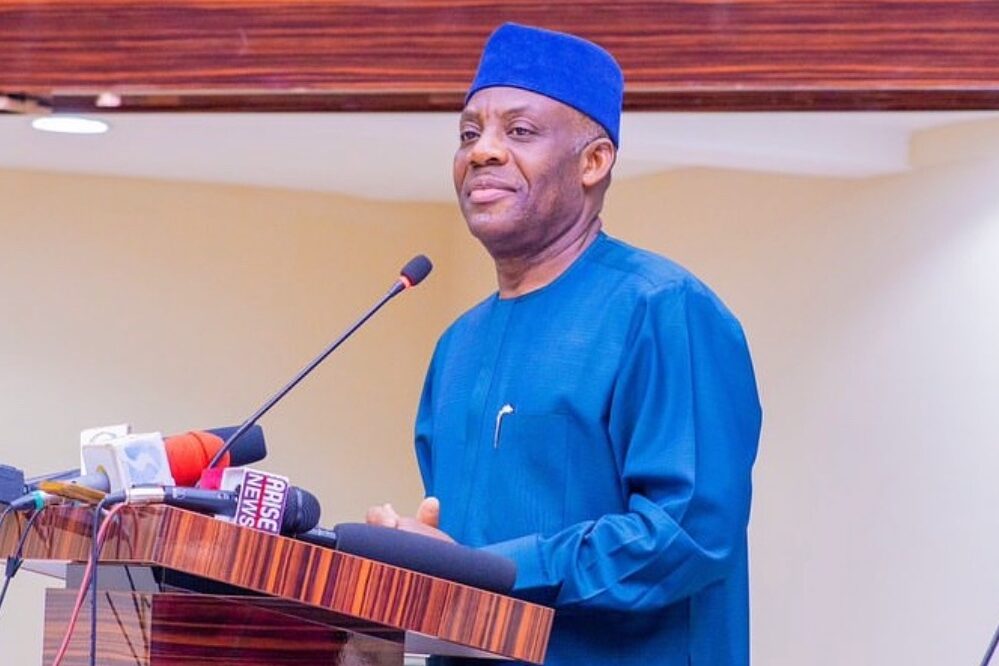
The announcement was made in a statement issued Tuesday by the Minister of Education, Tunji Alausa, who explained that the initiative was discussed during a high-level meeting with the Minister of Communications, Innovation and Digital Economy, Bosun Tijani.

According to Alausa, the initiative follows a directive from Bola Ahmed Tinubu to expand digital infrastructure across critical sectors of the economy, particularly education.
He noted that the programme is designed to harness modern technology, including Artificial Intelligence (AI), to improve teaching methods and learning outcomes across the country’s education system.
“By connecting our schools, we are opening the door to digital learning, emerging technologies such as AI, and the gradual transition to Computer-Based Testing for national examinations—ensuring Nigerian students are equipped to thrive in a digital, knowledge-driven world.
“The initiative will develop a coordinated framework to ensure connectivity across all levels of education, from foundational and secondary schools to universities and colleges,” Alausa said.
The minister explained that the initiative builds on previous work done through the Nigerian Research and Education Network, which previously provided broadband access to universities under a programme funded by the World Bank. Although the earlier programme achieved progress, it slowed after the funding cycle ended, prompting the Federal Government to adopt a broader and more sustainable strategy.
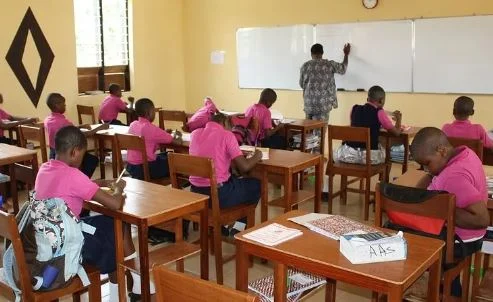
Alausa said the government intends to deploy approximately 90,000 kilometres of fibre optic broadband infrastructure and install about 3,700 telecommunications towers, particularly in rural and underserved communities, to ensure that schools across the country are deliberately connected.
He emphasised that the connectivity strategy will not rely solely on fibre networks but will also incorporate telecommunications towers, satellite technology, and other digital infrastructure required to provide reliable internet access nationwide.
To ensure effective implementation, the government has established two technical working groups to oversee the rollout across tertiary institutions as well as foundational and secondary schools. In addition, the governing council of NgREN will be expanded to include representatives from different levels of the education system to improve coordination.
The minister expressed optimism that the first phase of the initiative could begin delivering visible results within three months, allowing students and teachers to access digital learning platforms, global knowledge resources and emerging technologies such as artificial intelligence.
He added that improved digital infrastructure would also support planned reforms in the examination system, including a gradual transition to computer-based testing for national examinations.
Minister Tijani also highlighted the importance of reliable connectivity for technology-driven education. He explained that although Nigeria currently hosts about eight international subsea internet cables, the main challenge lies in distributing the available capacity inland through fibre networks so that schools and communities across the country can benefit.

“Most of the internet capacity enters Nigeria through submarine cables landing in Lagos, but without sufficient inland fibre infrastructure, that capacity cannot effectively reach schools and communities across the country,” Tijani said.
The latest initiative follows the Federal Government’s recent launch of Nigeria’s first National Educational Technology strategy, which aims to scale digital learning across the country while strengthening teacher training and improving access to education in underserved communities.
In 2025, the government also introduced eLearn, a centralised e-learning platform developed with support from the UK-funded PLANE programme. The platform provides students and teachers from basic to tertiary levels with curriculum-aligned exercises, instructional videos and other learning materials designed to expand access to quality education nationwide.
More recently, the Inspire Live(s) programme has been introduced to stream real-time interactive lessons to learners across the country. The initiative is designed to ensure continuity of education while helping bridge learning gaps created by teacher shortages or geographical barriers.
What you should know
Nigeria has been gradually expanding its digital education infrastructure as part of broader reforms aimed at modernising the learning system.
Programmes such as NgREN, eLearn, and the National Educational Technology Strategy are designed to improve access to digital tools, enhance teacher capacity and connect students with global knowledge resources.
By expanding broadband infrastructure and linking schools to reliable internet services, the government hopes to promote digital literacy, enable computer-based examinations and ensure that Nigerian students are better prepared for a technology-driven global economy.