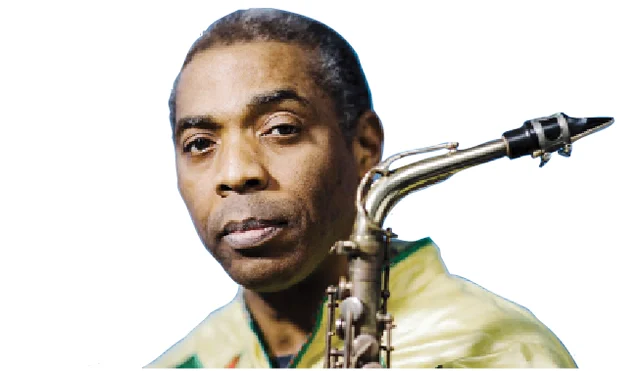
Afrobeat musician Femi Kuti has expressed deep regret over the recent wave of comparisons between contemporary Nigerian music stars and his late father, Fela Anikulapo-Kuti, the legendary pioneer of Afrobeat, dismissing the controversy as a distraction from Nigeria’s pressing socio-political challenges.
In a candid interview on Arise Television, the Grammy-nominated saxophonist and activist made clear he would not be drawn into what he characterized as an unnecessary and divisive debate, instead urging Nigerians to focus on nation-building and addressing systemic failures.
“I wish it never came up. I’m not participating in it,” Femi stated emphatically. “The government doesn’t even know how to move people positively forward. It’s shameful.”
The debate reignited after Afrobeat superstar Wizkid made controversial remarks suggesting he had surpassed Fela’s legacy, reportedly declaring, “I big pass your papa”—a statement directed at Seun Kuti, Femi’s younger brother and fellow musician. The comment sparked fierce reactions across social media and within Nigeria’s music community, dividing fans and industry observers.
The timing of the controversy proved particularly sensitive, coinciding with Fela’s posthumous nomination for a Lifetime Achievement Award at the Grammy Awards. The recognition has renewed global conversations about the elder Kuti’s enduring influence on African music and his role in shaping the contemporary Afrobeat sound that has taken the world by storm.
For Femi Kuti, the very premise of comparing his father to modern artists fundamentally misunderstands Fela’s unique position in Nigerian cultural history. He argued that Fela should be regarded not as a competitor to today’s stars, but as the foundation upon which the entire industry was built.
“Fela is the template musically and artistically in Nigeria. He should be put in a sector of his own and respected,” Femi insisted, his tone reflecting both reverence for his father’s legacy and frustration with what he sees as misplaced priorities.
While acknowledging the remarkable global success achieved by contemporary Nigerian artists—including Wizkid, Burna Boy, and Davido, among others—Femi emphasized that such achievements should serve as a platform for unity rather than rivalry.
Perhaps most poignantly, Femi highlighted the bitter irony that nearly three decades after his father died in 1997, Nigeria continues to grapple with the same social ills Fela fearlessly critiqued through his music and activism.
“For 29 years, he has been gone, yet we are still discussing the same issues,” he observed, his voice heavy with disappointment.
The younger Kuti painted a sobering picture of a nation where corruption, insecurity, tribalism, and terrorism have not only persisted but also intensified since his father’s passing. Fela’s revolutionary songs—addressing police brutality, government corruption, and social injustice—remain as relevant today as when they were first performed at his legendary Shrine nightclub.
Rather than engaging in celebrity comparisons, Femi urged Nigeria’s youth and the broader population to channel the international recognition of Nigerian music into constructive nation-building efforts.
“This recognition is good for Nigeria and Africa. We should use it to build the country, build our music industry, and come together,” he appealed, framing the global Afrobeat phenomenon as an opportunity for collective advancement rather than individual glorification.
His comments reflect a broader concern among some cultural observers that Nigeria’s celebrated soft power—its music, film, and cultural influence—has not translated into meaningful improvements in governance, infrastructure, or quality of life for ordinary citizens.
Femi Kuti’s intervention comes at a moment when Nigerian music enjoys unprecedented global visibility. Afrobeat-influenced sounds dominate international charts, Nigerian artists headline major festivals worldwide, and the genre has become a significant cultural export. Yet this cultural renaissance unfolds against a backdrop of economic hardship, security challenges, and political instability at home.
By refusing to engage with the Wizkid controversy, Femi Kuti has effectively redirected attention toward what he sees as the real issues facing Nigeria—a move consistent with the activist tradition embodied by his father, who used his platform not for personal aggrandizement but for social commentary and political resistance.
As Nigeria’s music industry continues its global ascent, Femi’s message is clear: honor the past, celebrate the present, but don’t lose sight of the work that remains to build a better future.
WHAT YOU SHOULD KNOW
Femi Kuti has refused to engage in comparisons between his late father, Afrobeat legend Fela Kuti, and contemporary stars like Wizkid, calling the debate a harmful distraction.
He insists Fela should be recognized as the foundational template of Nigerian music—not a competitor to modern artists—and urges Nigerians to redirect their energy toward addressing the country’s ongoing problems with corruption, insecurity, and poor governance.
Nearly three decades after Fela’s death, the same issues he fought against remain unresolved, and Femi believes Nigeria’s global music success should be leveraged for national unity and development, not divisive celebrity comparisons.