Enugu State has posted a dramatic revenue turnaround, generating N406.8 billion in internally generated revenue (IGR) for 2025, representing 80 percent of its ambitious N509.9 billion target, officials announced on Sunday.
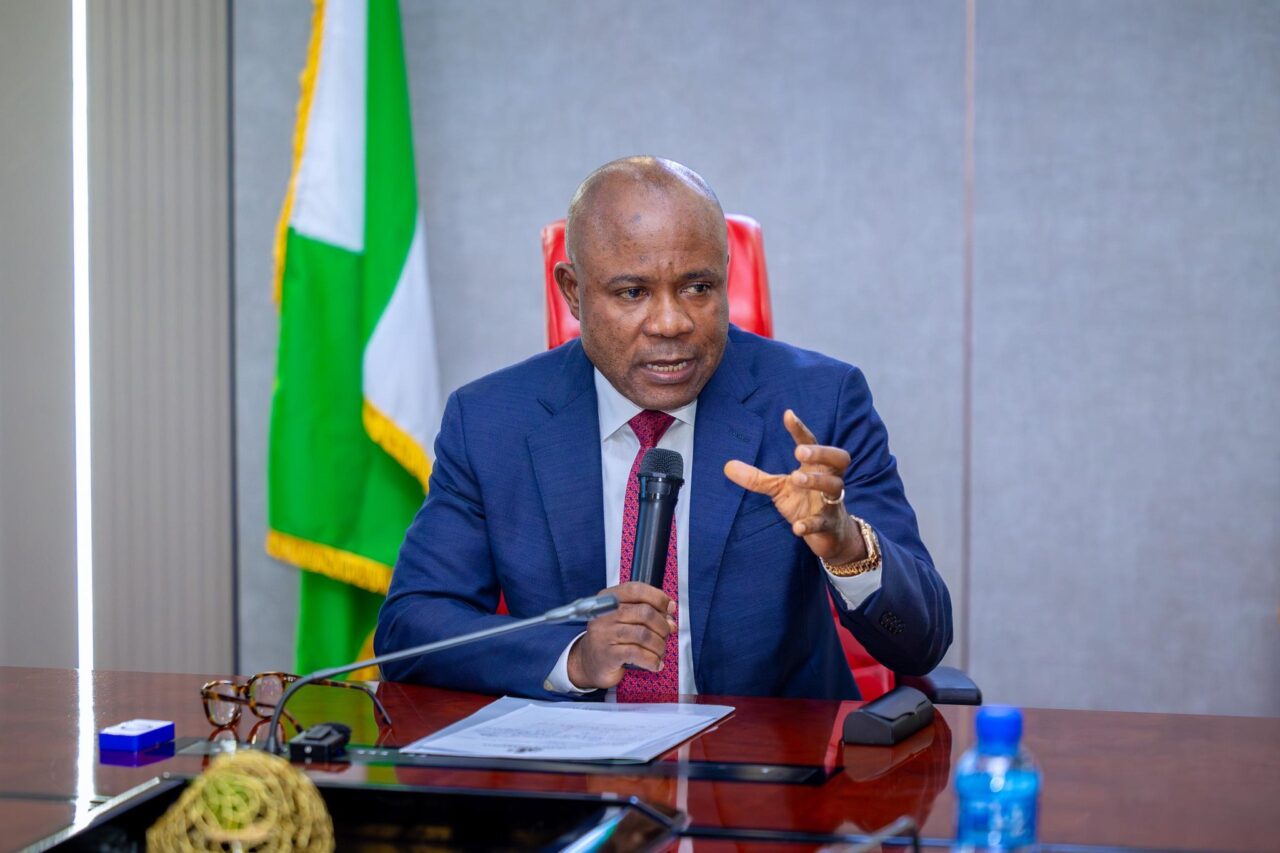
The figures, disclosed by Mr. Emmanuel Nnamani, Chairman of the Enugu State Internal Revenue Service (ESIRS), during a media briefing in the state capital, signal what may be one of the most significant fiscal transformations in recent Nigerian state governance.
The 2025 performance represents a staggering 125 percent increase over the N180.5 billion collected in 2024, underscoring the effectiveness of revenue reforms championed by Governor Peter Mbah‘s administration since he took office.
From Skepticism to Success
When the N509.9 billion revenue target was announced in late 2024, it drew widespread skepticism from fiscal analysts and opposition voices who questioned its feasibility. Those doubts have now been largely dispelled.
“I’m happy to tell you today that at the end of 2025, the Enugu State government collected a total IGR of N406,774,321,758.87,” Nnamani said, reading out the precise figure with evident satisfaction. “If you compare the target and actual, Enugu State achieved 80 percent of the revenue target.”
The achievement is particularly remarkable given the state’s revenue history. Just three years ago, in 2022, before the current administration, Enugu’s total IGR stood at a modest N26.8 billion—barely six percent of what was collected in 2025.
Non-Tax Revenue Drives Growth
A detailed breakdown of the 2025 revenue structure reveals an unconventional formula for success. Unlike most states that rely heavily on taxation, Enugu’s revenue architecture is dominated by non-tax sources.
Non-tax revenue contributed N355.2 billion—a commanding 87.4 percent of total collections—while tax revenue accounted for only N51.5 billion, or 12.6 percent. Personal income taxes largely drove the tax component.
This lopsided ratio reflects a deliberate strategy to expand revenue beyond traditional taxation, thereby reducing dependence on levies that could burden residents and businesses, while tapping into alternative income streams.
Still, tax revenue itself showed robust growth, climbing 72 percent year-on-year from N30 billion in 2024 to N51.5 billion in 2025. This growth rate significantly outpaced the 31 percent tax revenue increase recorded the previous year, suggesting improved compliance and efficiency in tax administration.
The Reform Trajectory
The transformation began with clear directives from Governor Mbah upon assuming office. Nnamani outlined the administration’s strategic pivot: a mandate to revenue agencies to aggressively grow IGR while prioritizing non-tax revenue streams.
In 2023, a key policy shift occurred when the state government instructed accountants to cease relying on federal allocations to fund recurrent expenditure—salaries, pensions, and overheads. This forced a fundamental rethinking of revenue generation.
“At the end of 2023, we generated revenue of N37.4 billion as tax revenue, while N14.5 billion was what we call non-tax revenue,” Nnamani recalled, describing the early stages of the reform.
The evolution from N26.8 billion in total revenue in 2022 to N406.8 billion in 2025 represents a compound annual growth trajectory that few states in Nigeria have matched.
Ambitious Targets Ahead
Far from resting on its laurels, the Enugu State government has set an even more ambitious target for 2026: N870 billion in IGR—more than double the 2025 collection.
Nnamani acknowledged that tax revenue growth may experience a temporary slowdown due to what he described as “pro-citizen tax reforms” designed to ease the burden on residents. However, he expressed confidence that continued expansion of non-tax revenue sources and improved compliance would sustain the growth momentum.
The strategy appears to balance fiscal expansion with political sensitivity—pursuing revenue growth without alienating the tax-paying public through excessive levies.
Broader Implications
Enugu’s revenue performance positions it among Nigeria’s most fiscally aggressive states at a time when sub-national governments face mounting pressure to reduce dependence on federal allocations amid dwindling oil revenues.
The state’s model—emphasizing non-tax revenue while maintaining tax compliance—may offer lessons for other states struggling with fiscal sustainability.
However, questions remain about the composition and sustainability of the non-tax revenue streams. While officials have touted diversification, the specific sources contributing N355.2 billion have not been fully detailed, raising natural curiosity about what assets, fees, or commercial activities are driving such substantial collections.
As Enugu sets its sights on the N870 billion target for 2026, the state’s ability to maintain this growth trajectory while implementing citizen-friendly tax policies will be closely watched by fiscal observers across Nigeria.
For now, the numbers speak to a revenue revolution—one that has taken Enugu from generating barely enough to cover basic expenses to collecting hundreds of billions annually, transforming its fiscal profile in just three years.
WHAT YOU SHOULD KNOW
Enugu State has achieved a remarkable fiscal turnaround, generating N406.8 billion in 2025—a 125% increase from the previous year and 15 times higher than the N26.8 billion collected just three years ago in 2022.
The state’s success stems from a strategic shift away from heavy taxation toward non-tax revenue sources, which now account for 87% of total collections. This approach has enabled explosive revenue growth while keeping the tax burden on citizens relatively low.
Governor Peter Mbah’s administration has set an even bolder target of N870 billion for 2026, signaling confidence that this revenue model is sustainable. If achieved, Enugu’s transformation could serve as a blueprint for other Nigerian states seeking fiscal independence from federal allocations.
Enugu has proven that with the right reforms and focus on diversified revenue streams, states can dramatically expand their financial capacity without crushing taxpayers.