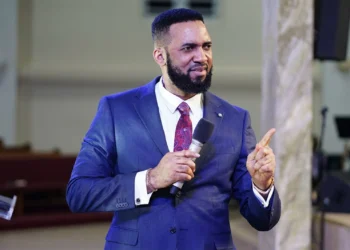
In a blistering social media critique, veteran media personality Emmanuel Ugolee has pulled back the curtain on what many consider Nollywood’s worst-kept secret: the prioritization of Instagram followers over acting ability in casting decisions.
Ugolee’s impassioned post, which has sparked widespread debate across industry platforms, takes direct aim at what he describes as an “unwritten rule” that has fundamentally altered the landscape of Nigerian cinema. The media veteran, known for his candid commentary on industry practices, didn’t hold back in his assessment of a system he believes is betraying the very foundation of filmmaking.
“It’s sickening,” Ugolee declared in his post, painting a picture of an industry where digital metrics have become more valuable currency than years of training and theatrical experience. His critique strikes at the heart of a transformation that has left seasoned actors scrambling to reinvent themselves as content creators, often at the expense of their privacy and artistic integrity.
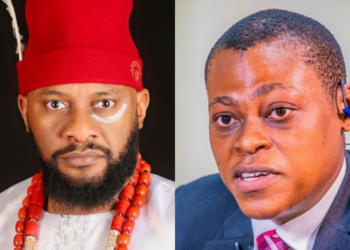
The timing of Ugolee’s intervention appears strategic, coming as the entertainment industry grapples with the intersection of traditional media and digital influence. His specific reference to the acclaimed series “To Kill a Monkey” serves as a powerful case study, highlighting two lead actors whose compelling screen presence and cross-demographic appeal have failed to translate into social media stardom—and by extension, consistent casting opportunities.
“Despite their impressive work, the actors remain under the radar online,” Ugolee observed, pointing to what he sees as a fundamental disconnect between artistic merit and industry recognition. His analysis suggests that these performers, who have chosen to maintain their privacy rather than commodify their personal lives, are being systematically overlooked in favor of influencers with questionable acting credentials but impressive engagement rates.
The media personality’s critique becomes particularly pointed when he contrasts these accomplished actors with a social media influencer whose content, as he describes it, centers around encouraging women to “gyrate, mimic sexual sounds, and share their favorite positions on camera.” While careful to clarify that his criticism isn’t aimed at the content creator personally, Ugolee uses this example to illustrate the stark reality of what generates the viral engagement that Nollywood casting directors increasingly demand.
This comparison exposes what industry insiders have long whispered about in private: the uncomfortable pressure on trained actors to transform themselves into influencer-entertainers, often compromising their artistic principles and personal boundaries in pursuit of visibility. The implications extend far beyond individual career choices, potentially reshaping the entire ecosystem of Nigerian cinema.
Ugolee’s analysis reveals a troubling paradox at the heart of modern entertainment: in an industry built on storytelling and character development, authentic talent may no longer be sufficient. Instead, actors find themselves compelled to become performers of their own lives, creating content designed more for algorithmic success than artistic expression.
The veteran’s appeal to “Nollywood producers and casting directors” represents more than criticism—it’s a call to action for industry leadership to resist what he sees as a dangerous trend. His argument centers on the belief that many of the industry’s most gifted performers have no desire to “build brands out of their personal lives,” seeking instead to let their craft speak for itself.
Perhaps most significantly, Ugolee’s public statement gives voice to frustrations that have long simmered beneath the surface of Nigeria’s film industry. By explicitly challenging the social media follower count as a casting criterion, he’s forcing a conversation about values, artistic integrity, and the future direction of Nollywood.
His closing acknowledgment—”Shout “out to the directors who ignore this rule while “casting”—suggests that resistance to these trends exists within the industry, though it may be overshadowed by those who have embraced the influence-driven model.
As Nigeria’s film industry continues its evolution on the global stage, Ugolee’s intervention arrives at a critical juncture. His critique raises fundamental questions about whether Nollywood can maintain its artistic credibility while adapting to digital-age marketing demands, or whether the industry will continue its apparent drift toward celebrity culture over cinematic excellence.
The veteran’s “gauntlet,” as he frames his challenge, now lies before an industry that must decide whether to double down on its current trajectory or heed his call for a return to merit-based casting. The response from producers, directors, and casting agents in the coming weeks will likely indicate which direction Nollywood chooses to pursue.
WHAT YOU SHOULD KNOW
Veteran media personality Emma Ugolee has exposed a troubling reality in Nigeria’s film industry: casting decisions are increasingly based on social media follower counts rather than acting ability. Skilled, trained actors are being overlooked for roles in favor of influencers with large online followings but questionable acting credentials.
The core issue is that talented performers who maintain their privacy and refuse to commodify their personal lives for social media clout are being systematically excluded from opportunities. Meanwhile, content creators who generate viral engagement through provocative material are fast-tracked to leading roles, regardless of their acting skills.