Biography and Early Life
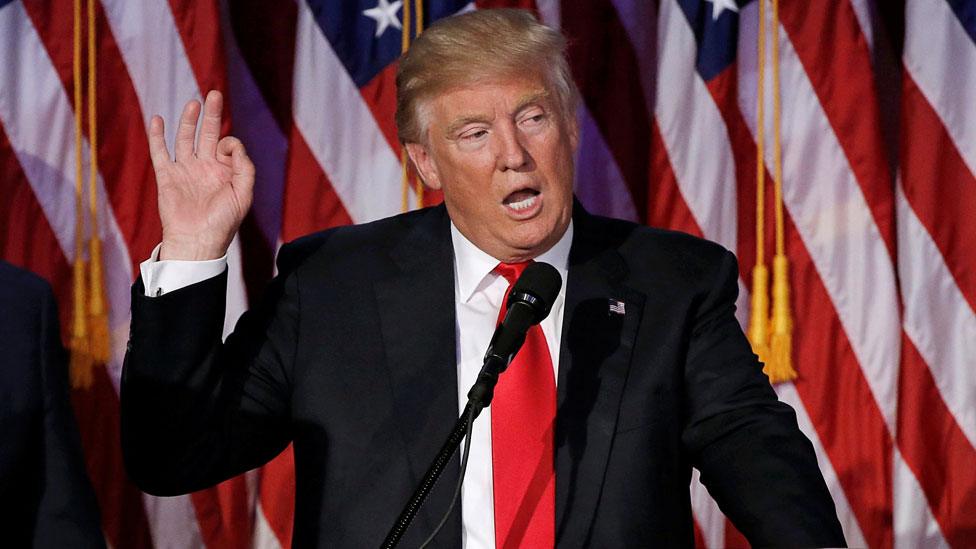
Donald John Trump was born on June 14, 1946, in Queens, New York City, to Fred Trump and Mary Anne MacLeod Trump. He was the fourth of five children in a wealthy real estate family. His father, Fred Trump, was a successful real estate developer who built and operated middle-income apartments in New York City’s outer boroughs, particularly Queens and Brooklyn.
Growing up in the affluent Jamaica Estates neighborhood of Queens, Trump was exposed to the real estate business from an early age, often accompanying his father to construction sites and learning the fundamentals of property development. His upbringing in New York City during its mid-20th-century transformation would profoundly influence his business approach and personal style.
As a youth, Donald Trump was known for his energy and assertiveness, traits that sometimes manifested as challenging behavior. His parents sent him to the New York Military Academy at age 13, hoping the structured environment would channel his energies productively. The experience at the military school reportedly instilled discipline and competitive drive that would characterize his later career.
Educational Background
Trump’s educational path took him through several institutions:
Fordham University (1964-1966): He began his college education at Fordham University in the Bronx, spending two years there before transferring.
Wharton School of the University of Pennsylvania (1966-1968): Trump transferred to the Wharton School, one of America’s most prestigious business schools, where he studied economics. He graduated in 1968 with a Bachelor of Science degree in Economics. Trump has frequently referenced his Wharton education throughout his career, citing it as evidence of his business acumen and intellectual capability.
After graduation, Trump joined his father’s real estate business rather than pursuing further academic credentials, eager to apply his education to the family enterprise.
Business Career
Early Years and The Trump Organization
Upon graduating, Trump joined his father’s company, Elizabeth Trump & Son, which focused on middle-class rental housing in New York’s outer boroughs. In 1971, he took control of the company and renamed it The Trump Organization, signaling his ambition to expand beyond his father’s business model.
Manhattan Expansion: Trump’s major strategic shift was moving the company’s focus from outer-borough middle-income housing to high-profile Manhattan real estate development. His vision was to build luxury properties that would carry his name and brand.
Major Real Estate Projects
Trump’s business career has been defined by several landmark projects:
Grand Hyatt Hotel (1980): His first major Manhattan deal involved transforming the aging Commodore Hotel near Grand Central Terminal into the Grand Hyatt, partnering with Hyatt Hotels. The project’s success established Trump as a serious Manhattan developer.
Trump Tower (1983): Perhaps his most iconic project, this 58-story skyscraper on Fifth Avenue became Trump’s primary residence and the headquarters of The Trump Organization. Its glitzy atrium and luxury condominiums became synonymous with 1980s excess and the Trump brand.
Trump Plaza and Trump World Tower: Additional luxury residential buildings in Manhattan that expanded his real estate empire.
Casinos and Atlantic City: Trump expanded into the casino business with properties including Trump Plaza, Trump Castle, and the Trump Taj Mahal in Atlantic City, New Jersey. However, these ventures would prove financially troubled.
Golf Courses and Resorts: Trump developed or acquired numerous golf courses and resorts internationally, including properties in Scotland, Ireland, and across the United States.
Trump International Hotel and Tower: Luxury properties in various cities, including Chicago, Las Vegas, and Washington, D.C.
Business Challenges and Bankruptcies
Trump’s business career has been marked by both spectacular successes and notable failures:
Corporate Bankruptcies: Trump’s companies have filed for Chapter 11 bankruptcy protection six times, primarily involving his Atlantic City casino properties (1991, 1992, 2004, 2009) and the Trump Hotels and Casino Resorts. While Trump personally avoided bankruptcy, these corporate bankruptcies involved billions in debt restructuring.
Financial Difficulties: During the early 1990s, Trump faced severe financial pressure, with personal debt exceeding $900 million. He negotiated with creditors to restructure debt and retain control of his properties, though he lost ownership stakes in several enterprises.
Business Strategy Evolution: Following financial challenges, Trump shifted increasingly toward licensing his name rather than developing properties himself, which is a less capital and intensive approach that proved lucrative.
The Trump Brand
Trump’s most valuable business asset became his name itself:
Licensing: He licensed the Trump name to buildings, products, and ventures worldwide, receiving fees without the risks of ownership. Trump-branded properties appeared globally, though many were merely licensed rather than owned by Trump.
Product Lines: The Trump brand extended to various products including clothing, steaks, vodka, books, and other merchandise, with varying degrees of success.
Brand Building: Trump cultivated an image of wealth, success, and luxury that made his name valuable in marketing, even as the actual financial performance of his businesses varied.
Television Career
The Apprentice
Trump’s cultural profile expanded dramatically with his television career:
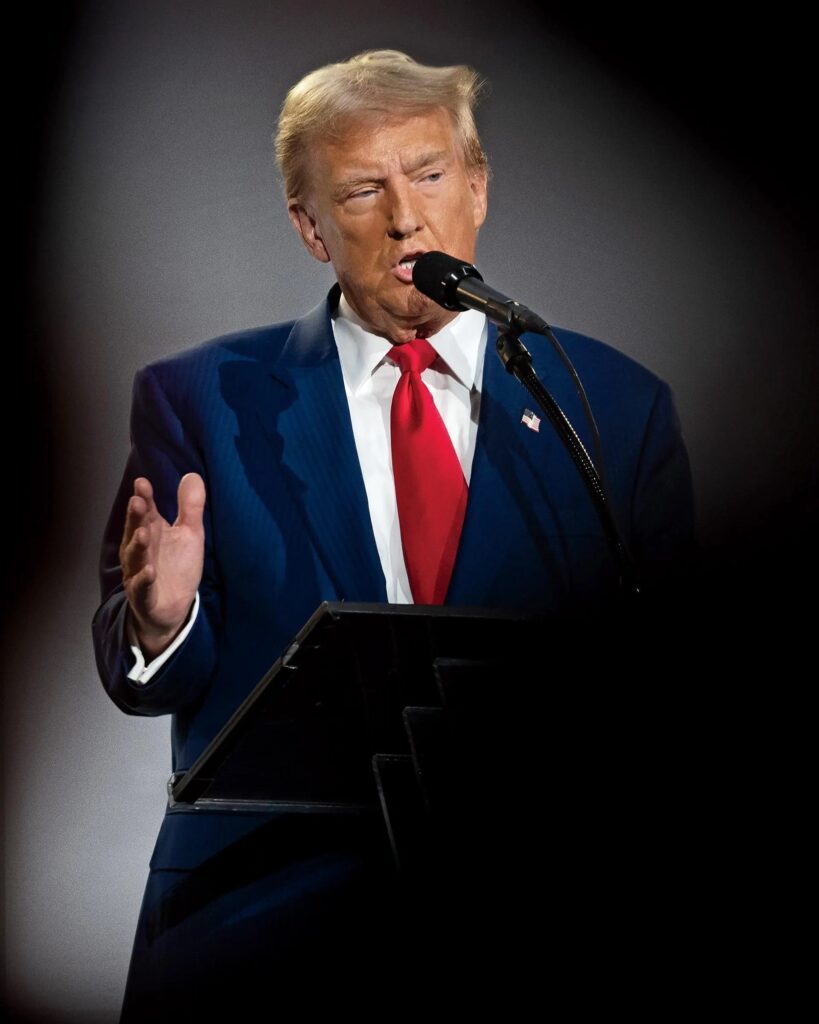
“The Apprentice” (2004-2015): Trump hosted and produced this NBC reality television show where contestants competed for a management position within his organization. The show’s signature phrase, “You’re fired!” became a cultural phenomenon and introduced Trump to millions of Americans who might not have followed real estate development.
The show’s success:
- Ran for 14 seasons under various formats
- Earned Trump an estimated $214 million
- Transformed him from a New York real estate figure into a national celebrity
- Reinforced his image as a successful businessman, despite questions about the actual state of his business empire
- Provided a platform that would prove crucial for his political aspirations
Celebrity Apprentice: A spin-off featuring celebrity contestants that further expanded Trump’s television presence and charitable tie-ins.
Political Career
Early Political Involvement and Views
Trump’s political involvement predates his presidential campaigns:
Party Affiliation: Trump has changed party registration multiple times from Republican, Reform Party, Democrat, and back to Republican, reflecting his pragmatic approach to political alignment.
Political Donations: He donated to politicians across the spectrum, building relationships with figures from both parties.
Presidential Speculation: Trump flirted with presidential campaigns multiple times (2000, 2004, 2012) before his 2016 run, generating media attention but not seriously pursuing candidacy.
Birther Controversy: Trump gained political notoriety by promoting false conspiracy theories questioning President Barack Obama‘s birth certificate and eligibility for office, a position he maintained for years before eventually (and briefly) acknowledging Obama’s American birth.
2016 Presidential Campaign
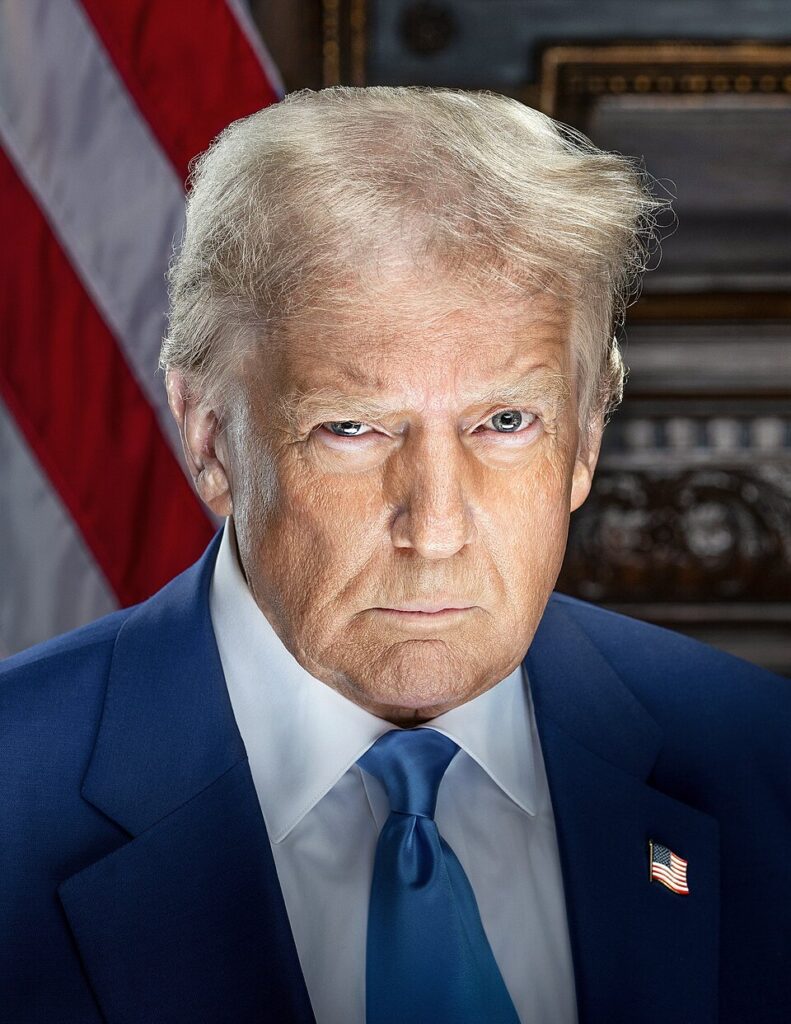
Trump announced his Republican presidential candidacy on June 16, 2015, with a speech that included controversial statements about Mexican immigrants and set the tone for an unconventional campaign.
Campaign Characteristics:
- Populist messaging focused on “Make America Great Again.”
- Criticism of the political establishment and “career politicians”
- Hard-line positions on immigration, including a proposed wall on the Mexican border
- Promises to renegotiate trade deals and bring back manufacturing jobs
- Extensive use of social media, particularly Twitter
- Frequent rallies generate significant media coverage
- Controversial statements that dominated news cycles
Primary Victory: Despite initial skepticism from the Republican establishment and numerous primary opponents, Trump secured the Republican nomination, defeating candidates including Jeb Bush, Marco Rubio, Ted Cruz, and others.
General Election: Trump faced Democratic nominee Hillary Clinton in a contentious race. Despite losing the popular vote by nearly 3 million votes, Trump won the Electoral College 304-227, securing victory through narrow wins in key swing states including Michigan, Wisconsin, and Pennsylvania.
Presidency (2017-2021)
Trump was inaugurated as the 45th President of the United States on January 20, 2017. His presidency was among the most controversial and polarizing in American history.
Major Policy Initiatives:
Tax Reform: Signed the Tax Cuts and Jobs Act of 2017, significantly reducing corporate and individual tax rates.
Immigration: Implemented strict immigration policies, including travel bans affecting several Muslim-majority countries, family separation at the border, and efforts to build a border wall with Mexico.
Trade Policy: Renegotiated NAFTA into USMCA, imposed tariffs on Chinese goods, and pursued protectionist trade policies.
Judicial Appointments: Appointed three Supreme Court justices (Neil Gorsuch, Brett Kavanaugh, Amy Coney Barrett) and numerous federal judges, significantly influencing the judiciary.
Deregulation: Rolled back numerous environmental, financial, and other regulations.
Foreign Policy: Pursued “America First” policies, withdrew from international agreements including the Paris Climate Accord and Iran nuclear deal, engaged in unprecedented direct diplomacy with North Korea, and brokered the Abraham Accords normalizing relations between Israel and several Arab nations.
COVID-19 Response: His administration’s handling of the coronavirus pandemic became highly controversial, with critics citing delayed response, inconsistent messaging, and politicization of public health measures.
Major Controversies:
Russia Investigation: The Mueller investigation examined Russian interference in the 2016 election and potential coordination with the Trump campaign, ultimately not establishing a criminal conspiracy but documenting Russian interference efforts.
First Impeachment (2019): Trump was impeached by the House of Representatives for abuse of power and obstruction of Congress related to his dealings with Ukraine. The Senate acquitted him.
Racial Tensions: His response to racial justice protests and white supremacist incidents drew widespread criticism.
Media Relations: Trump maintained an antagonistic relationship with mainstream media, frequently labeling critical coverage as “fake news.”
Social Media Controversies: His Twitter account generated constant controversy with provocative statements, attacks on opponents, and the spread of misinformation.
2020 Election and Second Impeachment
Re-election Campaign: Trump ran for re-election but lost to Democratic challenger Joe Biden, who won both the popular vote (by over 7 million votes) and the Electoral College (306-232).
Election Denial: Trump refused to concede, making false claims of widespread election fraud despite courts and election officials confirming the election’s integrity.
January 6, 2021: Trump’s rhetoric about a “stolen election” culminated in his supporters storming the U.S. Capitol building to disrupt certification of Biden’s victory, resulting in deaths, injuries, and property damage.
Second Impeachment (2021): Trump became the first president impeached twice, charged with “incitement of insurrection” related to January 6. The Senate again acquitted him, though seven Republicans voted to convict.
Post-Presidency and 2024 Campaign
After leaving office, Trump remained influential in Republican politics:
Continued Influence: He maintained significant control over the Republican Party, endorsing candidates and attacking those who voted for his impeachment.
Legal Challenges: Trump faced multiple legal investigations and indictments, including:
- Criminal charges in New York related to business records
- Federal charges regarding classified documents retained at Mar-a-Lago
- Federal charges related to efforts to overturn the 2020 election
- Georgia state charges related to election interference
- Civil cases, including business fraud and defamation
2024 Presidential Campaign: Trump announced his candidacy for the 2024 presidential election and became the Republican nominee despite ongoing legal challenges.
2024 Election Victory: Trump won the 2024 presidential election, defeating Vice President Kamala Harris, making him only the second president in U.S. history to serve non-consecutive terms (after Grover Cleveland).
Return to Office (2025): Trump was inaugurated as the 47th President of the United States on January 20, 2025, returning to the White House after a four-year absence.
Personal Life
Marriages and Family:
Trump has been married three times:
Ivana Trump (1977-1992): Czech model and businesswoman; three children: Donald Jr., Ivanka, and Eric.
Marla Maples (1993-1999): Actress and television personality; one daughter: Tiffany.
Melania Trump (2005-present): Slovenian former model who served as First Lady; one son: Barron.
All five of Trump’s adult children have been involved in his business and, to varying degrees, his political endeavors, with Donald Jr., Ivanka, and Eric being particularly prominent.
Lifestyle and Public Persona:
Trump is known for his ostentatious lifestyle, luxury properties, gold-plated interiors, private jets, and public displays of wealth. His personality traits—confidence bordering on bravado, combativeness, loyalty demands, and showmanship—have remained consistent throughout his business, television, and political careers.
Cultural Impact and Legacy
Trump’s impact on American culture, politics, and society is profound and contested:
Political Transformation: He reshaped the Republican Party, moving it toward populist nationalism and away from traditional conservative orthodoxies on trade, foreign policy, and deficit spending.
Media Environment: His presidency accelerated the fragmentation of media consumption, with Americans increasingly inhabiting separate information ecosystems.
Polarization: Trump both reflected and amplified America’s political polarization, with evaluations of his presidency falling sharply along partisan lines.
Populist Movement: He tapped into and mobilized populist sentiments that transcended traditional party politics.
Democratic Norms: Critics argue his presidency challenged democratic norms and institutions; supporters contend he fought against entrenched establishment interests.
Global Influence: His approach influenced populist and nationalist movements worldwide.
Accomplishments and Criticisms
Supporters Credit Him With:
- Appointing conservative judges
- Strong pre-COVID economy with low unemployment
- Renegotiating trade deals
- Criminal justice reform (First Step Act)
- No new foreign wars
- Middle East peace agreements
- Challenging political correctness
- Tax cuts stimulating economic growth
Critics Cite:
- Divisive rhetoric and behavior
- Attacks on democratic institutions and norms
- COVID-19 pandemic response failures
- Attempted election overturn
- Impeachments and legal troubles
- Environmental regulation rollbacks
- Strained international alliances
- Increased national debt
- Racial tensions
Donald J. Trump remains one of the most consequential and polarizing figures in modern American history. His journey from real estate developer to reality television star to president represents an unprecedented path to power. Whether viewed as a disruptive force challenging a failing system or a threat to democratic norms, Trump has indelibly shaped American politics, culture, and society. His return to the presidency in 2025 ensures his influence will continue to shape American and global affairs for years to come.