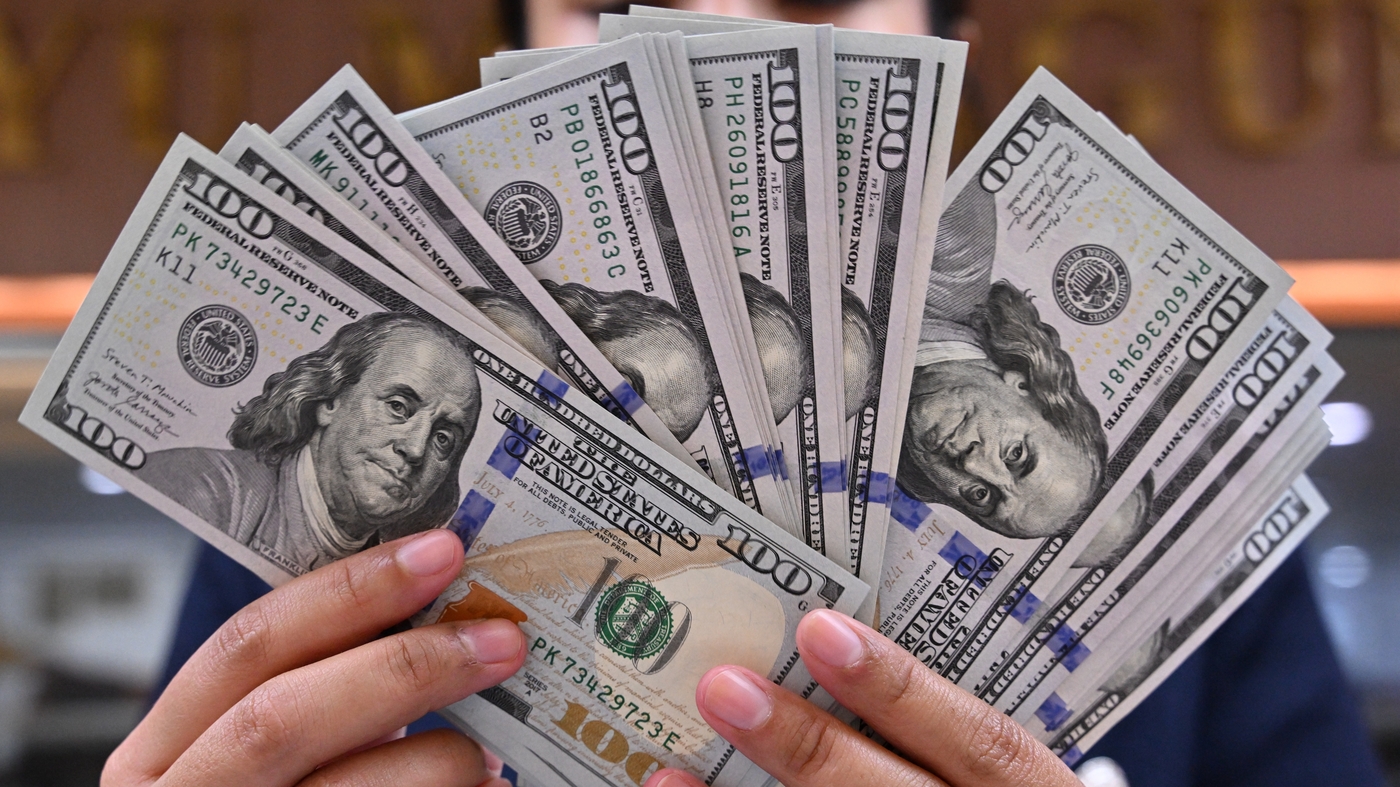
The U.S. dollar is poised to close July with its first monthly gain of 2025, climbing to two-month highs as investors regain confidence in American economic resilience and trade war anxieties begin to subside following a series of bilateral agreements.
The greenback’s resurgence comes on the heels of Federal Reserve Chairman Jerome Powell’s measured remarks Wednesday, signaling the central bank remains in no hurry to cut interest rates. Powell’s comments, which offered little clarity on the timing of future rate reductions, have reinforced the dollar’s appeal among investors seeking higher yields in an uncertain global landscape.
Trade Deals Provide Market Relief
The currency’s strength has been amplified by President Donald Trump’s recent trade agreements, which have helped dispel some of the uncertainty that plagued markets earlier this year. The European Union’s agreement to impose 15% tariffs on U.S. exports represents a significant development in resolving transatlantic trade tensions, though it has simultaneously dealt a blow to European market confidence.
“I think there was too much optimism in the price of the euro,” said Jane Foley, a strategist at Rabobank. “There’s been a lot of commentary about how the EU conceded to the U.S. on this trade deal, and that’s been a dose of reality for the Europeans.”
The euro has emerged as one of the primary casualties of the dollar’s July rally, with the single currency on track to lose nearly 3% this month despite closing Thursday up 0.36% at $1.144. The European currency hit a seven-week low Wednesday as investors unwound positions that had been built on earlier optimism about European market opportunities.
Bank of Japan Signals Potential Policy Shift
Across the Pacific, the Bank of Japan delivered a mixed message to markets during its two-day policy meeting conclusion on Thursday. While the central bank maintained its short-term interest rate at 0.5% in a unanimous decision, officials upgraded inflation forecasts across all three years through fiscal 2027 and characterized price outlook risks as “roughly balanced.”
The yen initially strengthened on speculation of a potential rate increase later this year before retreating to trade roughly unchanged. Governor Kazuo Ueda’s post-meeting comments suggested underlying inflation, while still below the bank’s 2% target, is “expected to rise “moderately,”—language some analysts interpreted as laying the groundwork for future tightening.
“There is a clear justification for them to hike rates,” noted Khoon Goh, head of Asia research at ANZ. “The question is whether the BOJ is now prepared to hike in October.”
Broader Market Dynamics
The dollar’s performance against a basket of currencies reflects a broader shift in global capital flows. After dipping slightly Thursday to 99.77, the dollar index remains on course for approximately a 3% monthly gain—its strongest showing since the year began.
Foley observed that the dollar had been lagging behind other U.S. assets, even as the S&P 500 reached record highs and long-term bond yields retreated from yearly peaks. “There were signs that the rotation trade that we saw in the early part of the year of pulling assets out of the U.S. was over,” she explained, suggesting the dollar’s recent strength represents a necessary correction toward more neutral positioning.
Trump’s Tariff Blitz Continues
The administration’s aggressive trade agenda showed no signs of slowing, with Trump announcing Wednesday that South Korea would face 15% tariffs on its U.S. imports. The Korean won strengthened on the news, last trading at 1,393 per dollar. More dramatically, Trump imposed 50% tariffs on most Brazilian goods while indicating ongoing negotiations with India.
These announcements come as countries race to secure trade agreements ahead of an August 1 deadline, after which they face the prospect of steep levies. The clarity provided by these bilateral deals, even when unfavorable to trading partners, appears to be providing markets with the certainty they had been craving.
As July draws to a close, the dollar’s resurgence marks a significant shift from the currency’s earlier struggles this year, driven by a combination of Federal Reserve hawkishness, American economic durability, and the gradual resolution of trade uncertainties that have dominated headlines throughout Trump’s renewed presidency.
WHAT YOU SHOULD KNOW
The U.S. dollar is heading for its first monthly gain of 2025, driven by three critical factors: the Federal Reserve’s reluctance to cut interest rates, America’s economic resilience, and reduced trade uncertainty as Trump secures bilateral deals with key partners.
Meanwhile, the Bank of Japan hinted at potential rate hikes, causing yen volatility, while the euro suffered its worst month, losing nearly 3% as the EU’s concessions to U.S. trade demands dampened European market confidence.