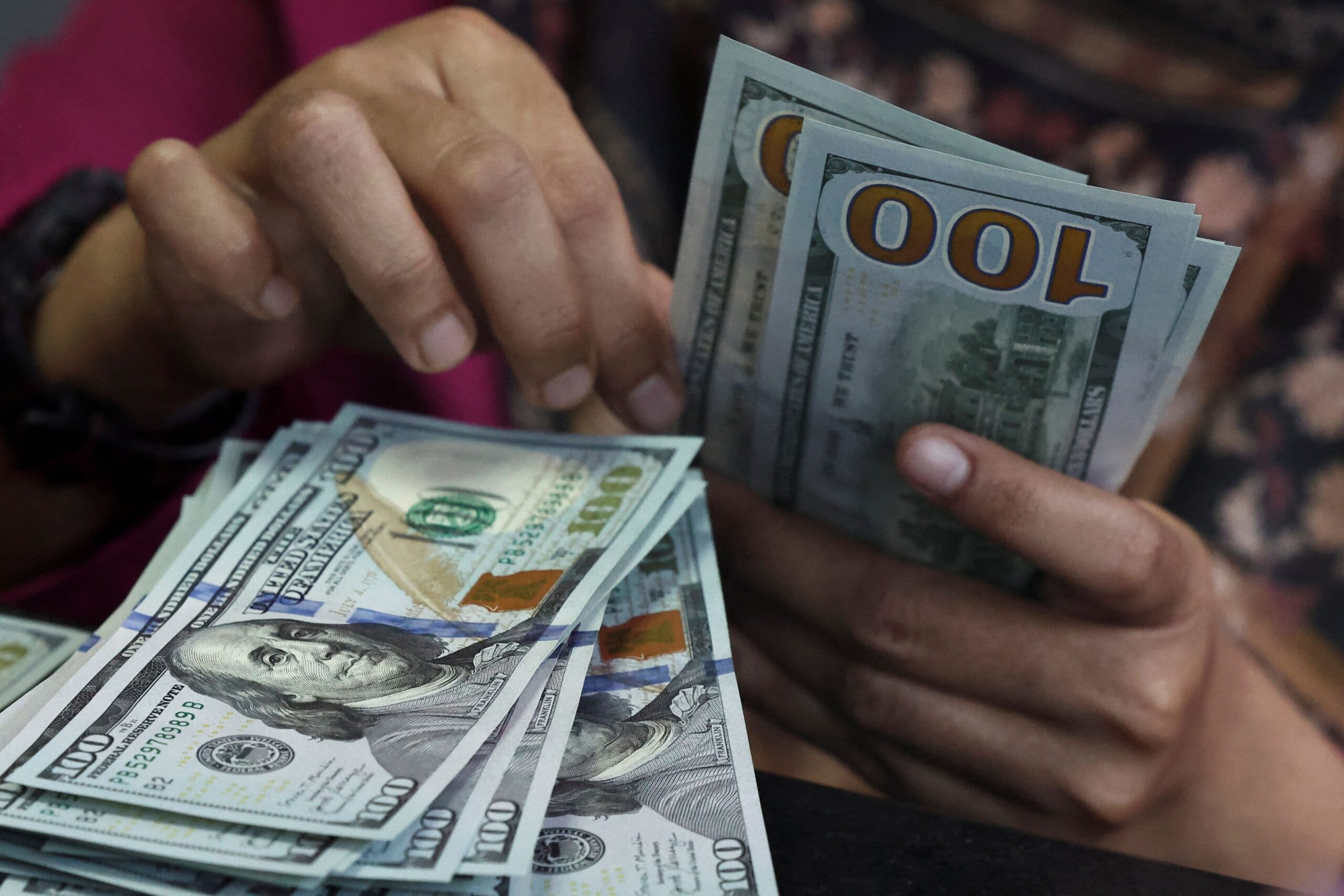
The U.S. dollar clawed back modest gains on Wednesday after sliding to three-week lows as jittery investors adopted a wait-and-see posture ahead of President Donald Trump’s highly anticipated address at the World Economic Forum in Davos, Switzerland.
The currency’s tentative recovery came against a backdrop of mounting geopolitical friction and market turbulence sparked by Trump’s contentious remarks on Greenland and threats of sweeping tariffs, which have roiled U.S. assets and strained America’s traditional alliances.
By midday European trading, the euro had retreated 0.10% to $1.1715, pulling back from Tuesday’s peak of $1.1770—its strongest level in three weeks. The Swiss franc, traditionally a haven during times of uncertainty, also eased 0.13% to 0.7909 per dollar after surging approximately 1.5% over the previous two sessions.
Treasury Secretary Scott Bessent, speaking on the sidelines of the Davos gathering, emphasized that economic growth would be the cornerstone of America’s presidency of the Group of 20 industrialized nations. His comments came as he urged European counterparts to withhold judgment until hearing Trump’s full position on contentious issues, including the president’s startling designs on Greenland.
The diplomatic schedule took an unexpected turn when Trump’s delayed arrival forced the cancellation of a planned meeting with German Chancellor Friedrich Merz, underscoring the turbulence surrounding this year’s forum.
Currency strategists are closely parsing every development in what Thierry Wizman of Macquarie Group dubbed the “Greenland or Bust saga.” The veteran analyst suggested that a potential compromise—possibly involving NATO joint administration of the Danish territory—might emerge from this week’s Davos discussions.
“Until that happens, the so-called primacy of the U.S. remains at risk of further dissolution, and with it, an upending of the geopolitical alignments that have upheld markets in recent years,” Wizman warned, noting that the European Union appears increasingly willing to deploy significant retaliatory trade measures.
The stakes escalated Tuesday when French President Emmanuel Macron advocated for the first-ever use of the EU’s International Procurement Instrument—informally known as the “trade bazooka”—which could severely restrict U.S. access to European public contracts and limit trade in services, particularly technology platforms. Macron himself acknowledged the gravity of the situation, calling it “crazy” that relations had deteriorated to this point.
Adding to the pressure on U.S. assets, Danish pension fund AkademikerPension announced Tuesday it would divest its entire $100 million portfolio of U.S. Treasuries by month’s end, fueling speculation about broader foreign investor flight from American debt.
Yet there were tentative signs of de-escalation. Before departing for Switzerland, Trump struck a markedly more conciliatory tone, telling reporters, “I think we will work something out where NATO is going to be very happy and where we’re going to be very happy.”
NATO Secretary General Mark Rutte confirmed Wednesday he was working “behind the scenes” to bridge the widening gap between Washington and its European allies, offering markets a measure of reassurance.
The flight to safety has dramatically reshaped currency markets. Sweden’s krona surged to a four-year high of 10.099 against the dollar, gaining 0.35% as investors gravitated toward countries with solid fiscal positions and low debt burdens.
Meanwhile, the Japanese yen faced its own crisis as political uncertainty compounded currency concerns. Prime Minister Sanae Takaichi’s Monday announcement of snap elections for February 8, coupled with promises of looser fiscal policy, triggered a selloff that left the yen languishing near 158 per dollar despite the broader weakness in U.S. assets.
Japanese government bonds experienced violent swings, plummeting early in the week before staging a partial recovery on Wednesday. Vincent Chung, co-portfolio manager at T. Rowe Price, attributed the volatility to a conspicuous “absence of strategic buyers,” predicting that “this environment of elevated volatility” would persist throughout 2026.
In a striking illustration of the yen’s weakness, the currency hit a record low of 200.20 against the Swiss franc earlier in the session before settling at 199.30.
Chris Turner, global head of markets at ING, warned that further weakness in Japanese government bonds “would seem to drag the dollar/yen towards intervention territory at 159/160. ” However, he questioned whether Japanese authorities could effectively stem the tide if “the yen sell-off is a self-inflicted wound from the Japanese government policy.”
All eyes now turn to Trump’s Davos speech, where investors hope for clarity on trade policy, tariff timelines, and the path forward on the Greenland controversy. The president’s words—and tone—could either stabilize rattled markets or deepen the uncertainty that has defined the opening weeks of 2025.
With European leaders weighing unprecedented trade countermeasures and traditional safe-haven currencies rallying against the dollar, the stakes for Trump’s address have rarely been higher. The question is no longer whether markets will react, but how violently they will move.
WHAT YOU SHOULD KNOW
Markets are on edge, as President Trump‘s Davos speech could determine whether U.S.-Europe relations stabilize or spiral into a full-blown trade war. The dollar has weakened to three-week lows amid his controversial Greenland demands and tariff threats, prompting European allies to consider their harshest trade retaliation measures ever, including France’s proposed “trade bazooka” that could severely restrict U.S. access to European markets.
While Trump struck a more conciliatory tone before leaving for Switzerland, investors remain deeply uncertain. His address will either calm nerves or trigger further selloffs in U.S. assets, as the traditional Western alliance faces its most serious strain in decades. The stakes are clear: America’s economic and geopolitical standing hangs in the balance.