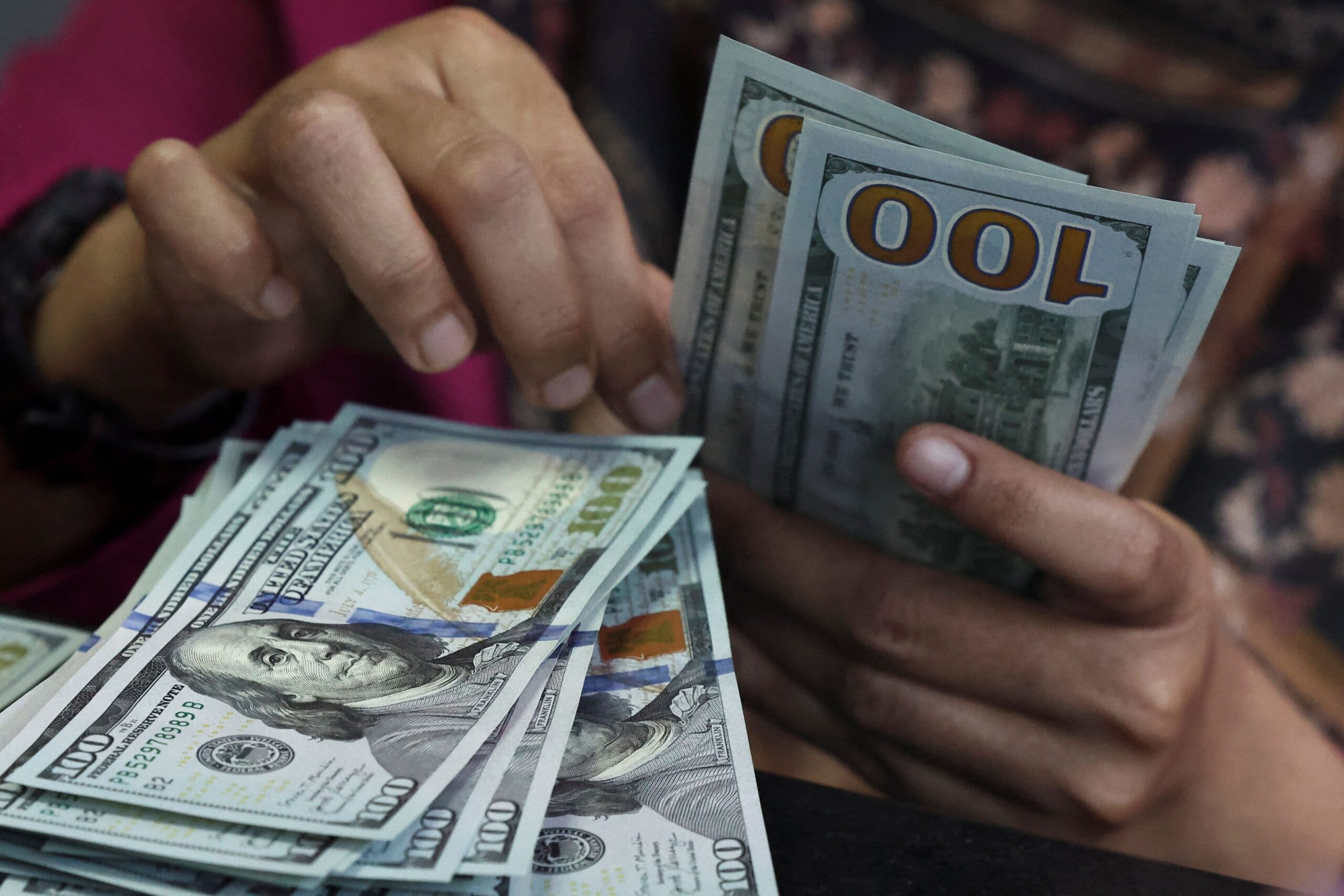
The U.S. dollar plummeted to levels not seen in over twenty years on Wednesday, capping what analysts say will be its worst annual showing since the early 2000s, as investors positioned for continued Federal Reserve rate cuts while other major central banks signaled a shift toward tightening.
The greenback’s retreat accelerated during Asian trading hours, brushing off stronger-than-expected U.S. GDP figures that failed to alter market expectations for monetary policy. Against a basket of major currencies, the dollar index tumbled to 97.767—a two-and-a-half-month nadir—putting it on course for a staggering 9.9% annual decline, the steepest such drop since 2003, according to Reuters data.
The dollar’s precipitous fall marks a dramatic reversal for what was once considered a safe-haven currency, and analysts point to a confluence of factors that have eroded investor confidence throughout the year. Chief among them: President Donald Trump‘s unpredictable trade policies, which triggered market turbulence earlier this year and sparked what some observers described as a “crisis of confidence” in U.S. assets.
Adding to the dollar’s woes are mounting concerns about Federal Reserve independence, as Trump’s public pressure on the central bank has raised questions about its ability to set policy free from political interference. Market participants are currently pricing in approximately two additional rate cuts in 2026, reflecting expectations that the Fed will maintain an accommodative stance even as economic data remains relatively robust.
Euro Surges to Best Performance in Two Decades
The dollar’s decline has lifted competing currencies across the board, with the euro emerging as the standout performer. The single currency climbed to a three-month high of $1.1806 on Wednesday, positioning it for a remarkable 14% gain for the year—its best annual performance since 2003 and a mirror image of the dollar’s decline.
The European Central Bank‘s hawkish pivot last week provided fresh momentum for the euro. Policymakers held rates steady and revised growth and inflation forecasts upward, signaling that the easing cycle that dominated much of the past year may be drawing to a close. Traders have since begun pricing in a slim possibility of rate hikes in the coming year, a stark contrast to expectations for continued cuts in the United States.
Antipodean Currencies Ride Hawkish Wave
The shifting rate differential has proven particularly beneficial for the Australian and New Zealand dollars, both of which have rallied on expectations that their respective central banks will be among the first in the developed world to resume tightening.
The Australian dollar surged 8.4% year-to-date, hitting a three-month peak of $0.6710 on Wednesday, while its New Zealand counterpart touched $0.58475—a two-and-a-half-month high—and is up 4.5% for the year. Market positioning suggests traders believe the Reserve Bank of Australia and Reserve Bank of New Zealand will need to raise rates to combat persistent inflation pressures, even as the Fed continues to ease.
Sterling also benefited from the dollar’s weakness, climbing to a three-month high of $1.3531 and gaining more than 8% for the year. However, the outlook for the British pound remains more nuanced, with investors anticipating the Bank of England will deliver at least one rate cut in the first half of 2026 and assigning roughly even odds to a second reduction before year-end.
Diverging Paths Ahead
The currency movements reflect a fundamental reordering of the global monetary landscape, with central banks charting increasingly divergent courses based on their domestic economic conditions. While the Federal Reserve appears committed to supporting growth through lower rates—despite solid economic fundamentals—several of its peers are confronting inflation pressures that may require tighter policy.
This divergence is likely to remain a dominant theme in currency markets heading into the new year, with the dollar’s direction hinging on whether the Fed can maintain its credibility amid political pressures and whether economic data ultimately supports the aggressive easing trajectory markets have priced in. For now, investors are voting with their wallets, and the verdict on the dollar has been decidedly bearish.
WHAT YOU SHOULD KNOW
The U.S. dollar is headed for its worst year since 2003, down nearly 10%, driven by expectations of continued Federal Reserve rate cuts while other major central banks prepare to tighten policy.
A widening monetary policy gap is reshaping global currency markets—the Fed is cutting rates amid political pressure and concerns about central bank independence, while Europe, Australia, and New Zealand signal potential rate hikes. This divergence, combined with President Trump’s erratic tariff policies that shook investor confidence in U.S. assets, has triggered a mass exodus from the dollar.
The euro is up 14% for the year, marking its best performance in two decades, as traders bet on fundamentally different economic trajectories between the U.S. and its trading partners.