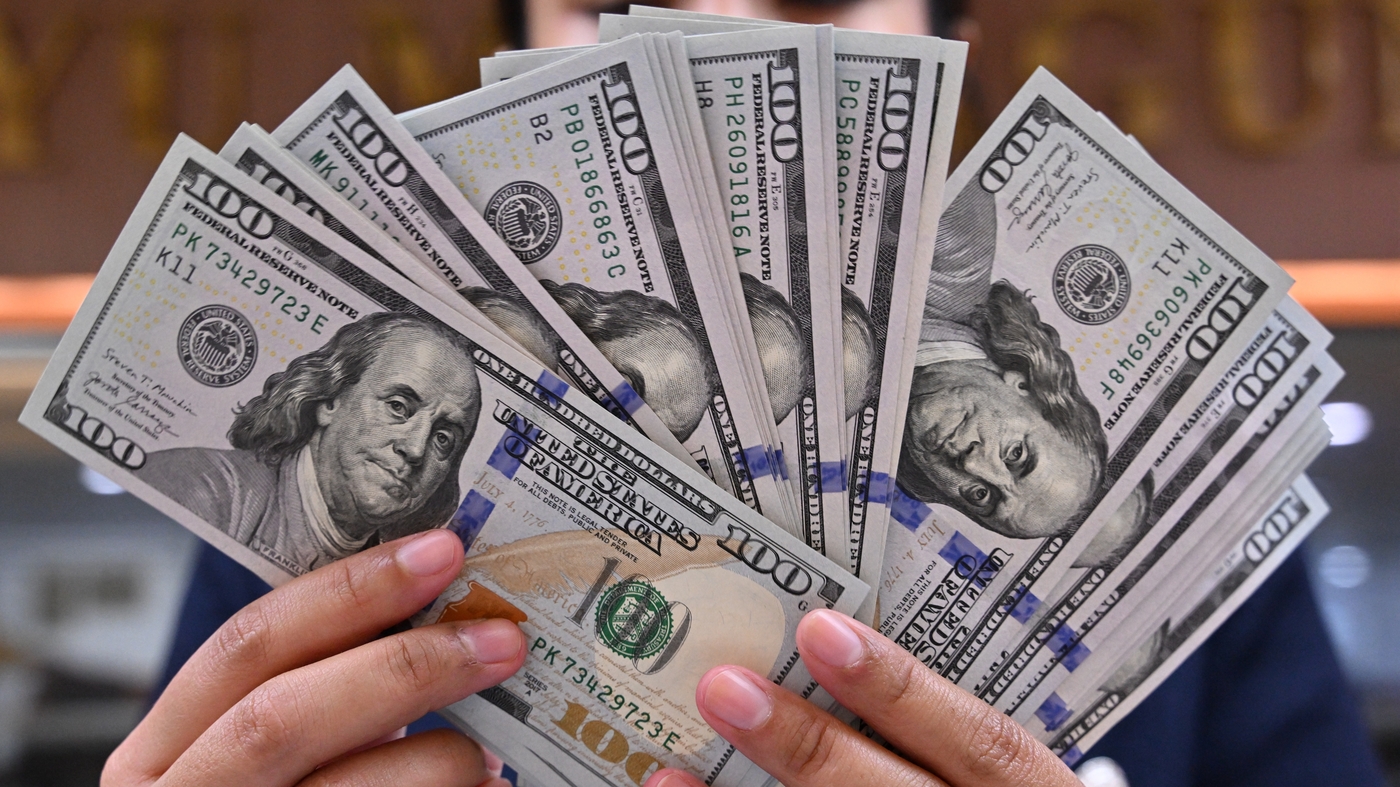
The U.S. dollar took a breather on Wednesday, trading largely unchanged against major currencies after a three-day rally, while the British pound emerged as the session’s weakest performer following an unexpected inflation slowdown that has rekindled speculation about an imminent Bank of England rate cut.
Sterling slumped 0.4% against the dollar to $1.3318 and lost 0.3% versus the euro, trading at 87.04 pence, after official figures showed UK inflation remained flat at 3.8% in September—well below forecasts from both market economists and the Bank of England itself.
The miss undermines the BoE’s recently adopted hawkish stance and significantly increases the likelihood of monetary easing before year-end, according to currency strategists.
“When the BoE started sending hawkish signals recently, they had this out-of-consensus view that inflation would prove stronger than what markets or economists were expecting, and it’s not really proving to be the case at the moment,” explained Francesco Pesole, FX analyst at ING. “It opens the door for a rate cut in December, but not in November because it’s too early before the budget.”
Money markets are now pricing in approximately a 75% probability that the central bank will lower interest rates before the end of the year, marking a dramatic shift in expectations.
Japanese Yen Steady After Turbulent Month
Across the Pacific, the Japanese yen showed modest strength, rising slightly to 151.85 per dollar after hitting a one-week low in the previous session. The move comes as Japan’s newly installed Prime Minister Sanae Takaichi moves to reassure currency markets while simultaneously preparing a substantial economic stimulus package.
Reuters sources indicate Takaichi’s administration is drafting measures likely to exceed last year’s 13.9 trillion yen ($92.19 billion) package, aimed at helping households cope with persistent inflation pressures. The yen has depreciated 2.5% this month—its steepest monthly decline against the dollar since July—as investors reacted to Takaichi’s ascension and her well-known advocacy for accommodative fiscal and monetary policies.
“Takaichi’s first statements as prime minister suggest she wants to calm markets and not exacerbate any weakness in the yen for the moment,” Pesole noted.
In a carefully calibrated message, Takaichi stated Tuesday that specific monetary policy tools remain the purview of the Bank of Japan, while newly appointed Finance Minister Satsuki Katayama emphasized Wednesday the importance of coordination between government and central bank to maximize policy effectiveness.
The BoJ faces a critical policy decision on October 30, with futures markets assigning just a 20% probability to a quarter-point rate increase to 0.75%.
Gold Stabilizes After Historic Plunge
In commodity markets, gold prices steadied at $4,119.80 per ounce following their largest single-day decline in five years during the previous trading session. The precious metal has experienced sharp volatility as investors recalibrate positions amid shifting interest rate expectations.
Dollar Index Holds Ground Amid Washington Gridlock
The dollar index, which tracks the greenback against six major currencies, traded at 99.01—virtually unchanged after three consecutive sessions of gains. The currency’s trajectory remains complicated by an ongoing U.S. government shutdown now entering its fourth week.
President Donald Trump on Tuesday rejected a meeting request from senior Democratic lawmakers until the partial government closure ends, deepening the political impasse. According to prediction market platform Polymarket, traders now assign a 40% probability that federal agencies will remain shuttered through November 16 or later—a significant deterioration in shutdown-resolution expectations.
The political standoff presents an additional complicating factor for the Federal Reserve as it prepares for its October 29 policy meeting. Despite the uncertainty, a Reuters poll of economists shows consensus around a 25-basis-point rate cut next week, followed by another reduction in December. However, analysts remain “deeply divided” on the interest rate trajectory for 2026.
Fed funds futures reflect a 97.3% probability of a quarter-point cut—down slightly from 99.4% the previous day—according to the CME Group’s FedWatch tool.
Geopolitical Tensions Simmer
The euro held steady at $1.1597 as diplomatic efforts to end the Ukraine conflict stalled. A planned summit between President Trump and Russian President Vladimir Putin was postponed after Moscow rejected proposals for an immediate ceasefire, casting doubt on near-term prospects for a negotiated settlement.
Currency analysts expect volatility to persist in the coming sessions as traders navigate a complex landscape of diverging monetary policies, political uncertainty, and evolving geopolitical risks.
WHAT YOU SHOULD KNOW
Global currency markets are being driven by three critical developments:
- The UK pound weakened significantly after inflation came in lower than expected at 3.8%, opening the door for a Bank of England rate cut in December (75% probability now priced in).
- The Japanese yen stabilized despite a volatile month, as new Prime Minister Takaichi prepares a massive stimulus package exceeding $92 billion while trying to calm market fears about currency weakness.
- The US dollar paused its rally amid an extended government shutdown now in its fourth week, though the Federal Reserve is still expected to cut rates by 25 basis points on October 29 (97.3% probability).