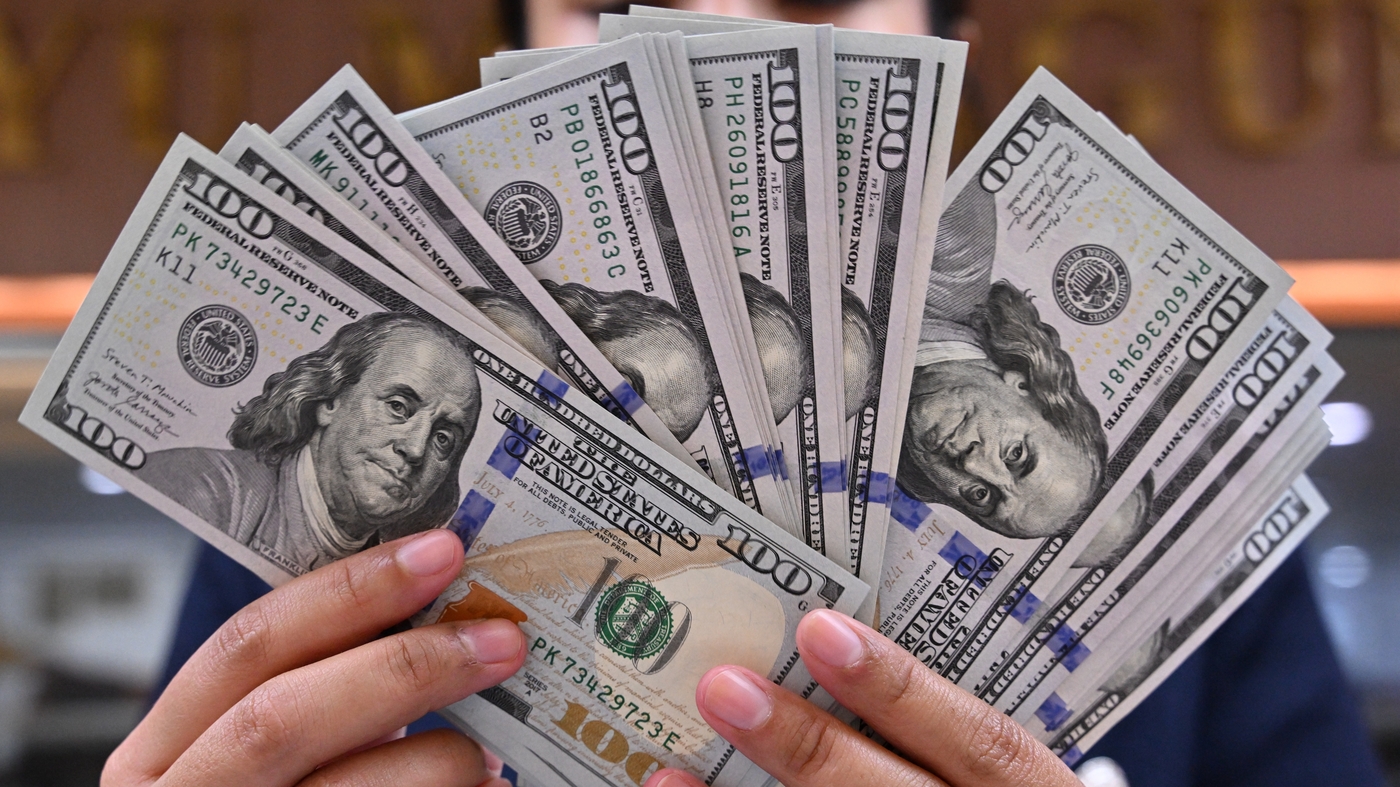
The U.S. dollar maintained its footing on Thursday as currency markets grappled with conflicting signals from Federal Reserve officials, highlighting the delicate balance between economic data and monetary policy expectations that continues to shape global trading patterns.
Despite the Fed’s widely anticipated rate cut last week, the greenback has shown resilience, climbing higher as policymakers adopt an increasingly cautious stance on future easing measures. The dollar index, which tracks the currency against six major peers, held near multi-week highs at 97.744, underscoring the market’s reassessment of the Fed’s policy trajectory.
Fed Officials Strike Cautious Tone
The central bank’s messaging has grown notably more measured, with Chair Jerome Powell and his colleagues emphasizing their data-dependent approach to future rate decisions. San Francisco Fed President Mary Daly captured the prevailing sentiment Wednesday, acknowledging that while additional cuts may be necessary, their timing remains highly uncertain.
“Will they come right now, this year, or going forward? “It’s hard to say,” Daly noted, referring to the Fed’s dual mandate of price stability and full employment. This uncertainty has prompted traders to scale back their expectations, with rate cut probabilities for the remaining meetings this year now standing at just 43 basis points.
Tariff Impact Remains Wild Card
Perhaps the most significant unknown factor weighing on policy decisions is the economic fallout from President Trump’s sweeping tariff implementation. The trade measures, which have fundamentally altered global commerce patterns, have yet to fully manifest in economic indicators, leaving policymakers and investors in uncharted territory.
Laura Cooper, global investment strategist at Nuveen, characterized tariff-driven inflation as a “wild card” that could derail the market’s expectations for consecutive rate cuts. Her analysis suggests Personal Consumption Expenditures inflation could spike to 3.2% later this year, keeping price pressures well above the Fed’s 2% target and potentially forcing a more hawkish stance.
Global Currency Dynamics in Focus
While dollar strength dominated headlines, other major currencies exhibited their own distinct patterns. The euro managed a modest 0.12% gain to $1.1752 during Asian trading, recovering partially from Wednesday’s 0.6% decline. Sterling similarly attempted to stabilize at $1.3464 after its own substantial retreat.
The Japanese yen emerged as a notable performer, strengthening to 148.62 against the dollar as Bank of Japan meeting minutes revealed growing sentiment for resumed rate hikes among board members. Markets are now pricing in roughly even odds for a BOJ rate increase at the October 29-30 policy meeting, when fresh economic projections will provide additional clarity on the central bank’s thinking.
Political Uncertainty Adds Complexity
Japan’s monetary policy deliberations are further complicated by domestic political upheaval following Prime Minister Shigeru Ishiba’s resignation announcement. The Liberal Democratic Party’s leadership contest has introduced questions about potential fiscal policy shifts that could influence the yen’s trajectory in the coming weeks.
Meanwhile, the Swiss National Bank faces its own crossroads, with markets expecting policymakers to pause their easing cycle and hold rates at zero during Thursday’s meeting—marking the first such pause since late 2023.
Data-Heavy Period Ahead
The coming days promise to deliver crucial economic indicators that could reshape market expectations. Friday’s PCE inflation report—the Fed’s preferred price gauge—along with Thursday’s final second-quarter GDP estimate, will provide fresh insights into the economy’s resilience amid trade policy disruptions.
Adding to the complexity is the looming threat of a U.S. government shutdown, which could further complicate economic assessment and policy planning.
As Vasu Menon of OCBC Bank noted, concerns persist that stronger-than-expected U.S. growth could limit the Fed’s easing capacity in 2026, contrary to current futures market pricing. This dynamic continues to support dollar strength even as the currency remains down nearly 10% for the year against major trading partners.
The current environment reflects a fundamental shift from earlier market assumptions about Fed policy normalization, with uncertainty now the dominant theme as economic data and geopolitical factors continue to evolve rapidly.
WHAT YOU SHOULD KNOW
The U.S. dollar is holding strong despite recent Fed rate cuts because policymakers are sending mixed signals about future easing. The biggest wild card is Trump’s tariffs, which haven’t fully impacted the economy yet but could push inflation to 3.2% and force the Fed to slow or stop rate cuts.
Meanwhile, Japan may raise rates in October, adding to global currency volatility. Bottom line: expect continued uncertainty in currency markets as central banks navigate between conflicting economic pressures and unclear tariff effects.