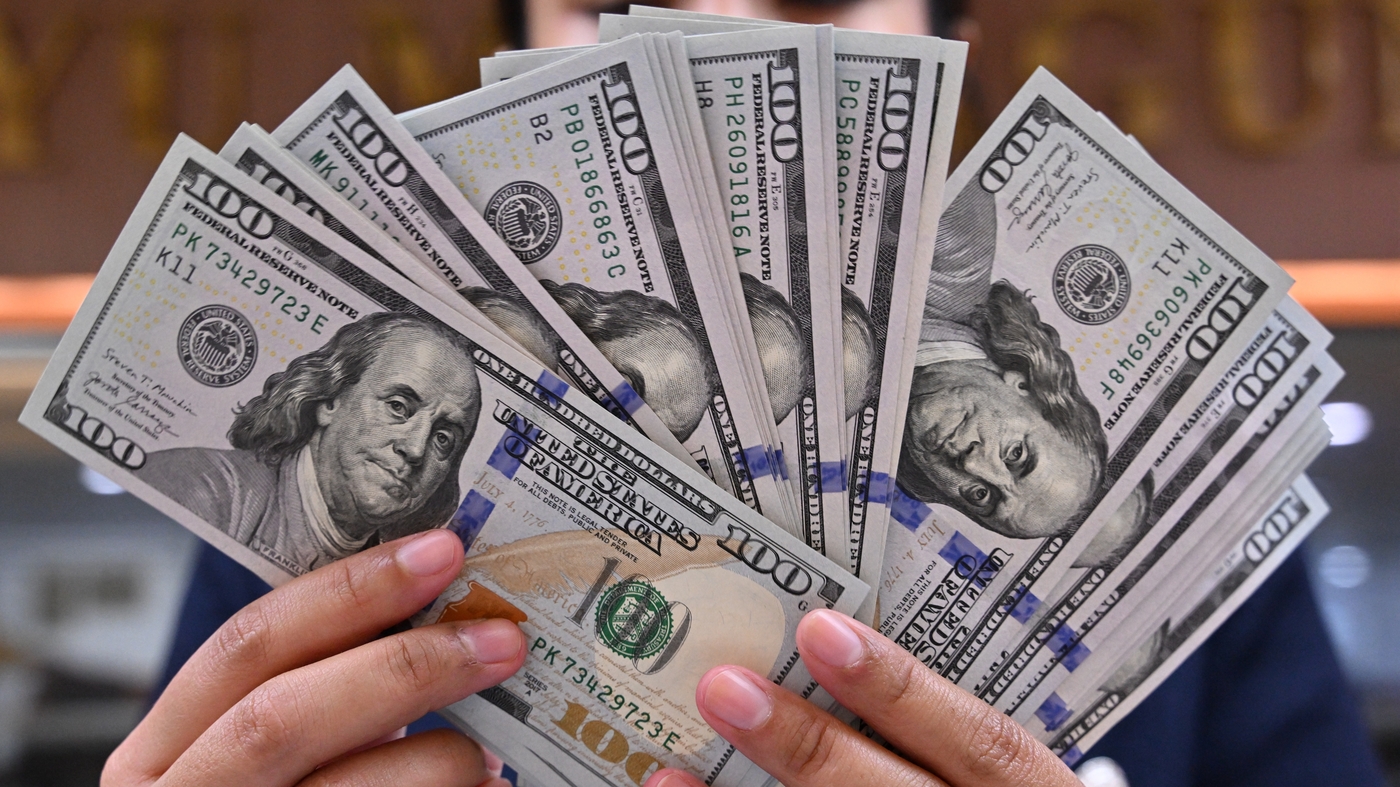
The U.S. dollar maintained a cautious drift on Thursday as financial markets entered a holding pattern ahead of what could be a pivotal speech by Federal Reserve Chairman Jerome Powell at the Jackson Hole Economic Symposium, while fresh political interference from President Donald Trump cast new shadows over the central bank’s independence.
Currency markets displayed the trademark calm-before-the-storm mentality that often precedes major Fed communications, with the euro ($1.1652) and British pound ($1.3451) showing little movement against the greenback. The Japanese yen and Swiss franc both weakened modestly, reflecting the market’s wait-and-see approach.
Rate Cut Expectations Face Reality Check
The central question gripping traders is whether Powell will validate or challenge the market’s aggressive betting on monetary easing. Current market pricing shows an 82% probability of a rate cut at the Fed’s September meeting—down from higher levels earlier in the week—a shift that has provided modest tailwinds for the dollar.
Kenneth Broux, head of corporate research for foreign exchange and rates at Societe Generale, warns that the market positioning creates an inherently lopsided risk scenario. “The risks are asymmetric,” Broux explained. “Because it (a cut) is already priced in, the risk is that we go back to 50-50.”
This dynamic means Powell faces a delicate balancing act. Should he signal the Fed might hold rates steady, the market reaction could be swift and punishing for bonds while benefiting the dollar. Conversely, if he leans toward confirming rate cut expectations, the response may be more muted given how thoroughly that outcome is already reflected in current pricing.
Political Storm Clouds Gather
Adding complexity to the Fed’s deliberations, President Trump has intensified his pressure campaign against the central bank, most recently calling for the resignation of Fed Governor Lisa Cook based on allegations from political allies. This latest salvo follows a pattern of criticism directed at Powell personally, with Trump repeatedly arguing that the Fed has been too slow to cut interest rates.
While Trump has acknowledged legal constraints prevent him from directly firing Fed board members over policy disagreements, his sustained criticism has reignited concerns about political interference in monetary policy—a cornerstone of modern central banking independence.
“It has the potential to raise questions around the Fed’s oversight and regulatory functions, but it has little to no near-term monetary policy implications,” noted Prashant Newnaha, senior Asia-Pacific rates strategist at TD Securities.
This assessment appears to be shared by currency traders, who showed relatively muted reactions to the political drama. The dollar initially dipped on the news but quickly recovered and edged higher, suggesting markets are compartmentalizing political noise from immediate policy implications.
Looking Ahead: Powell’s Pivotal Moment
With Powell’s term set to expire in May, market participants are already gaming out potential succession scenarios. The expectation that Trump will nominate a more accommodative replacement has become a background factor in current positioning.
Trump has already signaled his intentions for Fed appointments, announcing plans to nominate Stephen Miran, currently Chairman of the Council of Economic Advisers, to fill a vacant board seat following Adriana Kugler’s unexpected resignation.
The dollar index, which tracks the greenback against six major trading partners, rose 0.1% to 98.337, positioning for a 0.4% weekly gain. Bond markets reflected the uncertainty, with the benchmark 10-year Treasury yield ticking higher to 4.30% and the policy-sensitive 2-year yield advancing to 3.756%.
Cautionary Notes
Some market observers warn that Powell’s Jackson Hole address may disappoint those expecting clear policy signals. The ongoing uncertainty around Trump’s proposed tariff policies and their potential inflationary impact adds another layer of complexity to the Fed’s decision-making calculus.
Meanwhile, other central bank developments provided some market movement elsewhere. Norway’s krone strengthened 0.4% against the dollar and 0.5% versus the euro after economic data revealed faster-than-expected mainland growth in the second quarter, with first-quarter figures revised upward.
As markets count down to Powell’s Friday speech, the fundamental question remains whether the Fed chairman will challenge market expectations or validate them—a decision that could reverberate through currency and bond markets well beyond Jackson Hole.
WHAT YOU SHOULD KNOW
The U.S. dollar is treading water as markets await Fed Chair Powell’s Friday speech at Jackson Hole, with traders betting 82% odds on a September rate cut. The main risk is that Powell pushes back against these expectations, which could trigger a dollar rally and bond sell-off since rate cuts are already heavily priced in.
Meanwhile, Trump’s renewed attacks on Fed independence—including calls for a governor’s resignation—are creating political noise but haven’t significantly moved markets, as investors view this as having minimal near-term policy impact.