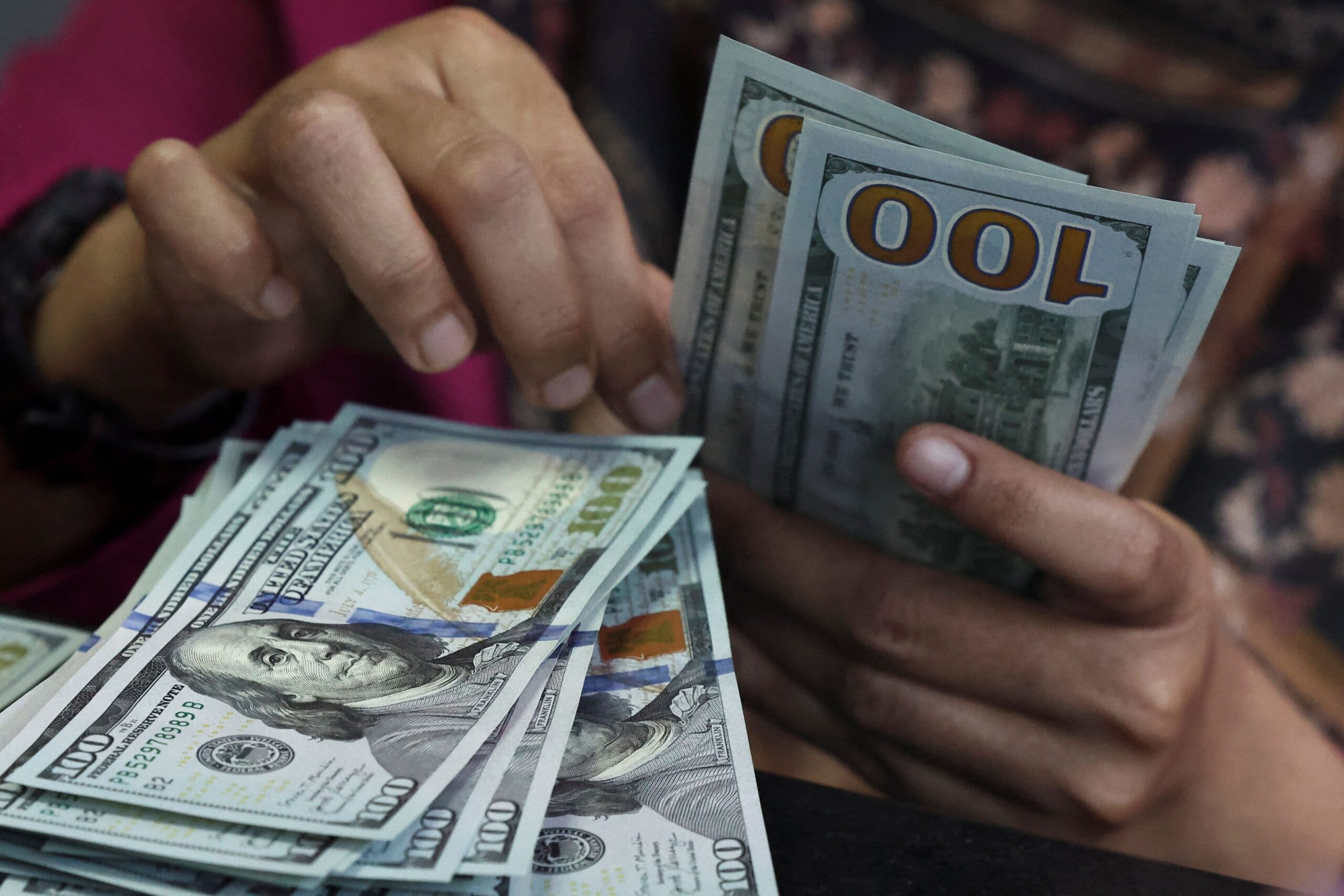
The U.S. dollar edged higher in muted Friday trading across Asian markets, as investors positioned themselves ahead of critical economic data and a potentially explosive Supreme Court decision that could fundamentally reshape American trade policy.
The dollar index, which measures the greenback’s performance against six major currencies, climbed 0.1% to 98.933 by midday Asian hours, hovering near its strongest level in a month. The modest advance reflected a market in wait-and-see mode, with traders reluctant to make significant moves before key catalysts emerge.
Market attention is firmly fixed on the December non-farm payrolls report, scheduled for release later Friday. The employment data takes on heightened significance following a recent government shutdown that created what analysts describe as a “data fog,” leaving investors struggling to gauge the true state of the U.S. economy.
However, strategists at ING cautioned that even a comprehensive jobs report may not provide the clarity markets crave regarding the Federal Reserve’s next moves on interest rates. In their research note, the Amsterdam-based bank’s analysts suggested that “the market is likely to show considerable tolerance to a weakish payrolls number,” pointing instead to the unemployment rate as the more critical metric for determining monetary policy direction.
“Barring a dramatic data print, the more impactful number is likely to be the unemployment rate,” the ING team wrote, reflecting a view that the Fed’s decision-making has shifted toward broader labor market health rather than headline job creation figures.
Thursday’s weekly jobless claims offered a preview of sorts, showing a marginal uptick in Americans filing for unemployment benefits. The data did little to move markets but added to the cautious mood ahead of the comprehensive December employment snapshot.
According to the CME Group’s FedWatch tool, which tracks interest rate expectations through fed funds futures, traders are now pricing in an 86% probability that the Federal Reserve will hold rates steady at its January 27-28 policy meeting. That figure represents a significant jump from just 68% a month ago, suggesting growing conviction that the central bank will pause its policy adjustments as it assesses economic conditions.
Perhaps even more consequential than the jobs data is the anticipated Supreme Court ruling on President Donald Trump’s authority to impose tariffs using emergency powers. The decision, which could arrive as early as Friday, centers on whether the president can invoke the International Emergency Economic Powers Act without congressional approval to levy duties on imported goods.
The stakes could hardly be higher. A ruling against the administration threatens to overturn months of painstaking trade negotiations with partner nations and could fundamentally alter the architecture of U.S. trade policy. Legal experts and trade specialists have described the case as one of the most significant tests of executive authority in commercial matters in decades.
Should the court rule against Trump, the fallout would extend far beyond policy circles. Company executives, customs brokers, and trade lawyers are already preparing for what could become a massive legal battle to secure refunds of approximately $150 billion in duties already paid to the U.S. government. The potential for such a large-scale reimbursement process adds another layer of uncertainty to an already complex situation.
In bilateral trading, the dollar extended its winning streak against the Japanese yen for a fourth consecutive session, advancing 0.3% to 157.29. The greenback’s strength came after Japanese data revealed an unexpected increase in household spending for November compared to the previous year, suggesting that consumer activity gained momentum before the Bank of Japan raised its policy rate to a three-decade high in December.
BOJ Governor Kazuo Ueda has signaled the central bank’s willingness to continue tightening monetary policy, stating that borrowing costs would keep rising if economic and inflation trends align with the bank’s projections. The prospect of further rate increases, while supporting the yen in theory, has been overshadowed by the still-wide interest rate differential between Japan and the United States.
Against the Chinese yuan trading in Hong Kong’s offshore market, the dollar held relatively steady at 6.9797 yuan, showing minimal reaction to China’s latest inflation figures. The data presented a decidedly mixed picture of the world’s second-largest economy.
While consumer price inflation accelerated to its highest level in nearly three years in December, offering a superficial sign of economic vigor, the full-year inflation rate told a different story—slumping to its weakest in 16 years. Meanwhile, producer deflation continued unabated, underscoring persistent weakness in industrial demand.
Analysts at Capital Economics interpreted the data as a clear signal that Beijing needs to implement more aggressive demand-side stimulus measures. “Without stronger demand-side measures, we think overcapacity and the resulting deflationary pressures will persist in the coming years,” the firm’s analysts wrote, echoing concerns that China’s economic challenges run deeper than cyclical weakness.
Other major currencies showed little movement in Asian trading hours, reflecting the market’s generally cautious posture. The euro remained flat at $1.1655 as traders awaited German trade data and retail sales figures for the broader eurozone, both scheduled for release later Friday.
The British pound traded unchanged at $1.3436, while the Australian dollar held steady at $0.6697. The New Zealand dollar edged marginally lower, declining 0.2% to $0.5742.
In cryptocurrency markets, Bitcoin slipped 0.3% to $90,892.58, while Ethereum declined 0.2% to $3,111.40, both tracking the subdued risk appetite evident across traditional financial markets.
As trading moves into European and U.S. sessions, all eyes will be on Washington for both the employment data and any Supreme Court announcement, either of which could inject significant volatility into currency markets that have remained remarkably calm through the Asian day.
WHAT YOU SHOULD KNOW
The U.S. dollar is strengthening as markets face two critical uncertainties: December jobs data that will clarify the Federal Reserve’s interest rate path and a Supreme Court ruling on President Trump’s tariff powers that could trigger $150 billion in duty refunds and upend global trade policy.
The Supreme Court decision poses the greater risk—potentially invalidating months of trade negotiations and forcing a massive legal battle over refunds. With 86% odds the Fed holds rates steady at its late-January meeting, the court’s ruling on executive tariff authority may prove the more market-moving event, threatening to reshape U.S.-China trade relations and corporate balance sheets overnight.