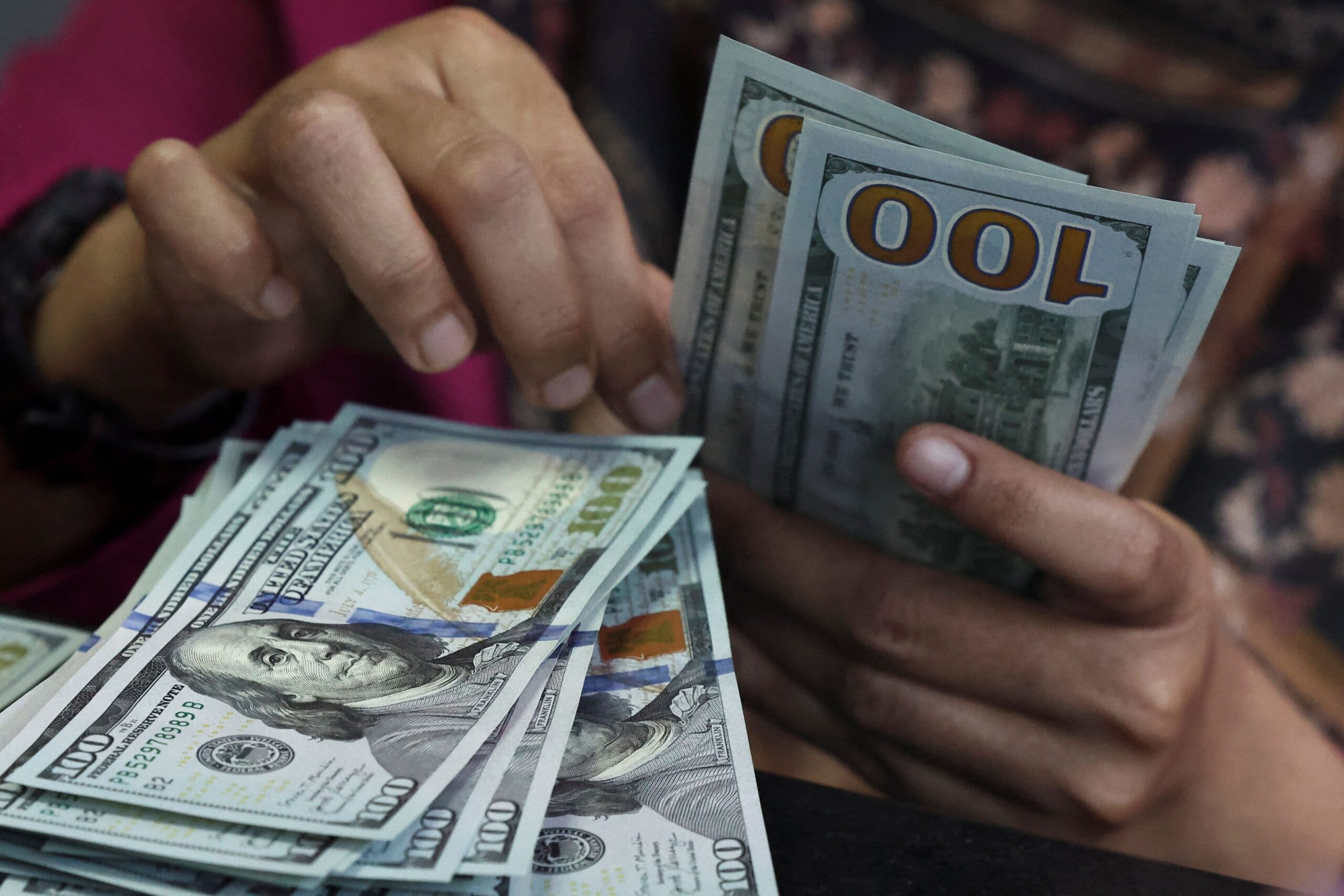
The U.S. dollar extended its retreat in Asian markets on Tuesday, pressured by a confluence of easing geopolitical anxieties and renewed speculation about Federal Reserve monetary policy flexibility, as traders reassessed risk appetite following days of heightened volatility.
The dollar index, which tracks the greenback’s performance against a basket of six major currencies, fell 0.2% to 98.216 in morning trading, marking its second consecutive daily decline after breaking a four-day rally on Monday. The pullback signals a notable shift in market sentiment as investors move away from traditional safe-haven assets.
Market participants are demonstrating remarkable resilience in the face of extraordinary geopolitical developments, according to currency analysts monitoring the situation from Asia-Pacific trading desks.
“The market isn’t really concerned about what’s happening on the geopolitical front, at least in the near term,” explained Rodrigo Catril, a currency strategist at National Australia Bank in Sydney. That environment “lessens the appeal for safe havens, and we’ve seen the U.S. dollar on the back foot,” he noted.
Financial markets are steadily recovering from the shockwaves sent through global trading floors over the weekend when U.S. forces captured Venezuelan President Nicolas Maduro in an unprecedented operation that initially triggered sharp volatility across commodity markets. Maduro entered a not guilty plea to narcotics trafficking charges during his arraignment in Manhattan federal court on Monday, but traders appear increasingly willing to look past the dramatic developments.
The dollar’s retreat gained momentum following disappointing U.S. manufacturing data that emerged during Monday’s session. Manufacturing activity contracted more sharply than economists had anticipated in December, falling to a 14-month low and raising fresh questions about the strength of the American economic recovery.
“The move in the dollar lacked follow-through and quickly stalled as attention returned to U.S. macro fundamentals,” analysts at DBS Group wrote in a research note distributed to clients. “The data undercut the USD’s upside by keeping Fed easing expectations intact and underscoring that geopolitical risk alone was insufficient to sustain a stronger USD with supportive U.S. data.”
Adding to the dollar’s woes, Minneapolis Federal Reserve President Neel Kashkari—a voting member of the central bank’s rate-setting Federal Open Market Committee this year—delivered notably cautious commentary Monday that sparked a subtle but meaningful shift in interest rate expectations.
Speaking to CNBC, Kashkari warned of potential labor market deterioration, suggesting he sees a risk that the unemployment rate could “pop” higher in the coming months. Such language from a voting FOMC member carries significant weight, and traders responded by marginally increasing their expectations for potential policy easing.
Despite the uptick in dovish sentiment, Fed funds futures markets continue to price in an 82.8% probability that the central bank will hold interest rates steady at its upcoming January 27-28 policy meeting, according to CME Group’s closely watched FedWatch tool. That figure represents only a modest decline from the 83.4% probability registered Friday, suggesting markets remain largely convinced the Fed will maintain its current stance in the near term.
In cross-currency trading, the dollar slipped 0.1% against the Japanese yen to 156.255, weakening slightly after a 10-year Japanese government bond auction drew demand consistent with recent average levels, indicating stable investor appetite for Japanese debt.
The Australian dollar, which maintains high sensitivity to commodity price fluctuations given the nation’s resource-heavy export profile, climbed 0.1% to reach a one-week high of $0.6724. The Aussie is approaching its strongest level in more than a year, buoyed by copper prices that recently surged to record highs. Its trans-Tasman neighbor, the New Zealand dollar, advanced 0.2% to $0.5798.
In European currency pairs, the euro gained 0.1% against the dollar to trade at $1.1737, while the British pound strengthened 0.2% to $1.3562. Against the Chinese yuan in offshore Hong Kong trading, the dollar edged down 0.1% to 6.9769 yuan.
Digital assets retreated modestly during the session, with Bitcoin falling 0.3% to $93,772.04 and Ethereum declining 0.4% to $3,225.96, suggesting profit-taking after recent gains as traders rotated into riskier traditional assets.
The currency market dynamics underscore how quickly investor sentiment can shift in response to changing narratives around monetary policy and geopolitical risk, with the dollar’s status as the world’s primary reserve currency making it particularly sensitive to such fluctuations in the current environment.
WHAT YOU SHOULD KNOW
The U.S. dollar weakened for a second straight day as markets shrugged off Venezuela tensions and focused instead on weak U.S. manufacturing data and dovish Federal Reserve commentary.
Traders are betting that softening economic conditions may force the Fed to ease monetary policy sooner than expected, reducing the dollar’s appeal even as geopolitical risks remain elevated. In short, economic fundamentals are trumping geopolitical drama in driving currency markets right now.