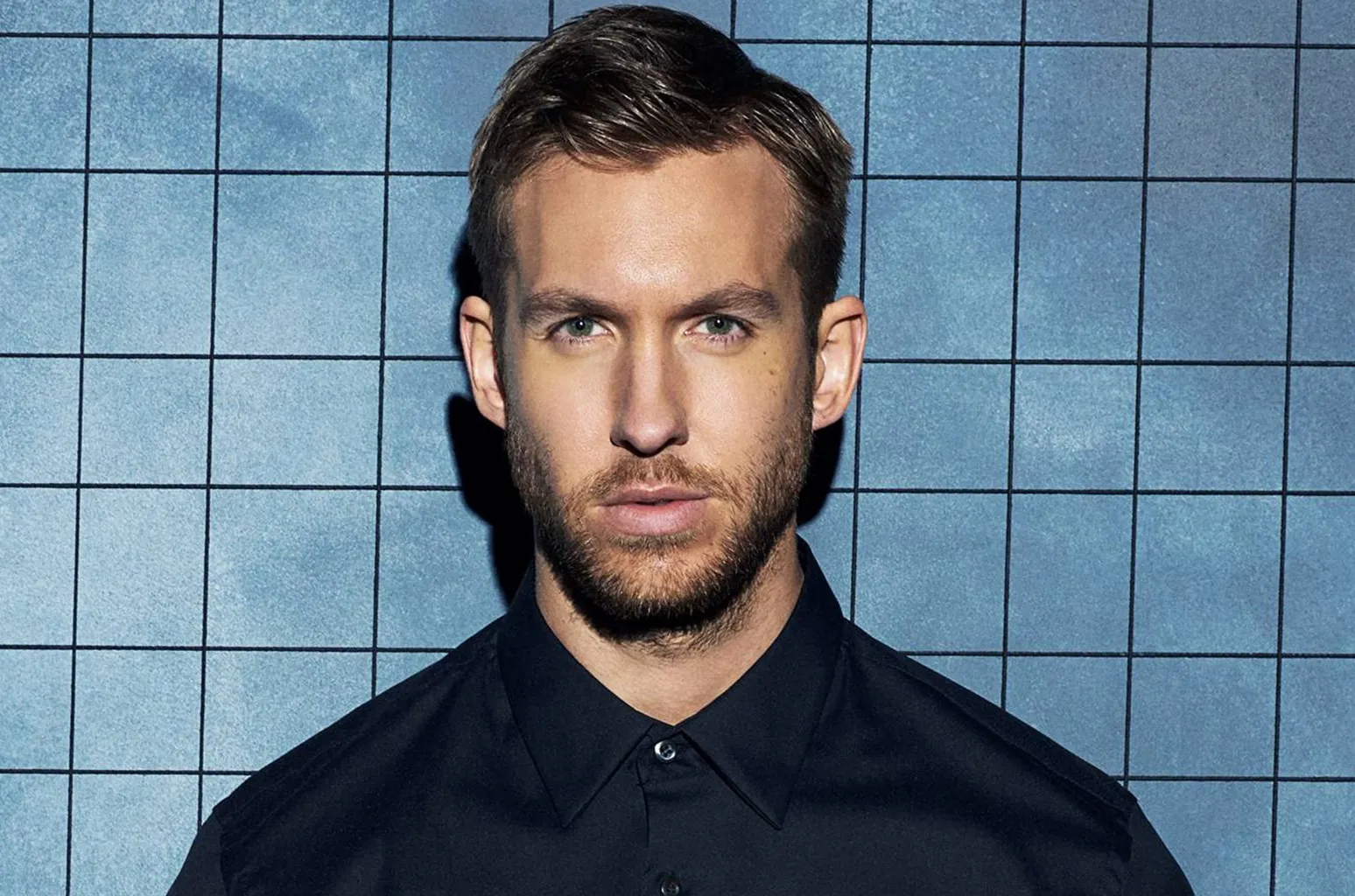
One of electronic music’s biggest stars has launched a devastating legal assault against his trusted financial adviser, accusing the man who handled his finances for over a decade of orchestrating an elaborate scheme that cost the DJ $22.5 million.
Calvin Harris, whose real name is Adam Wiles, filed explosive court documents Friday seeking to enforce a temporary injunction in his ongoing arbitration battle against Thomas St. John, his Scottish financial adviser since approximately 2012. The legal filing has pulled back the curtain on what had been a private arbitration proceeding, revealing allegations that read more like a Hollywood thriller than a typical business dispute.
The case centers around Harris’s investment in what has become known as the CMNTY Culture Campus project, a proposed 460,000-square-foot development in Hollywood that was originally pitched as a recording studio and creative office space but has since shifted focus toward residential development.
According to the arbitration demand obtained by Billboard, the relationship began to unravel when St. John allegedly found himself cash-strapped after purchasing the Hollywood tract in 2021. Court documents paint a picture of betrayal, alleging that St. John exploited his position of trust to secure Harris’s investment in 2023—not through transparent business dealings, but through what the DJ’s legal team characterizes as deception.
The financial breakdown is staggering. Of the $22.5 million Harris allegedly invested, $10 million took the form of a loan that St. John has reportedly never repaid, despite an apparent deadline of January 31, 2025. The remaining $12.5 million was structured as an equity stake in the real estate venture—money that Harris claims has vanished without a trace.
Perhaps most damning is the allegation that shortly after Harris made his $12.5 million equity investment, St. John distributed over $11 million to himself, leaving the DJ with nothing to show for his substantial commitment. “Mr. Wiles has not received a single penny in return for that investment,” the court documents state with stark clarity.
The legal papers reveal Harris’s bewilderment and frustration: “Mr. Wiles has no idea what exactly happened” with his money. For a global superstar who has built his career on precision and control—from crafting chart-topping hits to managing a business empire—this alleged financial blindsiding represents a profound breach of trust.
The case highlights the vulnerabilities that even megastars face when they delegate financial responsibility. Harris’s legal team emphasizes that “out of necessity, Mr. Wiles surrounds himself with professionals,” individuals in whom he “placed his trust to ensure his earnings are protected, his investments are smart, and his family and future are secure.”
This trust, they allege, was systematically exploited. St. John worked for Harris from approximately 2012 to April 2025, building what appeared to be a solid professional relationship over more than a decade before the alleged scheme unfolded.
St. John’s attorney, Sasha Frid, has mounted a vigorous defense, categorically denying any wrongdoing and painting Harris as an impatient investor dissatisfied with normal real estate development timelines. “It’s no secret that due to interest rates and other market factors, real estate projects are taking longer to build,” Frid stated, emphasizing that “the development is very much viable and expected to have a $900+ million valuation when completed.”
Crucially, Frid asserts that Harris “actively pursued” the investment opportunity, challenging the narrative that the DJ was duped into the deal. This sets up what promises to be a contentious battle over the fundamental nature of their business relationship and whether Harris was a willing participant or an unwitting victim.
The dispute is now being overseen by retired judge Michael R. Wilner, who was appointed as arbitrator in early August. The temporary injunction freezing certain assets—agreed to by both parties—suggests the seriousness of the claims and the potential for significant financial exposure.
Harris’s decision to file the public court petition to enforce this private arbitration agreement represents a calculated escalation, bringing what had been a behind-closed-doors dispute into the harsh glare of public scrutiny. This move suggests either confidence in his legal position or frustration with the pace of private proceedings.
This case illuminates the complex financial relationships that underpin the entertainment industry, where massive earning potential meets the need for sophisticated financial management. Harris, with decades of chart success and lucrative Las Vegas residencies under his belt, represents the kind of high-net-worth client that financial advisers compete to serve—and potentially, as this case alleges, to exploit.
As the legal battle unfolds, both sides face significant stakes. For Harris, it’s about recovering a substantial sum and vindicating his trust in professional relationships. For St. John, it’s about defending his reputation and business practices against explosive fraud allegations.
The case serves as a stark reminder that in the world of celebrity finance, even the most successful artists remain vulnerable to those they trust with their financial futures. Whether this proves to be a case of genuine fraud or a real estate deal gone wrong will ultimately be determined by the arbitration process—but the public airing of these allegations has already inflicted reputational damage on all parties involved.
WHAT YOU SHOULD KNOW
Calvin Harris is suing his financial adviser of over a decade for allegedly stealing $22.5 million through a fraudulent Hollywood real estate investment scheme. The DJ claims his trusted adviser, Thomas St. John, distributed $11 million of Harris’s investment money to himself, while the promised recording studio project never materialized.
This case highlights how even mega-successful celebrities remain vulnerable to financial exploitation by those they trust most with their money. The dispute is now in private arbitration, with both sides presenting starkly different versions of events—Harris alleging deliberate fraud, while St. John’s team claims it was a legitimate but delayed real estate deal.