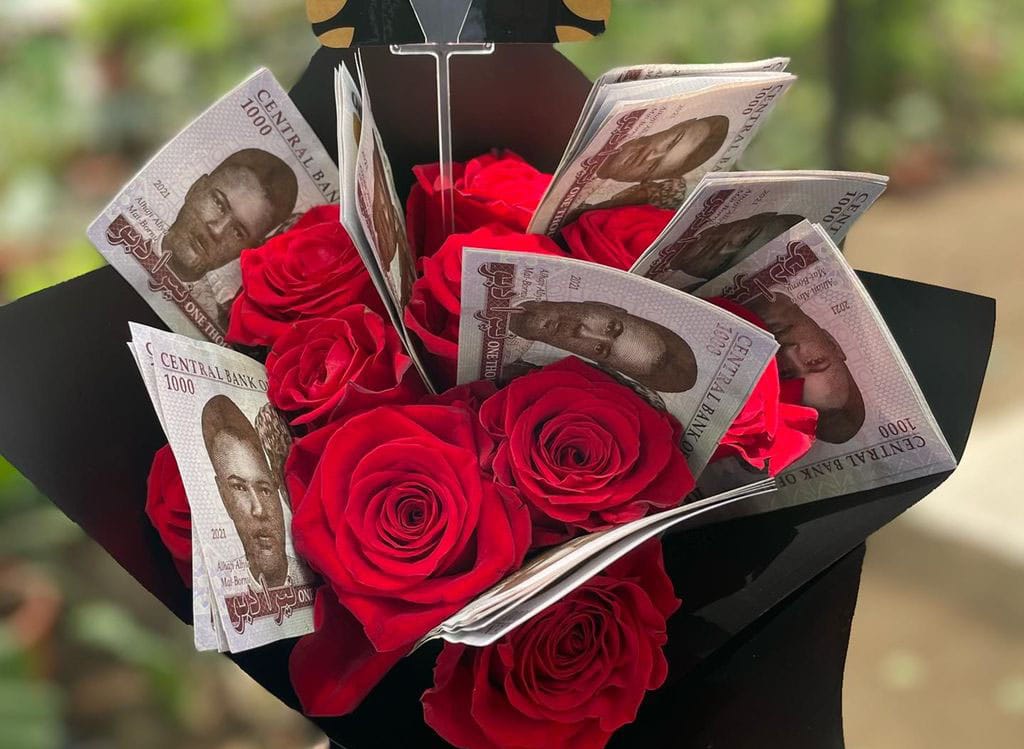
The Central Bank of Nigeria (CBN) escalated its campaign against currency abuse by officially designating decorative “money bouquets” as illegal, expanding the scope of punishable offenses that now include spraying, squeezing, selling, and defacing the naira.
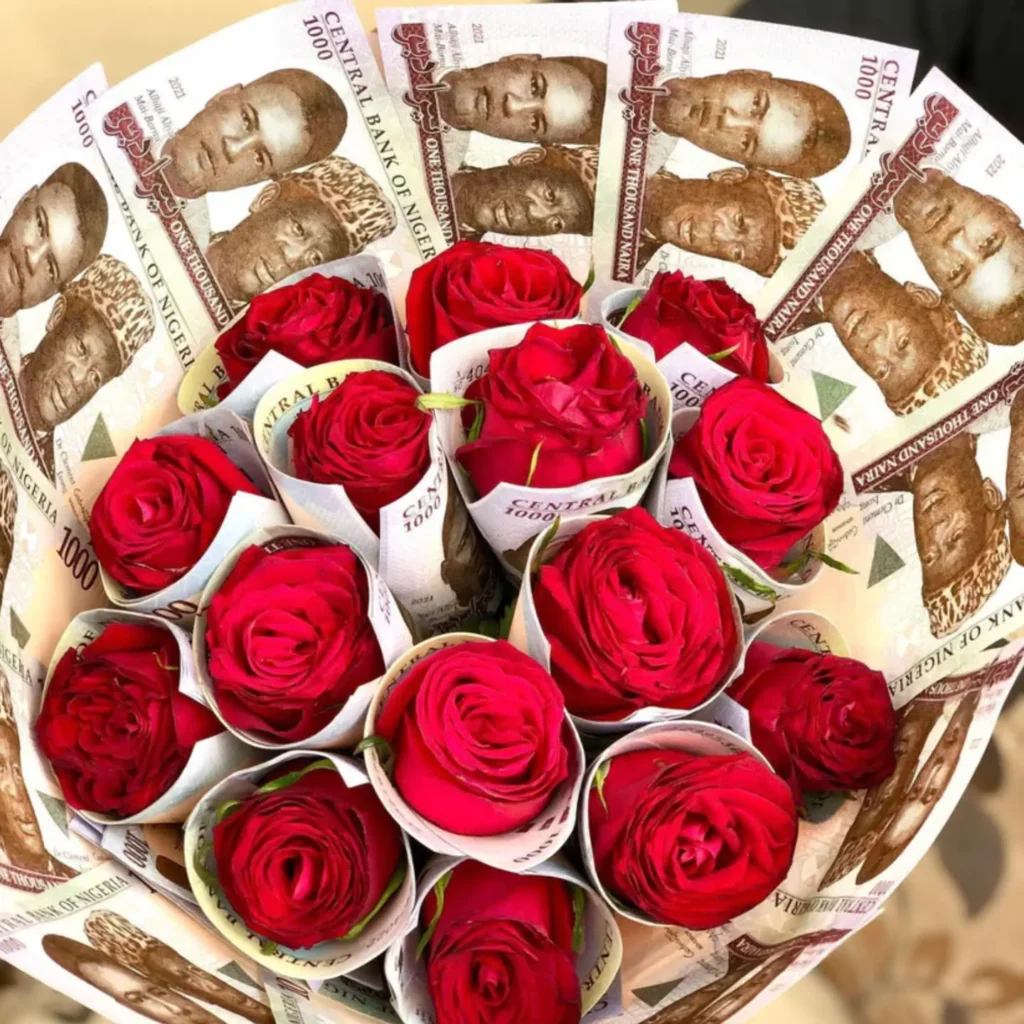
The apex bank’s announcement positions the increasingly popular practice of arranging banknotes into elaborate gift bouquets alongside traditional forms of currency mishandling, all of which carry significant legal consequences under Nigerian law.
According to provisions outlined in the CBN Act, individuals found guilty of tampering with the national currency face a minimum sentence of six months imprisonment or a fine of no less than ₦50,000. The legislation grants authorities broad powers to prosecute anyone who mutilates, defaces, or otherwise abuses legal tender.
Money bouquets, which have gained traction in recent years as creative gifts for weddings, birthdays, and other celebrations, typically involve folding, stapling, or arranging banknotes into flower-like displays. While givers view them as thoughtful presents, the Central Bank argues the practice degrades the physical integrity of the currency and violates statutory protections.
The CBN’s move comes amid growing concern over widespread naira abuse across Nigeria. Currency spraying at social events where guests shower celebrants with cash remains commonplace despite long-standing prohibitions. The practice has drawn criticism for damaging notes and undermining the dignity of the national currency.
In its statement, the apex bank called on Nigerians to exercise greater responsibility in handling the naira and actively report violations to authorities. The appeal signals a renewed commitment to enforcement, with agencies intensifying actions against offenders nationwide.
Economic analysts suggest the crackdown reflects broader efforts to preserve the lifespan of banknotes and reduce the costs associated with printing replacement currency. Damaged notes place additional strain on the CBN’s resources, particularly as Nigeria grapples with ongoing economic challenges.
The prohibition on money bouquets may prove controversial given the practice’s cultural popularity, though legal experts note the law provides clear grounds for prosecution. Whether enforcement agencies will pursue widespread arrests or focus on high-profile cases remains to be seen.
The CBN has yet to announce specific penalties for vendors who manufacture money bouquets commercially, though such businesses could face prosecution under existing statutes governing currency abuse.
Citizens found in violation are encouraged to surrender themselves to authorities or risk arrest as enforcement operations continue across the country.
WHAT YOU SHOULD KNOW
The Central Bank of Nigeria officially banned money bouquets, decorative arrangements of cash given as gifts, classifying them as currency abuse. Violators face a minimum of six months in jail or a ₦50,000 fine under the CBN Act.
This crackdown extends beyond traditional offenses like spraying cash at parties, and enforcement agencies are actively prosecuting offenders nationwide. Bottom line: Creating or giving money bouquets is now illegal and punishable by law.