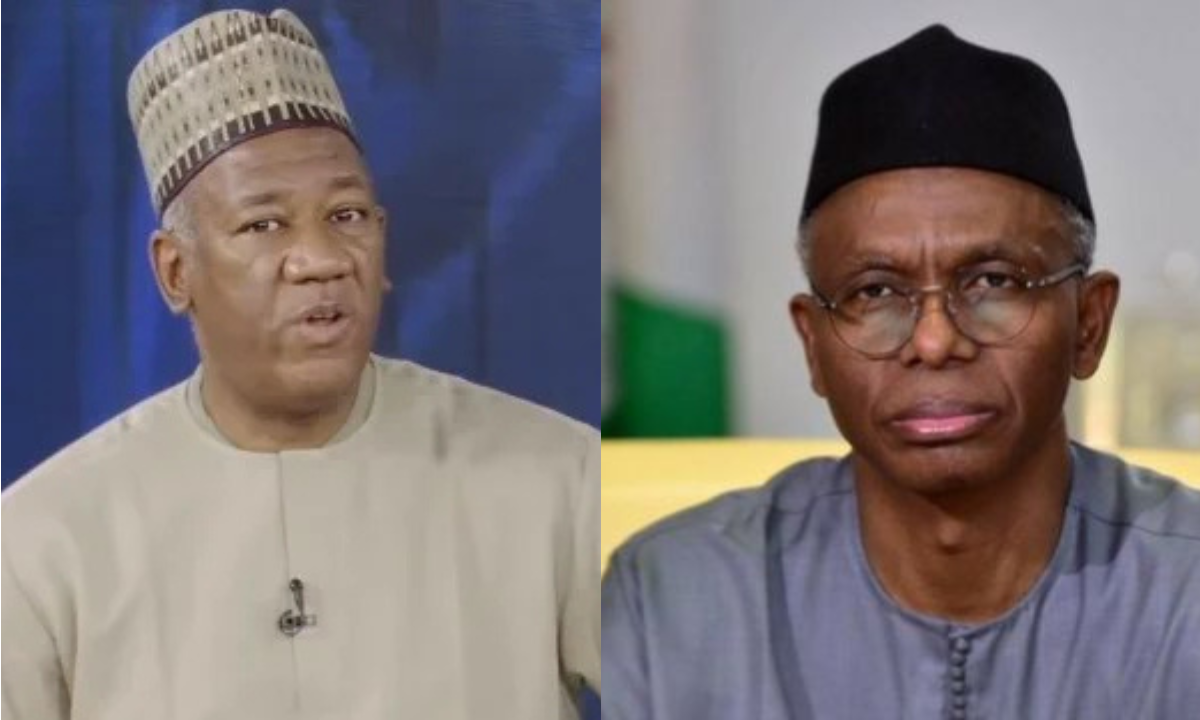
The vice-presidential candidate of the Labour Party in the 2023 elections, Datti Baba-Ahmed, has faulted former Kaduna State governor, Nasir El-Rufai, over his recent claim that government authorities were paying bandits.
According to him, El-Rufai cannot absolve himself from responsibility, given his role as a key figure in the All Progressives Congress (APC) since its formation.
Speaking as a guest on Politics Today, a Channels Television programme, Baba-Ahmed accused the APC of weaponising insecurity for political gain. He said El-Rufai’s attempt to distance himself from the matter was hypocritical. “El-Rufai cannot run away because he is part of it,” Baba-Ahmed declared. “My grudge with Nasiru’s statement is that he was part and parcel of the APC from 2013. Like he told you, he was one of the architects of it all. All of a sudden, he has to come and absolve himself. No. Nasiru is part and parcel of all that has been going on. We suffered, we are victims of Nasiru’s misrule in Zaria.”
The Labour Party chieftain insisted that insecurity had been “politicised and orchestrated” by the APC. He expressed deep concern about the country’s trajectory, stating, “I am in so much pain, believe me. Nigeria should be a great country, yet we have people destroying us by the hour. Insecurity has been part of APC’s game, and Nasiru is saying it. I think he is right, the government has been paying them. Insecurity has been the APC’s way of staying in power. That is my candid, firm opinion, strengthened by the kind of unfortunate comments like that of Nasiru.”
Baba-Ahmed also faulted the Office of the National Security Adviser (ONSA) for dismissing El-Rufai’s allegation instead of addressing it with the seriousness it deserves. “The reaction of ONSA is not disputing what Nasiru has said. Nasiru should be writing some comments and statements by now,” he argued. “If the Office of the National Security Adviser will take this statement with levity, then Nuhu Ribadu was never a policeman. Nasiru should be writing to the police, to the court. If the position of the government is to be paying bandits, then we don’t have a nation.”
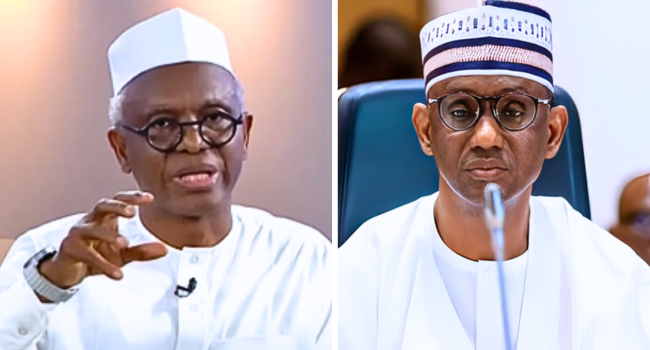
El-Rufai’s claims had sparked controversy after he alleged on Channels Television’s Sunday Politics that both the Federal Government and the Kaduna State Government were worsening insecurity by empowering criminal groups. He suggested that as much as ₦1 billion had been paid to bandits. “What I will not do is pay bandits, give them a monthly allowance, or send food to them in the name of non-kinetic. It’s nonsense; we’re empowering bandits,” El-Rufai stated. He added that the policy was a national one, driven by the ONSA.
The former governor, who served two terms in Kaduna, insisted that only military force could eliminate banditry. “My position has always been [that] the only repentant bandit is a dead one. Let’s kill them all. Let’s bomb them until they are reduced to nothing, and then the five percent that still want to be rehabilitated can be rehabilitated,” he declared.
The Federal Government swiftly dismissed El-Rufai’s remarks. In a statement, ONSA described the allegations as “baseless,” stressing that no arm of government had engaged in ransom payments. Zakari Mijinyawa, who signed the statement, explained, “At no time has the ONSA, or any arm of government under this administration, engaged in ransom payments or inducements to criminals. On the contrary, we have consistently warned Nigerians against paying ransom. El-Rufai’s allegations are not only false but also contradict verifiable facts on the ground.”
The statement added that the government’s dual approach of military operations and community engagement had recorded significant progress, citing the elimination of notorious bandit leaders and the capture of members of Ansaru.
Similarly, the Nigerian Armed Forces rejected the former governor’s claim. Speaking on Sunrise Daily, Chief of Defence Operations, General Emeka Onumajuru, stressed that the military does not fund criminal groups. He explained that the army instead operates a Disarmament, Demobilisation and Reintegration (DDR) programme under Operation Safe Corridor.
The Kaduna State Government also condemned El-Rufai’s remarks, describing them as “calculated, malicious lies designed to undermine security efforts, incite public anger, and legitimise criminality.” Commissioner for Internal Security and Home Affairs, Suleiman Shuaibu, accused the ex-governor of attempting to destabilise the state after his allies lost in the August 16 by-elections.
Despite the backlash, El-Rufai doubled down on his position in a lengthy social media post, accusing the ONSA and the Kaduna State Government of politicising national security. He claimed that government actors were “greasing the palms” of non-state armed groups and challenged authorities to explain the alleged payments. He further hinted at questionable financial activities, linking illicit financial flows and suspicious real estate acquisitions in Abuja to corruption.
What You Should Know
Datti Baba-Ahmed has taken aim at Nasir El-Rufai over his claims that government institutions are paying bandits, arguing that El-Rufai himself cannot escape blame as a key figure in the APC.
While El-Rufai insists his allegations are true, both the Federal Government and security agencies have strongly denied them, labelling the claims baseless.
The controversy underscores ongoing debates about how Nigeria’s security challenges are managed and whether politics has played a role in prolonging the crisis.