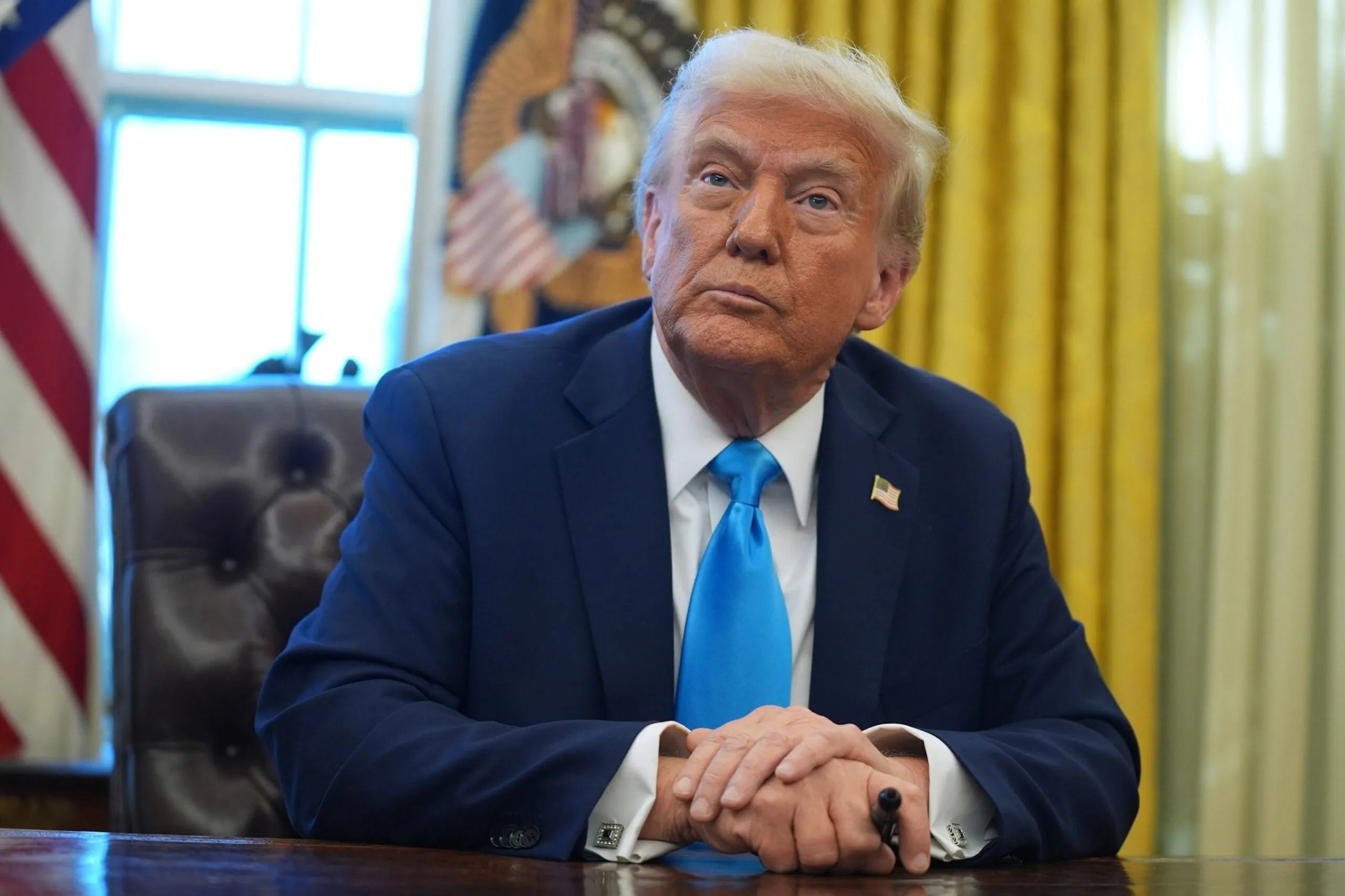
In a defining political moment, US President Donald Trump scored a significant legislative victory on Thursday as Congress narrowly approved his signature tax and spending legislation, a sweeping package that encapsulates the central themes of his radical second-term agenda.
With a final tally of 218–214, the bill now heads to Trump’s desk, where it is expected to be signed into law on Independence Day, July 4.
Dubbed the “One Big Beautiful Bill,” the 869-page legislation marks a consolidation of Trump’s power over a Republican Party that has faced internal discontent over the bill’s enormous scope, its impact on the national deficit, and its aggressive social policy shifts.
Despite days of resistance, a handful of Republican lawmakers ultimately caved to pressure from House Speaker Mike Johnson, who worked tirelessly overnight to secure enough votes for passage in the lower chamber after the Senate approved a revised version earlier in the week.
Trump celebrated the moment with characteristic flair on social media, declaring, “One of the most consequential Bills ever. The USA is the ‘HOTTEST’ Country in the World, by far!!!” as he signaled confidence in the legislation’s legacy.
The bill grants Trump a platform to escalate his mass deportation agenda by sharply increasing funding for immigration enforcement. It also revives and expands tax cuts from his first term, committing $4.5 trillion toward an extension of benefits widely criticized as favoring the ultra-wealthy.
At the same time, it makes deep cuts to social safety nets, notably Medicaid and food assistance programs, potentially stripping healthcare from an estimated 17 million Americans and threatening the survival of numerous rural hospitals.
While the bill advances Trump’s pledge to usher in what allies like Speaker Johnson call a “new Golden Age” for the country, critics say it comes at a steep cost. The Congressional Budget Office projects an additional $3.4 trillion added to the national debt over the next decade.
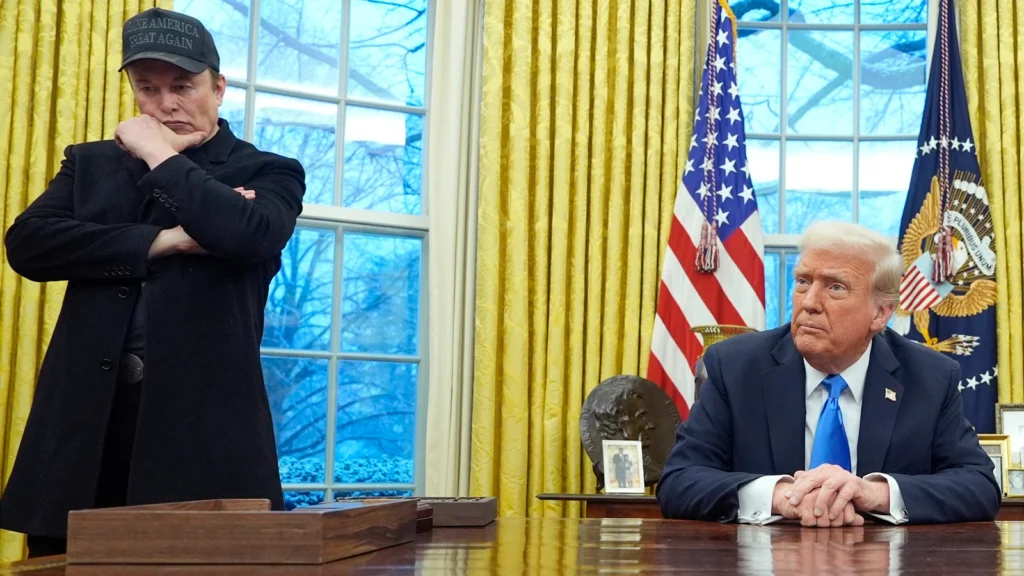
The move to redirect funds away from welfare and clean energy subsidies has already sparked significant backlash, including a public rift with former ally Elon Musk over the elimination of electric vehicle and green technology incentives.
The measure passed despite fierce resistance from Democrats, including House Minority Leader Hakeem Jeffries, who delivered a marathon nine-hour speech in an effort to delay the final vote.
Jeffries condemned the bill as a devastating blow to ordinary Americans, calling it “one big, ugly bill — this reckless Republican budget, this disgusting abomination.” He accused Republicans of prioritizing the wealthy at the expense of vulnerable citizens, particularly children, the elderly, and the working poor.
For weeks, Trump has led a vigorous campaign to rally support among hesitant lawmakers. White House meetings, phone calls, and private discussions were all part of an effort to quell dissent from Republican moderates worried about their reelection chances, and fiscal conservatives dismayed by what they view as a betrayal of promised spending discipline.
The bill’s passage is the latest in a string of wins for Trump in recent weeks. A favorable Supreme Court decision weakened judicial oversight of executive actions, and his administration’s airstrikes in the Middle East helped secure a ceasefire between Israel and Iran, all strengthening the president’s grip on power.
With the 2026 midterm elections looming, Democrats are banking on voter outrage to regain control of the House. They argue that the bill represents a massive wealth transfer from the poor to the rich, and say it exemplifies the worst of Trump-era governance.
Nonetheless, Trump and his allies remain undeterred. “This isn’t about me, it’s about America,” he said earlier in the week. “And this bill? It’s just the beginning.”
What You Should Know
- The “One Big Beautiful Bill Act” passed the House (218-214) on July 3, 2025, after Senate approval (51-50), to be signed by Trump on July 4.
- It extends 2017 tax cuts, adds new tax breaks for tips, overtime, and seniors, and funds mass deportations and defense, costing $4.5 trillion.
- Cuts to Medicaid ($930 billion) and SNAP may leave 12–17 million uninsured, risking rural hospital closures.
- The bill adds $3.4 trillion to the $36.2 trillion national debt, raising the debt ceiling by $5 trillion.
- Democrats and some Republicans, like Elon Musk, criticize its wealth transfer to the rich and EV credit cuts, with 59–64% public opposition on X.