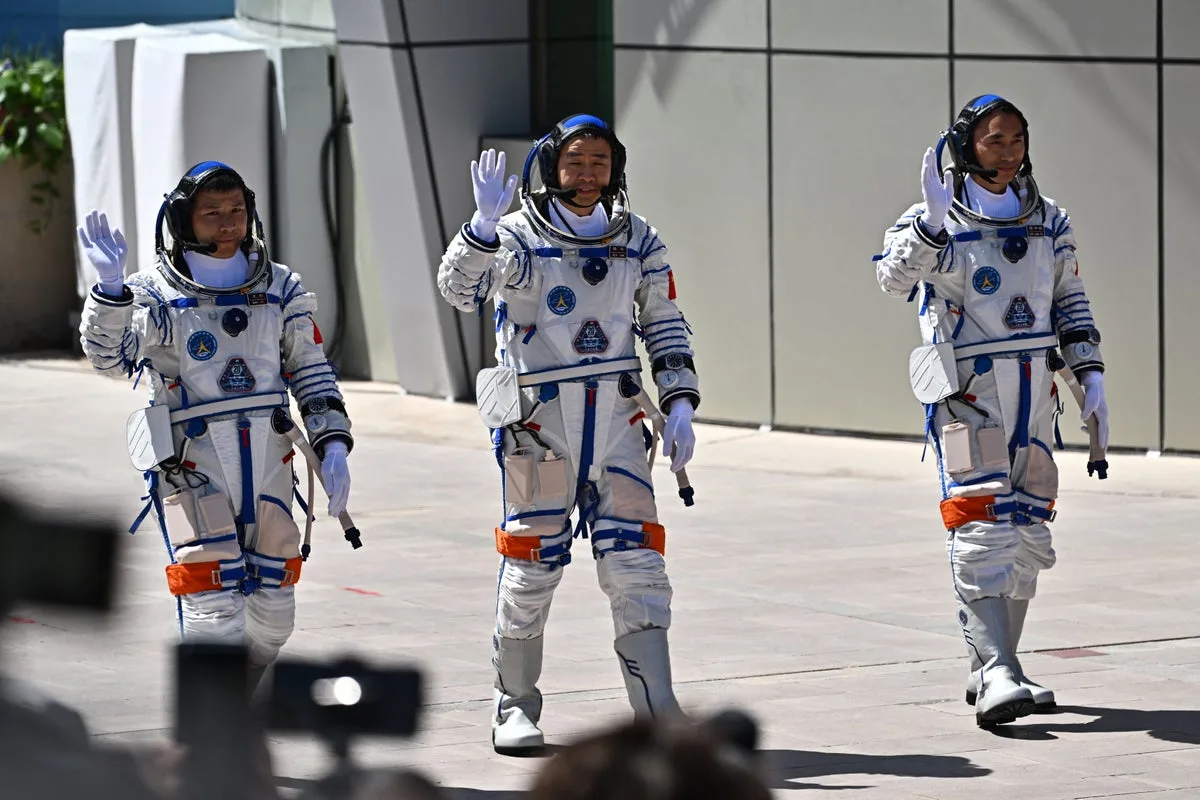
Three Chinese astronauts made a safe return to Earth on Friday, as seen on state television, following a delay caused by orbital debris striking their spacecraft.
The crew had been stationed on the Tiangong space station, China’s flagship orbital facility where astronauts rotate every six months. Their original return date of November 5 was postponed after the Shenzhou-20 craft sustained damage.
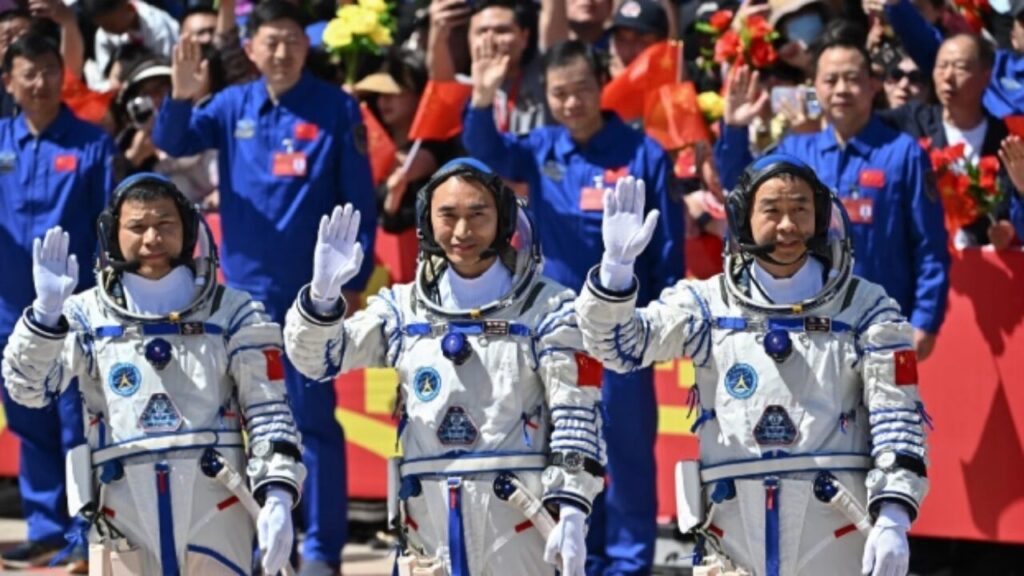
With Shenzhou-20 compromised, the China Manned Space Agency (CMSA) arranged for the astronauts to return aboard the Shenzhou-21 spacecraft. According to CCTV, the landing module detached from Tiangong at 11:14 am (0314 GMT) and made its descent. Over five hours later, at approximately 4:40 pm, the capsule touched down in Inner Mongolia with its parachute deployed, landing under clear skies.
The astronauts Chen Dong, Chen Zhongrui, and Wang Jie were declared “in good condition” after the “successful” landing. Rescue teams, driving across the vast plains of Inner Mongolia, quickly converged on the capsule. State footage showed two large Chinese flags placed on either side of the spacecraft as ground crews prepared for the astronauts to exit.
China’s Expanding Space Ambitions
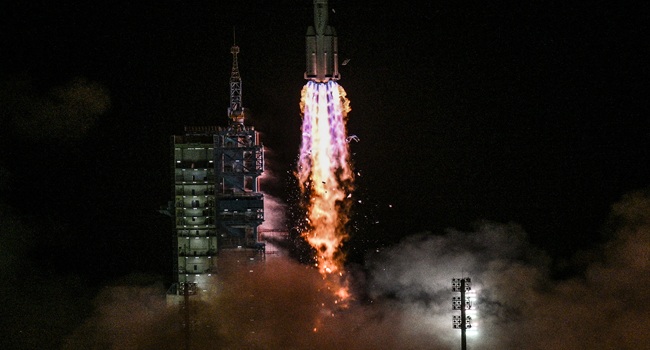
China’s space ambitions have surged under President Xi Jinping. As the third nation to send humans into orbit, China achieved a historic milestone in 2019 by landing its Chang’e-4 probe on the far side of the Moon, followed by a successful Mars rover landing in 2021.
Despite the setback, the damaged Shenzhou-20 will stay in orbit for experiments, CCTV reported, with its cracked window believed to have been caused by the debris impact.
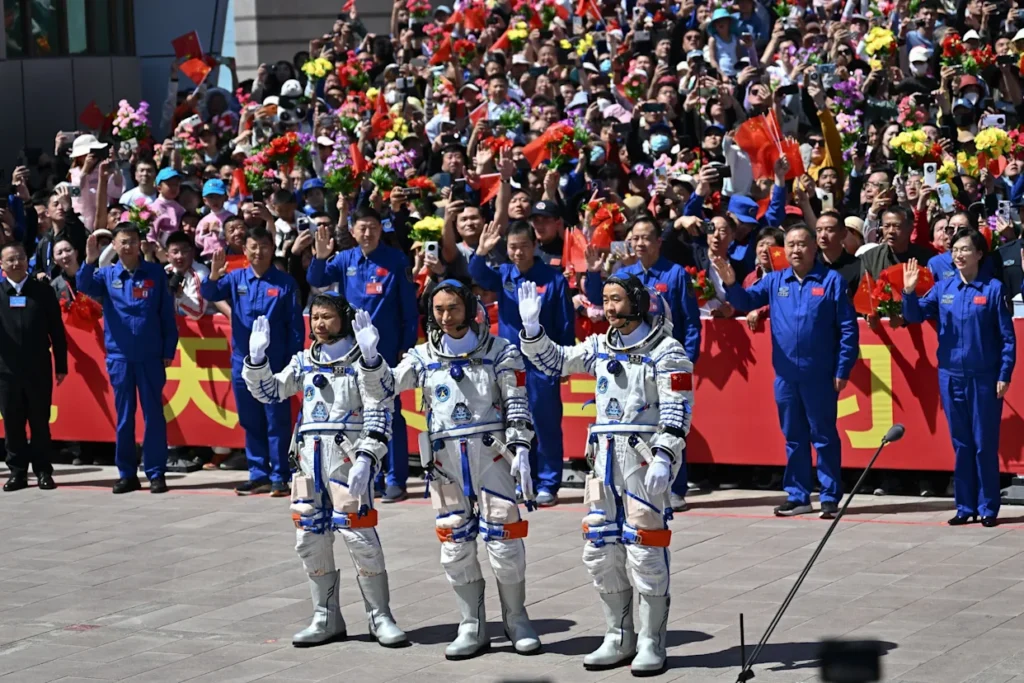
CMSA recently detailed “crucial upcoming tests” as part of China’s plan to land astronauts on the Moon by 2030. Meanwhile, the Shenzhou-21 crew will conduct spacewalks and install anti-debris shields to enhance Tiangong’s protection.
Since being barred from the International Space Station in 2011 due to a U.S. ban on NASA collaboration, China has pushed to expand international partnerships. In February, it signed an agreement with Pakistan to recruit the first foreign “taikonauts.”
What You Should Know
China’s latest crew return highlights both the progress and risks of its expanding space programme. The astronauts’ delayed landing underscores growing concerns about orbital debris, an increasing threat to spacecraft worldwide.
Tiangong remains central to Beijing’s long-term space strategy, especially as China accelerates efforts toward its 2030 Moon mission. The Shenzhou-20 damage incident also demonstrates China’s capacity for rapid contingency planning, using Shenzhou-21 to bring its crew home safely.
Excluded from the International Space Station for over a decade, China is building its own global partnerships, recently opening pathways for international astronauts to join its missions.