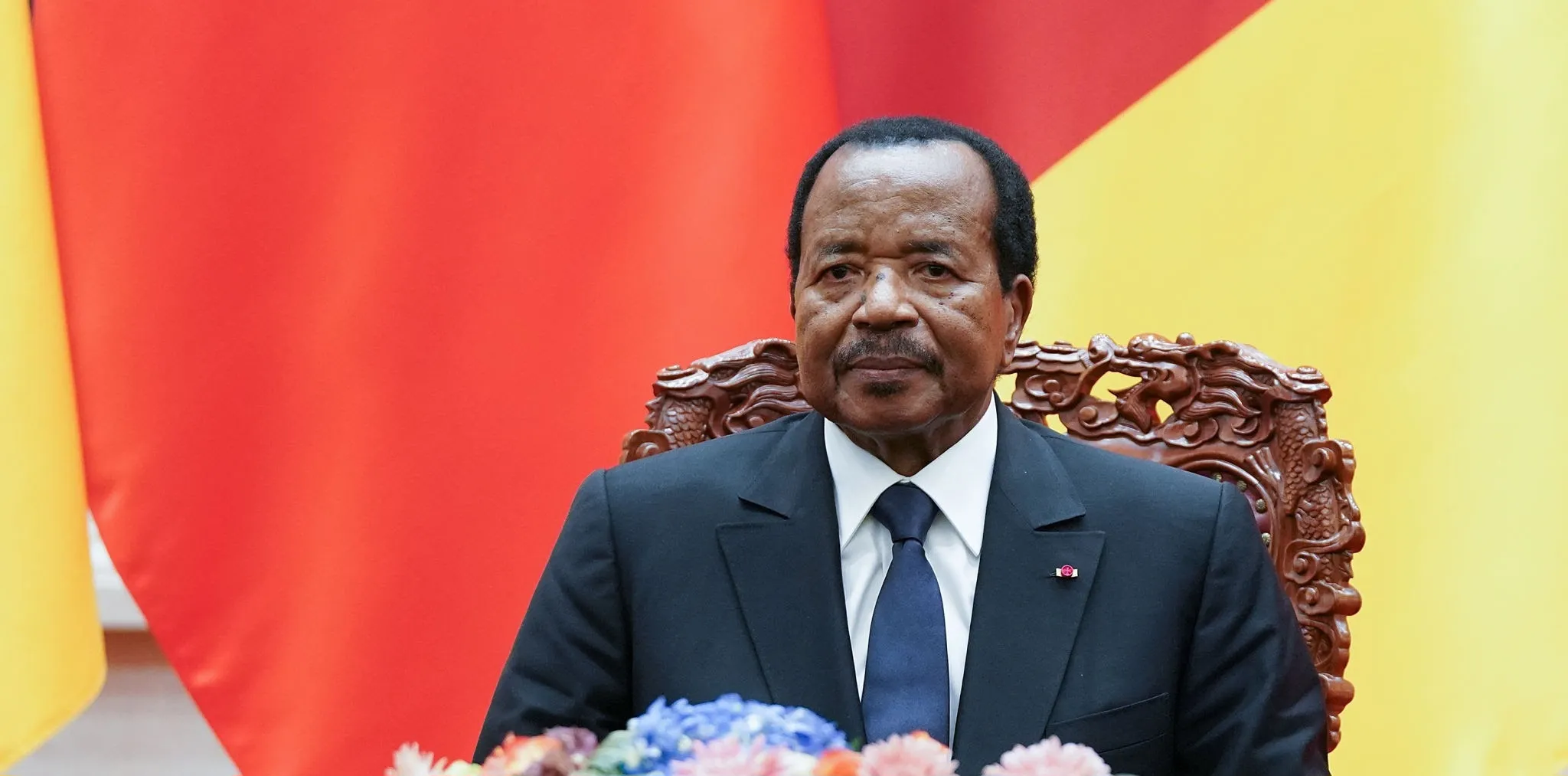
Cameroon’s long-serving President, Paul Biya, has officially announced his intention to run for an eighth term in the presidential election scheduled for October 12, 2025.
The 92-year-old leader, who has ruled the Central African nation for nearly 43 years, made his declaration via a post on the social media platform X, in both French and English.
“I am a candidate for the 12 October 2025 presidential election. Rest assured that my determination to serve you is commensurate with the serious challenges facing us,” Biya wrote. He added optimistically, “Together, there are no challenges we cannot meet. The best is still to come.”
Although his candidacy was largely anticipated—given his longstanding role as head of the ruling Cameroon People’s Democratic Movement (CPDM)—his formal declaration comes amid increasing scrutiny over his health and ability to lead the country. At his age, questions around his physical and cognitive fitness have become central to public and political discourse, particularly as the country grapples with multifaceted crises.
In recent months, signs of growing unease within Biya’s traditional power base have emerged. Several of his longtime political allies have broken ranks, signaling a potential shift in the dynamics of Cameroonian politics. In June, Employment Minister Issa Tchiroma Bakary resigned from his cabinet post to contest the presidential race under the banner of the Front for the National Salvation of Cameroon (FSNC), marking a significant political realignment.
Another notable defection came from former Prime Minister Bello Bouba Maigari. A staunch supporter of Biya for nearly three decades, Maigari has now positioned himself as a presidential contender representing the National Union for Democracy and Progress (NUDP). Both FSNC and NUDP were previously aligned with Biya’s CPDM, which has maintained an unbroken grip on power since Cameroon’s independence in 1960.
The emerging field of candidates also includes familiar opposition figures. Maurice Kamto, who finished as runner-up in the contentious 2018 election and remains one of Biya’s most vocal critics, has declared his intention to run again. He will be joined by Cabral Libii, leader of the Cameroonian Party for National Reconciliation (CPNR), another prominent voice in the country’s opposition landscape.
While these candidacies indicate a growing appetite for change, the opposition remains fragmented. Despite widespread dissatisfaction with the current administration—ranging from economic grievances to poor infrastructure and public services—the lack of a unified opposition front may ultimately dilute any serious challenge to Biya’s continued rule.
Public frustration continues to mount over a host of domestic issues. Youth unemployment remains high, with many young Cameroonians expressing disillusionment over limited economic opportunities. Inflation has further exacerbated the strain on household incomes, while access to quality healthcare, education, and basic amenities remains uneven, particularly outside urban centers.
Adding to the country’s volatility is the persistent unrest in its English-speaking regions. Though Cameroon is predominantly francophone, long-standing grievances among its anglophone minority have fueled a separatist movement that occasionally erupts into violence. These conflicts, along with broader national concerns, have only intensified scrutiny of Biya’s capacity to govern effectively.
Candidates have until July 21 to formalize their participation in the upcoming election. As the political landscape evolves, much attention will be focused on whether the fractured opposition can rally around a single figure capable of mounting a serious challenge to Biya’s four-decade-long dominance.
Still, with the CPDM’s expansive political machinery, the incumbent remains a formidable force. However, the shifting loyalties and growing public discontent suggest that this election could mark a critical juncture for Cameroon’s political future.
What you should know
President Paul Biya’s decision to seek re-election at age 92 comes amid deepening concerns about his health, defections from key allies, and rising public dissatisfaction with economic hardship and political stagnation.
Despite these challenges, Biya’s CPDM retains significant control, while the opposition remains fragmented ahead of the July 21 deadline for candidate declarations.